Tomato Juice Benefits: Lycopene, Heart Health & More


Tomato Juice Benefits: Lycopene, Heart Health & More
Savory, refreshing and surprisingly nutritious, tomato juice is one of the most underrated drinks around. While it may not be as sweet as fruit juices, it more than makes up for it with a remarkable nutritional profile and a unique, satisfying flavor that has made it a brunch and travel favorite for generations.
Here is what tomato juice really does for your body, an easy recipe with prep time, and the best ways to enjoy this savory classic at home.
What is in tomato juice?
Tomato juice is pressed from fresh, ripe tomatoes, capturing their savory flavor and impressive nutrition in liquid form. Unlike sugary fruit juices, it is low in calories and naturally savory, which makes it a refreshing change of pace.

A glass is especially rich in lycopene, the antioxidant that gives tomatoes their red color, along with generous amounts of vitamin C, vitamin A, potassium and B vitamins. This combination of antioxidants and minerals is the foundation of tomato juice’s many benefits.
The benefits of tomato juice
Behind its savory taste, tomato juice delivers a genuinely impressive list of benefits for your health.

- Rich in lycopene — a powerful antioxidant linked to heart health and sun protection.
- Supports the heart — its potassium and antioxidants are friendly to your cardiovascular system.
- High in vitamin C — supporting immunity and healthy skin.
- Low in calories — a satisfying, savory drink that is light on calories.
- Hydrating — like most juices, it is mostly water and helps top up your fluids.
As Healthline reports, tomato juice is an excellent source of lycopene and other antioxidants that support heart health and overall wellbeing.
The power of lycopene
If tomato juice has one standout nutrient, it is lycopene. This powerful antioxidant gives tomatoes their vivid red color and has been studied extensively for its health benefits, particularly for the heart and for protecting skin from sun damage from the inside out.
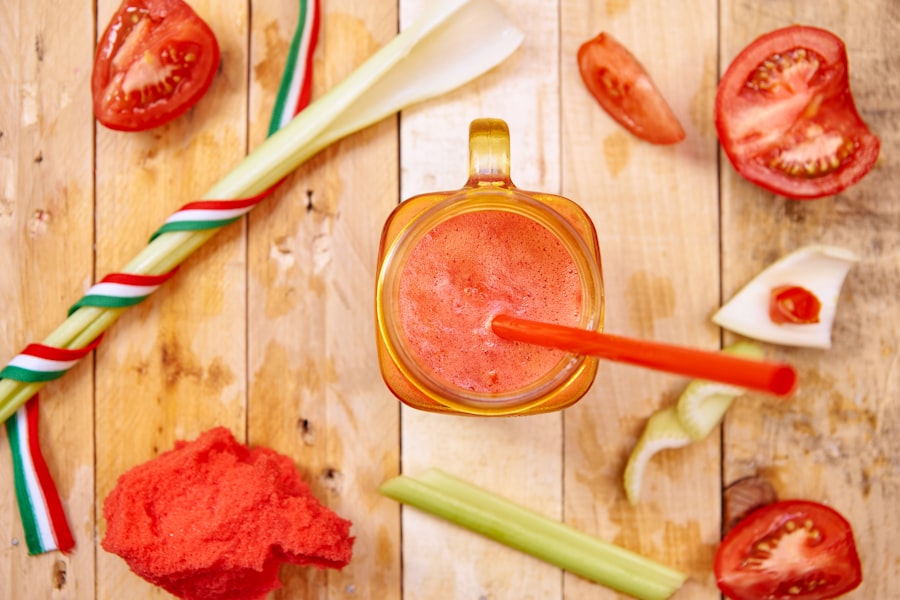
Interestingly, your body actually absorbs lycopene more easily from cooked and processed tomatoes than from raw ones, because heat breaks down the cell walls. This means tomato juice, which is processed from cooked or pressed tomatoes, is one of the very best dietary sources of this beneficial compound — even better than a fresh tomato in some cases.
Easy fresh tomato juice recipe
Skip the salty, additive-laden cartons — fresh tomato juice is easy to make and tastes infinitely better. This savory blend takes just ten minutes.
Ingredients
- 6 ripe tomatoes
- 1 celery stalk
- Juice of ½ lemon
- A pinch of salt and pepper
- A dash of hot sauce (optional)
Instructions
- Roughly chop the tomatoes and celery.
- Blend until smooth, then strain through a sieve.
- Season with lemon, salt, pepper and hot sauce, and serve over ice.

It pairs beautifully with the savory, vegetable-forward world of celery juice and other fresh blends.
Is tomato juice good for your heart?
Tomato juice is one of the more heart-friendly drinks you can choose, and several of its nutrients work together to support cardiovascular health. The lycopene helps protect your cells and has been linked to healthier cholesterol levels, while the potassium it contains supports healthy blood pressure by helping to balance sodium in the body.
For the most heart benefit, choose tomato juice with little or no added salt, since many commercial versions are very high in sodium. Made fresh at home, with just a pinch of seasoning, tomato juice becomes a genuinely heart-supportive drink that fits well into a balanced diet, much like a vibrant beet juice.
Tomato juice for recovery
Athletes have taken a real interest in tomato juice, and for good reason. Its natural electrolytes, including potassium, along with its antioxidants, make it a popular choice for recovery after exercise.

Some research suggests that the antioxidants in tomato juice may help reduce the muscle stress and inflammation that come with hard exercise. Combined with its hydration and savory, satisfying flavor, this makes a glass of tomato juice a refreshing, natural recovery option, especially appealing if you do not enjoy sweet drinks after a workout.
Watch the salt
Here is the one important caveat with tomato juice. While the juice itself is wonderfully nutritious, many store-bought versions are loaded with added salt, which can work against its heart-healthy benefits and add far more sodium than you need.
The simple solution is to make your own, as in the recipe above, or to choose low-sodium or no-salt-added versions when buying. That way you get all the lycopene, vitamins and potassium without the excess sodium. A little fresh lemon, pepper and a dash of hot sauce provide plenty of flavor without reaching for the salt shaker.
Best ways to enjoy tomato juice
Tomato juice is wonderfully versatile, working as both a drink and an ingredient in all sorts of recipes.
- On its own — chilled over ice with a squeeze of lemon and a grind of pepper.
- Savory smoothies — blended with cucumber, celery and herbs for a gazpacho-style drink.
- In cooking — as a base for soups, stews and sauces.
- Spiced up — with a dash of hot sauce, celery salt and a celery stalk to garnish.
However you enjoy it, tomato juice brings a savory, nutrient-rich change from the usual sweet juices.
Tomato juice and your skin
The lycopene that makes tomato juice so good for your heart may also benefit your skin. Lycopene and the vitamin C in tomato juice are both linked to skin health, with lycopene studied for helping protect skin from sun damage from the inside out and vitamin C supporting collagen for firmness.
While no drink replaces sunscreen and good skincare, a nutrient-rich diet shows up on your skin over time, and tomato juice is a delicious, antioxidant-rich contributor. It is one more reason this savory classic deserves a place in a balanced diet.
Tomato juice proves that not all the healthiest juices are sweet. With its impressive lycopene content, heart-supporting potassium and generous vitamin C, this savory classic is a genuinely nutritious drink — especially when you make it fresh and keep the salt in check. Blend it at home, season it with lemon and pepper instead of salt, and enjoy a glass of this underrated, antioxidant-rich juice as a refreshing change of pace.
Fresh and savory, the Green Apple way
We press our juices fresh to order with clean, all-natural produce — no concentrates, no added sugar — so every glass delivers the brightest flavor and the most nutrients. Discover a fresh take on healthy drinks with us.
Frequently asked questions
What are the benefits of tomato juice?
Tomato juice is rich in lycopene, a powerful antioxidant linked to heart health and sun protection, plus vitamin C, vitamin A and potassium. It supports the heart, immunity and hydration, all for few calories.
How do you make fresh tomato juice?
Blend ripe tomatoes with a little celery, then strain and season with lemon, salt, pepper and optional hot sauce. It takes about 10 minutes with no cooking and avoids the excess salt of store-bought versions.
Is tomato juice good for your heart?
Yes. Its lycopene supports healthy cholesterol and its potassium supports healthy blood pressure. Choose low-sodium or homemade tomato juice to get the heart benefits without excess salt.
Why is tomato juice high in lycopene?
Your body absorbs lycopene more easily from processed tomatoes than raw ones, because heat breaks down the cell walls. Since tomato juice is pressed or cooked, it is one of the best dietary sources of lycopene.