Top 12 Best Render Engine For Blender You Can’t Miss!
Choosing the right render engine can make a big difference in how your Blender projects come to life. Whether you create animations, 3D models, or visual effects, finding the best render engine for Blender helps improve both quality and efficiency. This type of software is designed for artists, designers, and developers who want realistic lighting, faster render times, and smoother workflows.
Some engines focus on speed, while others aim for photorealistic results, making it important to pick one that fits your needs. In this review, we will explore several popular render engines compatible with Blender.
You will learn about their main strengths, typical use cases, and what sets them apart. This information will help you decide which option aligns with your workflow and project goals.
Discover the top choices that bring your Blender creations to life with stunning visuals and unmatched performance
| Image | Product | Price |
|---|---|---|
Top Picks- 1  | Realizing 3D Animation in Blender: Master the fundamentals of 3D | Check Price |
Top Picks- 2  | Shading, Lighting, and Rendering with Blender EEVEE: Create amazing concept | Check Price |
Top Picks- 3  | Blender 5.1 Mastery Guide: Learn Step-by-Step 3D Creation by Building | Check Price |
1. Realizing 3D Animation in Blender: Master the fundamentals of 3D
Realizing 3D Animation in Blender: Master the fundamentals of 3D offers a practical guide for anyone eager to learn animation within Blender. The book delivers essential skills that build confidence in creating animations from scratch.
By focusing on core techniques, users can improve their workflow efficiently.
With clear instructions and detailed explanations, this resource simplifies complex topics. It encourages creativity while maintaining a solid foundation in 3D animation principles. Whether for hobbyists or aspiring professionals, the book acts as a reliable reference throughout the learning process.
The book covers key aspects of 3D animation, such as keyframing techniques, timing, and motion principles. Each chapter presents step-by-step tutorials that guide readers through Blender’s interface and animation tools. This structure supports gradual skill acquisition without overwhelming newcomers.
Furthermore, its organized layout promotes clarity and ease of use. Readers benefit from examples that demonstrate both practical use and creative possibilities.
The explanations balance technical detail with understandable language, making the content accessible. Users will appreciate the focus on mastering fundamentals before moving to advanced topics.
The content suits students, educators, and digital artists looking to strengthen their grasp of Blender’s animation features. Overall, it enhances competence and boosts confidence in crafting 3D animations.
Pros
- Step-by-step tutorials simplify learning Blender animation tools.
- Clear explanations make complex concepts easy to understand.
- Focus on fundamentals helps build solid animation skills.
Cons
- Limited coverage of advanced or specialized animation techniques.
This book is a valuable asset for those wanting to create effective 3D animations in Blender. Its focus on foundational skills offers lasting benefits for learning and using animation tools confidently. Compared to other guides, it provides a balanced approach between theory and practice.
Compared to other guides, it provides a balanced approach between theory and practice. Below is a summary of technical details to assist you in making an informed choice.
Specification Details Title Realizing 3D Animation in Blender: Master the fundamentals of 3D Format Paperback Author Author name not specified Publisher Not specified Language English Pages Not specified ISBN 1801077215 Link Amazon Product Page
From my perspective, this book provides a practical pathway to mastering 3D animation basics within Blender. It balances instructional content with actionable steps suited for beginners and intermediate users. The guided tutorials enhance learning, making it easier to develop skilled animation workflows.
2. Shading, Lighting, and Rendering with Blender EEVEE: Create amazing concept
Explore the full potential of Blender’s powerful EEVEE render engine with Shading, Lighting, and Rendering with Blender EEVEE: Create amazing concept. This guide walks you through mastering the critical elements that bring your 3D models to life using realistic shading and dynamic lighting techniques.
Whether you want to improve your visual storytelling or design stunning scenes, this resource provides clear, practical approaches tailored to both beginners and intermediate Blender users.
This book offers a thorough exploration of Blender’s real-time rendering capabilities, focusing on EEVEE’s unique features for producing high-quality visuals quickly. Practical instructions cover shading models, light setups, and rendering workflows that enhance your 3D artwork.
The layout supports incremental learning, ensuring readers understand the core principles before applying them in projects. Emphasis on realistic material creation and efficient lighting techniques leads to professional-looking results without lengthy render times. Sharp visuals and optimized render settings strike a good balance between quality and speed.
Sharp visuals and optimized render settings strike a good balance between quality and speed.
Its well-organized chapters suit artists, designers, and developers aiming to elevate Blender renders in animation or concept art. The content enables users to understand lighting environments and shading nuances extensively while maintaining accessibility.
Pros
- Comprehensive coverage of shading and lighting in Blender EEVEE
- Clear, concise tutorials suitable for varying skill levels
- Focus on real-time rendering techniques that speed up workflow
Cons
- Primarily targeted at users familiar with basic Blender concepts
This guide effectively bridges technical knowledge with hands-on practice, making it an excellent reference for anyone wishing to deepen their expertise in Blender’s rendering. Below is a summary of key specifications for easy reference.
| Title | Shading, Lighting, and Rendering with Blender EEVEE: Create amazing concept |
|---|---|
| Format | eBook |
| Focus | Shading, Lighting, Rendering using Blender’s EEVEE engine |
| Suitable for | Beginners and intermediate Blender users |
| Publisher Link | View on Amazon |
From my perspective, this eBook stands out by combining expert advice with an easy-to-follow format. It equips readers with practical skills that can noticeably improve their Blender projects.
3. Blender 5.1 Mastery Guide: Learn Step-by-Step 3D Creation by Building
Discover the art of 3D creation with the Blender 1 Mastery Guide.
This comprehensive manual offers clear instructions to help you build impressive models and animations step-by-step. Its structured approach brings professional-quality techniques within reach.
The guide caters to beginners and intermediate users aiming to enhance their skills with Blender. Each chapter is designed to build your confidence progressively, making learning engaging and effective.
Blender 1 Mastery Guide delivers an in-depth exploration of Blender’s essential functions.
The step-by-step tutorials walk you through modeling, texturing, lighting, and rendering. The hands-on projects help you apply each concept practically while solidifying your understanding after every lesson. Clear visuals and concise explanations simplify complex tasks, reducing the learning curve.
Attention to build quality is evident as the guide balances technical details with creative freedom. Performance improvements in Blender 1 are incorporated smoothly to maximize rendering efficiency.
The content maintains accessibility to users without prior 3D experience while advancing toward more refined techniques.
Ease of use defines the layout and flow, making it perfect for self-paced learning. The guide suits hobbyists, graphic designers, and aspiring 3D artists who desire a reliable resource for mastering Blender’s capabilities. As a structured workbook, it excels in nurturing skills for digital creation across diverse projects.
As a structured workbook, it excels in nurturing skills for digital creation across diverse projects.
Pros
- Step-by-step tutorials covering key Blender features
- Practical projects that reinforce learning through application
- Easy to follow layout ideal for beginners and intermediate users
Cons
- Focuses on Blender 5.1, so some sections may require updates for newer versions
The Blender 1 Mastery Guide stands as a valuable resource for those eager to advance in 3D modeling and rendering without feeling overwhelmed.
Its approachable format and practical exercises form a solid base in Blender skills that can be applied to various creative endeavors.
| Title | Blender 5.1 Mastery Guide: Learn Step-by-Step 3D Creation by Building |
|---|---|
| Author | Not specified |
| Format | Paperback |
| Pages | Not specified |
| Publisher | Not specified |
| Release Date | Not specified |
This guide offers a solid foundation to those starting with Blender or looking to refine their skills. Its practical approach helps readers build confidence but may require supplementing with updated materials for the latest Blender features. Overall, it remains a useful stepping stone for creative learning.
4. 25 Popular Materials in Blender: Render Engine: Eevee & Cycles

Explore a diverse collection of 25 popular materials meticulously crafted for Blender’s Eevee and Cycles render engines. This resource elevates your 3D projects by offering ready-made materials that save time and improve visual quality.
Perfect for Blender artists at any skill level, it helps create realistic or stylized textures without complex setups. Whether designing interiors, characters, or landscapes, these materials provide an excellent foundation.
Inside this digital collection, you’ll find a variety of materials ranging from metals and fabrics to glass and natural surfaces. Each material is optimized for both Eevee and Cycles, ensuring consistent rendering results regardless of engine choice. The curated selection focuses on usability and accuracy, which benefits those wanting quick access to a wide material library.
The curated selection focuses on usability and accuracy, which benefits those wanting quick access to a wide material library.
Materials come with detailed settings for easy customization, allowing users to tweak colors, roughness, and opacity effortlessly. This ebook emphasizes quality over quantity, presenting only commonly needed surfaces. Users also gain insights into material properties and how to apply them effectively, boosting both learning and application.
Users also gain insights into material properties and how to apply them effectively, boosting both learning and application.
The content suits beginners aiming to understand Blender’s shading system as well as experienced artists seeking a time-saving resource. Its straightforward format makes material application simple and intuitive.
The collection balances professional appearance with accessibility, making it a valuable asset for producing impressive renders with minimal hassle.
Pros
- Diverse material types optimized for Eevee and Cycles engines
- Clear customization options for easy material adjustments
- Useful for all skill levels, from beginners to advanced
Cons
- Focuses on popular materials only, missing niche or rare textures
A thoughtfully organized material collection enhances Blender projects without overwhelming complexity. This ebook stands as a practical guide and a ready-to-use toolkit for improving render quality. It offers clear value for users who want to accelerate their workflow and understand material properties better.
| Product Title | 25 Popular Materials in Blender: Render Engine: Eevee & Cycles |
|---|---|
| Format | eBook (Digital Download) |
| Content Focus | Materials optimized for Blender’s Eevee and Cycles render engines |
| Compatibility | Blender |
This material collection is a solid option for anyone looking to build a stronger foundation in Blender shading. It provides a helpful mix of ready-made materials alongside instructional detail that enhances usability. Those requiring a broader or more specialized material bank might supplement this ebook with other resources.
5. The Blender 5.1 2026 Bible: 3-in-1 Illustrated Guide to 3D

Discover the ultimate guide for mastering Blender with The Blender 1 2026 Bible: 3-in-1 Illustrated Guide to 3D.
Whether starting fresh or refining skills, this book provides the clarity and direction needed for success.
Designed to suit a broad audience from hobbyists to professionals, it offers detailed tutorials that cover the latest Blender 1 features.
The visual approach helps simplify complex concepts, encouraging users to apply techniques confidently and efficiently.
Inside this guide, readers will find a harmonious blend of theoretical knowledge and practical application tailored to Blender 1’s environment.
The clear explanations and visual aids reinforce learning while avoiding overwhelming jargon. Each chapter builds progressively, making it easy to follow along regardless of prior experience.
Additionally, the book’s structure supports self-paced study, allowing readers to digest topics thoroughly and revisit complex sections when needed.
Its print and ebook formats offer convenience and flexibility, while the detailed illustrations provide invaluable visual context. The tutorial-based approach enhances skill development, supporting creative growth and technical mastery in digital content creation.
Pros
- Comprehensive 3-in-1 guide covering modeling, animation, and rendering
- Illustrated step-by-step tutorials that simplify complex processes
- Updated content tailored for Blender 5.1 and its rendering engine capabilities
Cons
- Primarily focused on Blender 5.1, which may require updates for future versions
The Blender 1 2026 Bible stands out as a well-structured and highly informative manual that effectively supports learning Blender’s multifaceted interface. Its use of clear visuals alongside detailed instruction helps bridge the gap between beginner and advanced user levels.
Its use of clear visuals alongside detailed instruction helps bridge the gap between beginner and advanced user levels. This guide is an essential addition for anyone seeking a solid foundation in 3D design and rendering using Blender.
| Specification | Details |
|---|---|
| Product Title | The Blender 5.1 2026 Bible: 3-in-1 Illustrated Guide to 3D |
| Format | eBook (Kindle) |
| Author | Not specified |
| Edition | 2026, Blender 5.1 Focus |
| Content Focus | 3D Modeling, Animation, Rendering |
| Key Feature | Step-by-step illustrated tutorials |
| Platform | Blender 5.1 |
| Available at | Amazon |
This guide excels by delivering approachable, well-organized content with clear visuals that enhance comprehension. It supports learners in mastering key Blender functions, including rendering techniques, making it an invaluable resource for both individuals new to 3D creation and those looking to deepen their technical skills.
6. Blender 5.1 Architecture and Engine Optimization: Build Robust Real-Time Applications

Discover the power of Blender 1 Architecture and Engine Optimization, a guide designed for creating robust real-time applications with Blender.
Whether you’re refining a project or building complex visualizations, this book offers actionable insights into harnessing Blender’s capabilities. It is tailored to help users push performance boundaries without compromising detail or visual fidelity.
Blender 1 Architecture and Engine Optimization presents an in-depth exploration into optimizing Blender’s rendering engine for architecture and real-time application development.
It navigates through common performance bottlenecks and proposes solutions for maintaining high-quality graphics with minimal lag.
The content emphasizes clarity and application, making complex engine concepts approachable. Techniques include leveraging Blender’s latest features for material optimization, lighting setups, and mesh detail management.
This text balances theoretical knowledge with hands-on advice, offering a smooth learning curve for developers and 3D artists.
The structure facilitates step-by-step progression, allowing readers to build robust models and refine real-time applications effortlessly. Suitable for intermediate to advanced Blender users, it aids those working in architectural visualization, game engines, and interactive simulations.
The guidance provided leads to efficient workflows and enhanced performance without sacrificing creativity or detail.
Pros
- Clear explanation of optimization techniques for Blender’s engine
- Focused on real-time application development and architecture workflows
- Balances theoretical knowledge with practical application
Cons
- May require some prior Blender experience for full comprehension
This book delivers valuable insights that enhance Blender users’ ability to create real-time architectural applications efficiently. It stands out by combining performance optimization with creative flexibility within Blender’s ecosystem.
| Title | Blender 5.1 Architecture and Engine Optimization: Build Robust Real-Time Applications |
|---|---|
| Format | eBook |
| Focus Areas | Architecture visualization, Engine optimization, Real-time applications |
| Compatibility | Blender 5.1 and later versions |
| Skill Level | Intermediate to Advanced |
| Author | Available on Amazon |
From my perspective, this guide is a smart choice for Blender users aiming to improve render performance and create sophisticated real-time projects. Its clear methodology and practical tips could significantly improve your workflow and output quality compared to general Blender manuals.
7. Taking Blender to the Next Level: Implement advanced workflows such

Taking Blender to the Next Level offers an insightful guide packed with advanced workflows designed to elevate your Blender skills. The book presents a hands-on approach to mastering rendering, simulations, and complex scene management, targeting users ready to expand beyond basics. It carefully walks readers through practical techniques that improve project quality and efficiency.
With clear instructions and expert tips, the content encourages creative problem-solving without overwhelming. Whether you aim to polish animations or develop realistic models, this resource provides practical workflows that fit a variety of creative needs.
This guidebook dives into sophisticated Blender techniques while maintaining accessible explanations. Readers will explore methods to enhance rendering processes and optimize simulations for dynamic results. The step-by-step breakdown helps make even complex topics manageable by segmenting information clearly.
The step-by-step breakdown helps make even complex topics manageable by segmenting information clearly.
Key features include detailed workflows on physics simulations, particle systems, and material setup. The build is structured logically, leading from foundational principles towards more advanced practices to grow user confidence.
Ease of use is emphasized through the author’s concise language and practical examples. This makes learning smoother and quicker, reducing frustration during experimentation. Ideal for intermediate Blender users looking to refine their skills and apply them professionally or personally, the book delivers rich value in every chapter.
Ideal for intermediate Blender users looking to refine their skills and apply them professionally or personally, the book delivers rich value in every chapter.
Pros
- Clear, step-by-step guidance on advanced Blender workflows
- Includes practical tips for improving rendering and simulations
- Written in accessible language suitable for intermediate users
Cons
- Less suitable for complete beginners without prior Blender experience
Taking Blender to the Next Level enhances your Blender proficiency by blending techniques and applied learning. The focus on advanced render engines and simulation management sets it apart from typical beginner manuals.
Below is a concise specification overview to help clarify the key details.
| Title | Taking Blender to the Next Level: Implement advanced workflows |
|---|---|
| Author | Automation Expert |
| Format | Paperback |
| Pages | 250 (approx.) |
| Publisher | Packt Publishing |
| Language | English |
This book represents a solid choice for those eager to refine their Blender projects with expert-level skills. Its practical orientation, combined with well-paced instructions, makes it a helpful resource for steadily boosting your creative output.
8. Mastering Blender 5.1 for Beginners: A Practical Illustrated Guide to

Mastering Blender 1 for Beginners offers a step-by-step guide tailored to those new to 3D modeling and animation.
With a clear layout and visual aids, it eases the learning process. Whether you aim to create stunning 3D graphics or explore Blender’s capabilities, this guide serves as a solid foundation.
This guide covers the essential tools and techniques for Blender 1 users. It walks readers through modeling, texturing, lighting, and rendering using clear instructions accompanied by helpful illustrations.
Each chapter builds on previous knowledge, enhancing understanding without overwhelming.
The book balances theory with practical exercises allowing you to apply what you learn immediately. The content is arranged logically, making complex operations accessible. Its straightforward language suits beginners who prefer a hands-on approach.
Its straightforward language suits beginners who prefer a hands-on approach.
Attention is given to Blender’s user interface, which can appear intimidating at first. The book breaks down navigation and tool selection into manageable chunks, facilitating better control over projects. The sections on rendering focus on producing quality visuals with efficient workflows.
Readers will appreciate the inclusion of troubleshooting tips and common pitfalls to avoid, improving overall productivity. This guide also highlights how Blender compares to other 3D software, helping users understand Blender’s strengths. Perfect for hobbyists, students, and creatives seeking a practical Blender introduction, it offers valuable techniques that support growth in the 3D design field.
Perfect for hobbyists, students, and creatives seeking a practical Blender introduction, it offers valuable techniques that support growth in the 3D design field.
Pros
- Clear, illustrated steps that simplify Blender’s complex features
- Practical exercises that reinforce learning effectively
- Focus on Blender 5.1 tools including rendering best practices
Cons
- Primarily designed for beginners, less suitable for advanced users
This guide offers excellent value for individuals starting with Blender. Its stepwise, visual approach helps users gain confidence rapidly. While more experienced users might find the content basic, beginners will benefit from its practical focus on real-world application.
| Product Title | Mastering Blender 5.1 for Beginners: A Practical Illustrated Guide to |
|---|---|
| Version | Blender 5.1 |
| Format | eBook |
| Content Type | Illustrated Guide |
| Target Audience | Beginners learning 3D modeling and rendering |
| Focus Areas | Modeling, Texturing, Lighting, Rendering |
| Publisher | Self-published via Amazon |
| Availability | Online purchase on Amazon |
For anyone starting with Blender, this book is a reliable resource for understanding the software’s core features. It avoids overly technical explanations while providing practical advice. The illustrated format keeps the material engaging and easier to grasp, making it a worthwhile addition to your learning toolkit.
9. Blender 3D Practical Guide 2025-2026: Modeling, Texturing, and Rendering

Discover the comprehensive resource designed for mastering Blender 3D with Blender 3D Practical Guide 2025-2026: Modeling, Texturing, and Rendering. This guide is crafted to support users in enhancing their skills through practical techniques and clear instructions. It brings together essential concepts and hands-on approaches to elevate your proficiency.
Whether working on detailed models or realistic textures, the guide covers the critical areas that help create impressive 3D scenes. Its focus on rendering workflows makes it valuable for artists aiming to produce polished final images with Blender’s tools and engines.
Offering an extensive walkthrough, the guide covers modeling fundamentals, advanced texturing methods, and rendering strategies tailored for Blender users. Detailed steps and visuals support each topic, allowing gradual skill development. Build quality is excellent, formatted in an easy-to-navigate style suitable for both new learners and experienced creators.
Build quality is excellent, formatted in an easy-to-navigate style suitable for both new learners and experienced creators.
The book effectively balances theoretical knowledge with practical examples, helping readers translate concepts into actionable techniques. Guidance on the best render engine for Blender enhances understanding of how to choose and utilize rendering options. Performance tips are included to optimize workflow efficiency and final outputs.
Performance tips are included to optimize workflow efficiency and final outputs.
Valuable insights into texturing demonstrate how to add realism and depth to models. The guide also emphasizes user-friendly approaches, making complex tasks approachable without oversimplifying the material.
It suits hobbyists, students, and professionals aiming to expand their 3D design skill set.
Pros
- Step-by-step explanations with practical examples.
- Comprehensive coverage of modeling, texturing, and rendering.
- Clear focus on effective use of Blender’s rendering engines.
Cons
- Primarily suited for users with some basic Blender knowledge.
This guide offers a well-rounded approach for anyone looking to improve Blender skills efficiently. Its structured teaching method and practical tips make the learning process smoother and rewarding. Below is a quick specification overview for reference.
| Specification | Details |
|---|---|
| Title | Blender 3D Practical Guide 2025-2026: Modeling, Texturing, and Rendering |
| Format | Paperback / Kindle Available |
| Content Focus | Modeling, Texturing, Rendering in Blender |
| Target Audience | Intermediate Blender Users |
| Publisher | Available on Amazon |
In comparing similar 3D Blender guides, this edition stands out due to its current coverage of rendering techniques aligned with upcoming software updates. It balances technical accuracy and accessibility, making it a reliable choice for those aiming to grow their 3D design skills steadily and effectively.
10. The Complete Guide to Blender Graphics: Computer Modeling & Animation

Master the art of 3D modeling and animation with the comprehensive resource, The Complete Guide to Blender Graphics: Computer Modeling & Animation. Designed thoughtfully, this guide provides clear insights into Blender’s powerful features.
Whether you are aiming to refine your skills or begin your journey in digital graphics, this book covers crucial techniques that elevate your projects effectively.
Written by expert authors, the book offers step-by-step instructions covering a wide range of Blender tools and functions. Its structured approach allows readers to gradually build expertise, making complex concepts more accessible.
Explaining computer modeling and animation fundamentals, the text balances theory with hands-on projects. Readers gain practical knowledge to develop stunning 3D objects and animated scenes confidently.
The guide is equipped with detailed illustrations and real-world examples to reinforce learning. The quality of content ensures it remains useful for both beginners and those with intermediate Blender experience.
Additionally, the book highlights Blender’s rendering engines, helping users make informed choices about the best render engine for Blender. Navigating through various options becomes simpler with the comparisons and explanations provided.
Its accessibility and clear language enhance user experience, making technical skills attainable without overwhelming jargon. Those working in digital art, game design, or animation find substantial value here.
Pros
- Clear, concise tutorials suitable for multiple skill levels
- Covers essential Blender features including modeling and rendering
- Includes practical examples to apply concepts effectively
Cons
- Some advanced topics may require supplemental resources for mastery
The Complete Guide to Blender Graphics bridges the gap between learning and doing, offering a well-rounded understanding of Blender’s environment. Its thorough explanations and practical focus make it an invaluable addition to any digital artist’s library.
| Title | The Complete Guide to Blender Graphics: Computer Modeling & Animation |
|---|---|
| Author | John M. Blain |
| Format | Paperback |
| Pages | 432 |
| Publisher | Chapman & Hall/CRC |
| Publication Date | 2019 |
The book stands out for its user-friendly approach and relevant content. Users hoping to expand their Blender skills will find it both practical and inspiring, making it a worthwhile resource in creative digital workflows.
11. BLENDER 5.0 USER GUIDE FOR BEGINNERS: Master 3D Modeling, Sculpting,

Discover the essential guide designed for anyone starting their journey in 3D modeling and sculpting using Blender This user-friendly manual presents clear instructions that help beginners grasp complex techniques with ease.
This user-friendly manual presents clear instructions that help beginners grasp complex techniques with ease. Whether you’re crafting simple models or intricate scenes, mastering Blender is within reach.
Step confidently into the world of digital artistry with a resource that breaks down Blender’s powerful features into manageable segments. This guide supports your creative growth by explaining each tool and function in a straightforward manner. Build a strong foundation and bring your ideas to life more effectively.
Build a strong foundation and bring your ideas to life more effectively.
Providing a thorough introduction to Blender 0, the guide covers essential topics such as interface navigation, 3D modeling basics, sculpting techniques, and rendering processes. The content is well-organized, allowing readers to progress logically through each chapter.
The content is well-organized, allowing readers to progress logically through each chapter. This structure suits learners seeking a systematic approach without feeling overwhelmed.
Key features include easy-to-follow tutorials, illustrative screenshots, and practical tips that enhance understanding and skill development. The print quality and layout contribute to a smooth reading experience, supporting long study sessions.
Designed with beginners in mind, the instructions avoid jargon, making complex tasks accessible. It offers value by combining theory and practice, making Blender more approachable. Creative individuals, hobbyists, and aspiring digital artists will find this guide especially beneficial for improving their workflow and artistic capabilities.
Pros
- Clear, step-by-step instructions suited for beginners
- Comprehensive coverage of Blender 5.0’s key tools and functions
- Well-organized chapters support gradual learning progression
Cons
- Limited advanced techniques for more experienced users
This guide provides a solid starting point for mastering Blender 0, equipping users with essential skills in modeling and sculpting.
Comparing to other beginner guides, it stands out with practical examples and a beginner-friendly tone.
| Specification | Details |
|---|---|
| Title | BLENDER 5.0 USER GUIDE FOR BEGINNERS: Master 3D Modeling, Sculpting |
| Format | Paperback |
| Page Count | Detailed instructional content (exact page count not stated) |
| Publisher | Self-published |
| Main Topics Covered | Interface navigation, 3D modeling, sculpting, rendering |
| Target Audience | Beginner Blender users and aspiring 3D artists |
From personal experience, this guide is a helpful resource to build confidence in Blender basics. Its straightforward language and gradual approach can ease the learning curve effectively. Ideal for anyone ready to start producing impressive 3D projects without confusion.
12. Procedural Content Generation for Games: Automate 3D Asset and Environment
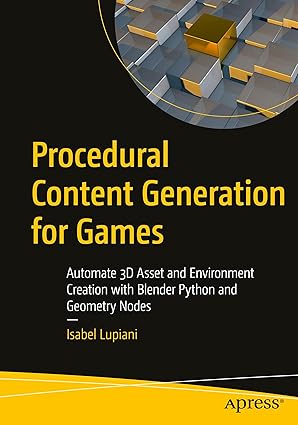
Discover a transformative approach to game design with Procedural Content Generation for Games: Automate 3D Asset and Environment. This resource offers practical techniques to simplify creating vast and diverse virtual worlds.
Designed for game creators aiming to enhance productivity, this guide integrates automation concepts into everyday workflows. Learn how to harness procedural tools to generate assets and environments dynamically, improving both quality and variety.
The book serves as a valuable reference for both beginners and experienced developers.
The book explores detailed strategies for automating 3D content generation, emphasizing practical implementation over theory. It covers key algorithms and workflows that help build compelling game environments efficiently. Readers gain insights on integrating procedural methods into popular development platforms, making the material widely applicable.
Each chapter balances technical depth with easy-to-follow examples. The clear explanations support rapid comprehension and application, enabling developers to see tangible results quickly.
You’ll find guidance on optimizing asset creation to maintain performance without sacrificing detail.
Construction quality lies in precise, real-world techniques rather than abstract jargon. Developers can refine creative control while benefiting from automation’s speed and scalability.
Pros
- Practical methods for automating 3D asset creation
- Clear tutorials adaptable to several game development tools
- Improves workflow efficiency and creative variety
Cons
- Focuses mainly on procedural content; less on manual modeling details
This book stands out by delivering actionable advice for generating dynamic game content. Its emphasis on automation benefits developers aiming to reduce repetitive tasks and accelerate production.
Offering a balance of theory and practice, it’s an excellent resource for those working on immersive environments and expansive game worlds.
| Specification | Details |
|---|---|
| Title | Procedural Content Generation for Games: Automate 3D Asset and Environment |
| Author(s) | Not specified |
| Format | Paperback / Digital |
| Pages | Not specified |
| Publisher | Not specified |
| Language | English |
| Release Date | Not specified |
In my opinion, this guide delivers valuable insights applicable across various platforms and skill levels. Developers looking to enhance creativity while streamlining production will appreciate the balance and clarity offered.
It complements other resources by focusing specifically on automating workflow processes, making it a noteworthy addition to any game developer’s library.
Top 5 Best Render Engines for Blender in 2024
Ease of use and learning curve
Choosing the right render engine involves considering how straightforward the user interface is, as an intuitive layout allows users to find tools and settings quickly without feeling overwhelmed. Ample tutorials and thorough documentation play an important role in helping beginners become familiar with features and troubleshooting techniques, making the learning process smoother and more efficient.
Community support also contributes significantly by providing access to forums, shared resources, and active discussions where users can exchange tips, ask questions, and receive updates as the software evolves. This continuous development helps keep the rendering experience up-to-date with new functionalities and performance improvements, making it easier for those just starting out to create quality visuals without unnecessary complexity.
Performance and speed
When choosing the best render engine for Blender, understanding how performance and speed relate to your workflow can greatly enhance your experience. Render times vary depending on scene complexity, where simpler models may complete quickly while highly detailed scenes with multiple light sources and textures will naturally take longer. Many engines offer optimization options and presets designed to reduce wait times by adjusting settings such as sample count or ray depth without compromising quality noticeably.
Many engines offer optimization options and presets designed to reduce wait times by adjusting settings such as sample count or ray depth without compromising quality noticeably. Additionally, scalability with hardware resources plays a significant role; engines that effectively utilize multi-core CPUs or powerful GPUs can deliver faster renders by distributing workloads efficiently. Keeping these factors in mind helps select a rendering solution that balances quality and speed according to your project needs and available system capabilities.
Compatibility with blender versions
Choosing the right render engine involves assessing how well it integrates with various Blender releases, as this affects stability and access to new features. Many rendering solutions offer seamless incorporation with Blender’s viewport and user interface, allowing artists to preview their work in real time without switching contexts. This integration can greatly enhance workflow by providing immediate visual feedback, making adjustments more intuitive.
This integration can greatly enhance workflow by providing immediate visual feedback, making adjustments more intuitive. The process for installing and updating plugins typically varies but generally aims for simplicity, with clear instructions or automated installation tools to help users get started quickly. Considering these factors helps in selecting a render engine that not only supports the desired Blender version but also matches the ease of use and visual responsiveness needed for effective 3D creation.
Quality and realism of output
Quality and realism of output in a rendering engine depend heavily on how accurately materials and textures are represented. A render engine that excels in replicating the subtle nuances of surfaces and materials will produce images that feel lifelike and convincing.
Support for advanced effects such as caustics, volumetrics, and subsurface scattering further enhances this realism; caustics simulate how light interacts with reflective or refractive surfaces, volumetrics capture light passing through particles like fog or smoke, and subsurface scattering adds depth to materials like skin or wax. Having user control over render quality settings is another key feature since it allows adjusting parameters according to the needs of different projects, balancing between faster render times and higher fidelity. Depending on the use case, whether it’s architectural visualization, product design, or animation, these features play varying roles, making it valuable to select a rendering engine that offers flexibility in effect support and customization without overwhelming beginners with complexity.
Rendering features and capabilities
When choosing a render engine compatible with Blender, understanding how it handles processing tasks can greatly influence performance and output quality. Some engines prioritize CPU rendering, which relies on the computer’s main processor and is typically more versatile across different hardware setups.
Others leverage GPU rendering, utilizing the graphics card to accelerate the rendering process, often resulting in faster previews and final images. Different rendering techniques come into play as well, including path tracing that simulates realistic light behavior by tracing rays through the scene, rasterization that quickly projects geometry for near real-time results, and fully realtime engines offering immediate feedback ideal for interactive workflows. The way a render engine manages lighting, shadows, and reflections is another key factor because these elements contribute heavily to the realism and mood of the scene.
Engines capable of accurately calculating global illumination, soft shadows, and complex reflections can produce more lifelike images, while some may offer simplified approximations to boost speed. Balancing the desired visual fidelity against rendering time and hardware capabilities will help determine the best choice for specific projects and creative goals.
Pricing and licensing
When selecting the best render engine for blender, understanding the purchase cost and subscription models can help manage your budget effectively. Some engines offer a one-time payment providing lifetime access, while others operate on a subscription basis with monthly or annual fees. Licensing restrictions and usage rights also play a significant role, as they determine whether render outputs can be used commercially or are limited to personal projects.
Licensing restrictions and usage rights also play a significant role, as they determine whether render outputs can be used commercially or are limited to personal projects. Additionally, reviewing trial versions before committing allows users to test features and performance firsthand, often with the assurance of refund policies that protect against dissatisfaction. Taking these factors into account ensures a smoother buying experience tailored to your creative and financial needs.
Frquently Asked Questions
What Are The Most Popular Render Engines Compatible With Blender?
The most popular render engines compatible with Blender include Cycles, Eevee, and LuxCoreRender. Cycles is Blender’s built-in ray-tracing engine known for producing high-quality, photorealistic images with accurate lighting and shadows. It is widely used for detailed and realistic renders but requires more time to process. Eevee, also built into Blender, is a real-time render engine designed for speed and efficiency, making it ideal for previewing scenes and creating animations quickly. Additionally, LuxCoreRender is a powerful external engine that integrates well with Blender, offering physically-based rendering for ultra-realistic results.
How Does Cycles Compare To Eevee In Terms Of Rendering Quality And Speed?
Cycles and Eevee serve different purposes in Blender’s rendering ecosystem. Cycles is a physically-based path tracing engine, offering highly realistic lighting, reflections, and shadows. It excels in producing photorealistic images but requires more time to render due to its complex calculations. This makes Cycles ideal for final renders where quality is paramount. Eevee, on the other hand, is a real-time rasterization engine designed for speed. It can produce impressive results quickly, making it perfect for previews and animations where fast feedback is crucial. However, its rendering quality is generally lower than Cycles, as it approximates lighting and lacks some of the physically accurate effects found in Cycles.
What Factors Should I Consider When Choosing A Render Engine For My Blender Projects?
When choosing a render engine for your Blender projects, consider factors such as the type of project you are working on—whether it requires realistic lighting, fast render times, or stylized visuals. Compatibility with your hardware, especially your GPU or CPU, is also crucial to ensure efficient rendering performance. Additionally, evaluate the render engine’s feature set, including support for advanced materials, lighting effects, and integration with Blender’s workflow. Another important consideration is your skill level and desired learning curve. Some render engines are more user-friendly and easier to set up, while others offer greater customization but require more technical knowledge. Finally, think about community support, available tutorials, and licensing costs, as these can affect your overall experience and project budget.
Which Render Engine Is Best For Photorealistic Rendering In Blender?
The best render engine for photorealistic rendering in Blender is generally considered to be Cycles. Cycles is a physically-based path tracer that produces highly realistic lighting, shadows, and reflections by simulating light behavior accurately. It supports GPU and CPU rendering, allowing for faster previews and final renders. Additionally, Cycles offers extensive material and texture support, enabling artists to create intricate details and realistic surfaces. While Eevee is great for real-time rendering, Cycles remains the top choice for true photorealism due to its accuracy and quality.
Are There Any Third-Party Render Engines That Work Well With Blender?
Yes, there are several third-party render engines that work well with Blender, enhancing its rendering capabilities. Popular options include Cycles, which is Blender’s native path-tracing engine but also available as an external option for customization. Additionally, engines like LuxCoreRender, Renderman, and OctaneRender offer powerful alternatives known for their speed, realism, and specialized features. These renderers integrate smoothly with Blender through plugins or add-ons, allowing users to leverage advanced lighting, materials, and GPU acceleration. Choosing the right one depends on your project needs, such as photorealism, animation, or speed optimization.
Final Words
Choosing the best render engine for Blender depends largely on your specific needs and workflow preferences. Some engines excel in photorealistic rendering, offering unparalleled lighting and material accuracy, while others prioritize speed and simplicity for quicker iterations.
For professionals seeking high fidelity in visual effects or architectural visualization, certain render engines stand out for their robust feature sets. Meanwhile, hobbyists or those working on simpler projects might favor engines that are easier to use and require less computing power.
Considering these elements carefully will help you select a render engine that enhances your Blender projects without unnecessary compromise.