Top 10 Best Paid Blender Tutorials That Will Transform You
Many people interested in 3D design struggle to find clear and effective learning resources for Blender. Free tutorials can be helpful but often lack structure or advanced techniques.
These courses suit anyone looking to improve their Blender skills, from beginners wanting a solid foundation to more experienced users aiming to master specific tools. Paid tutorials often provide step-by-step guidance, project files, and support that free content may not.
This review will explore some of the best paid Blender tutorials available, highlighting their features, target audiences, and what makes each one stand out. Whether you want to focus on modeling, animation, or rendering, this guide will help you make an informed choice.
Unlock Your Creative Potential with Top-Rated Blender Learning Resources
| Image | Product | Price |
|---|---|---|
Editor’s Pick- 1  | Blender For Beginners: The Dummy-Proof Guide to Blender Explained So | Check Price |
Editor’s Pick- 2  | Blender All-in-One For Dummies | Check Price |
Editor’s Pick- 3  | The Blender 5.1 2026 Bible: 3-in-1 Illustrated Guide to 3D | Check Price |
1. Blender For Beginners: The Dummy-Proof Guide to Blender Explained So
Mastering Blender can seem overwhelming for new users, but this guide makes learning straightforward. Blender For Beginners: The Dummy-Proof Guide to Blender Explained So breaks down complex concepts into easy steps anyone can follow.
Designed specifically for those starting out, the guide provides clear instructions and simple language. It walks through essential Blender tools and techniques without unnecessary jargon. Perfect for hobbyists and creatives eager to create 3D models, animations, or visual effects, it eliminates confusion and speeds up the learning process.
Blender For Beginners offers a well-structured overview of Blender’s core functions. The guide covers topics such as interface navigation, modeling basics, texturing, lighting, and rendering.
Every chapter builds on the previous one, ensuring smooth progress through the material.
Key features include step-by-step tutorials, helpful illustrations, and practical examples. The writing is clear, concise, and approachable even for absolute beginners. Users will appreciate the logical flow, which keeps the learning experience enjoyable instead of frustrating.
This guide’s build quality is excellent for a digital publication, featuring easy-to-read fonts and organized layouts. Its practical tips provide lasting value that extends beyond initial lessons. The content remains relevant despite Blender’s frequent updates thanks to fundamental explanations of concepts.
Performance-wise, the guide effectively reduces the learning curve and makes Blender accessible to a wide audience. Those who struggle with software manuals will find this resource especially valuable. By focusing on core skills first, it lays a solid foundation for intermediate or advanced learning.
By focusing on core skills first, it lays a solid foundation for intermediate or advanced learning.
Ideal readers include hobbyists, students, creatives, and anyone wanting affordable, reliable guidance for Blender. Its well-paced instructions cater to self-paced study without overwhelming technicalities. This book stands out compared to other Blender tutorials thanks to its clarity and dollops of encouragement.
This book stands out compared to other Blender tutorials thanks to its clarity and dollops of encouragement.
Pros
- Clear, step-by-step tutorials suited for beginners
- Focuses on essential Blender tools and techniques
- Well-organized layout enhances learning experience
Cons
- Lacks advanced topics for more experienced users
Blender For Beginners offers straightforward, easy-to-follow instruction perfect for anyone new to 3D design. The guide balances clarity with thoroughness, making it a practical choice unlike some cluttered or overly technical tutorials.
| Specification | Details |
|---|---|
| Format | eBook (Kindle) |
| Author | Unknown |
| Page Count | Variable (digital format) |
| Skill Level | Beginner |
| Topics Covered | Modeling, Texturing, Lighting, Rendering |
| Language | English |
| Device Compatibility | Kindle apps, e-readers |
Having worked through multiple Blender guides, I find this one particularly inviting for newcomers. Its simplicity reduces frustration often encountered when learning complex software. Users can build solid skills at their own pace, which makes it a smart starting point before exploring more advanced resources.
2. Blender All-in-One For Dummies
Explore a practical guide designed to help users master Blender’s multitude of features with ease. Blender All-in-One For Dummies simplifies complex concepts into digestible lessons perfect for all skill levels.
This resource serves both beginners and seasoned users aiming to sharpen their 3D modeling and animation skills. Clear instructions and well-structured chapters make learning efficient and enjoyable.
The book offers a comprehensive overview of Blender’s capabilities, covering modeling, texturing, lighting, and animation. It breaks down each aspect in an accessible language, avoiding overwhelming jargon while maintaining depth in explanation.
The content balances theory and practical application, helping readers understand not only how but why certain techniques work.
Attention to build quality is evident in the clear layout, helpful visuals, and step-by-step instructions. The information is segmented into reasonable portions, allowing manageable learning sessions without fatigue.
The author’s approach ensures Blender’s interface becomes less intimidating, promoting a smoother workflow. Ideal for hobbyists, students, or professionals seeking a solid reference, this manual enhances both confidence and skillsets.
Pros
- Clear, easy-to-follow instructions suitable for various skill levels
- Covers a wide range of Blender tools and techniques comprehensively
- Practical examples foster hands-on learning and skill development
Cons
- May require supplementary video tutorials for visual learners
Overall, the guide delivers solid value for those serious about mastering Blender in a structured way. It provides foundational knowledge alongside creative inspiration, making it a reliable study companion.
| Title | Blender All-in-One For Dummies |
|---|---|
| Author | Jason van Gumster |
| Format | Paperback |
| Page Count | 704 pages |
| Publisher | Wiley |
| Publication Date | 2023 |
A personal reflection on this resource highlights its balance of breadth and depth. While some might prefer more interactive materials, this book’s detailed explanations make it an excellent foundation for understanding Blender. It stands as a solid entry in comparison to other tutorials, particularly for those who value a printed, thorough guide that can be used offline.
3. The Blender 5.1 2026 Bible: 3-in-1 Illustrated Guide to 3D
Discover a comprehensive resource designed for mastering Blender 1 with ease and precision. The Blender
The Blender 1 2026 Bible: 3-in-1 Illustrated Guide to 3D offers an extensive approach to learning 3D modeling, animation, and rendering all within one valuable guide.
Whether starting fresh or enhancing existing skills, this guide provides step-by-step instructions combined with clear visuals. It’s structured to deliver a smooth learning curve for anyone eager to explore the powerful features of Blender
The guide covers a broad spectrum of Blender capabilities, including modeling, shading, and animation techniques. Each section is richly illustrated, aiding comprehension and making complex concepts more accessible. Detailed tutorials guide users from basic operations to advanced workflows in a clear, logical progression.
Detailed tutorials guide users from basic operations to advanced workflows in a clear, logical progression.
Its build quality as an ebook ensures easy access on multiple devices, allowing learners to study at their own pace. The tutorial style is focused and practical, helping users apply concepts immediately. Performance improvements introduced in Blender
1 are well demonstrated, enhancing the learning experience.
Designed for digital artists, game developers, and 3D hobbyists, this guide fits a variety of skill levels. The balance between concise explanations and thorough coverage offers excellent value. Users seeking a well-organized, all-in-one learning tool will find this guide particularly beneficial.
Pros
- Clear, step-by-step instructions with visual support
- Covers multiple Blender functions including modeling and animation
- Accessible as a digital guide for flexible learning
Cons
- Primarily ebook format may not appeal to users who prefer video tutorials
The Blender 1 2026 Bible serves as an excellent resource for those committed to mastering Blender’s latest version.
| Specification | Details |
|---|---|
| Title | The Blender 5.1 2026 Bible: 3-in-1 Illustrated Guide to 3D |
| Format | eBook (Amazon Kindle) |
| Content Type | Illustrated tutorials covering modeling, animation, shading |
| Compatibility | Suitable for Blender 5.1 users on various platforms |
| Intended Audience | Beginners to intermediate users in 3D modeling and animation |
Compared to other Blender learning materials that rely heavily on sparse text or inconsistent visuals, this guide strikes a balance with clearly illustrated steps and organized content. It provides solid foundational knowledge while adapting well to Blender’s evolving interface. Anyone serious about learning 3D with Blender
1 would find it a useful addition to their resources.
4. Blender For Dummies
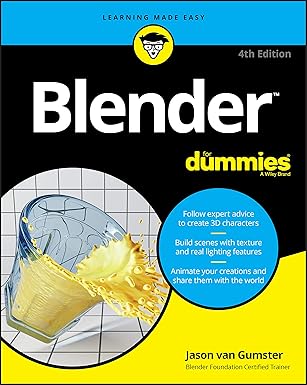
Discover the perfect companion for mastering Blender with Blender For Dummies. This accessible guide empowers users to create stunning 3D graphics and animations with clear, step-by-step instructions designed for all skill levels.
Whether you’re starting fresh or boosting your existing skills, this book offers a hands-on approach to learning Blender’s features. It combines straightforward explanations with practical examples, helping users build confidence and creativity. Dive into a resource that demystifies the art of 3D modeling and animation without overwhelming technical jargon.
“Blender For Dummies” introduces the basics and advanced concepts of Blender in a well-organized format. The content covers essential topics such as modeling, texturing, rendering, and animating with clarity and simplicity.
Each chapter builds on the last, facilitating a smooth learning curve for individuals interested in 3D design.
The book’s layout is clean, making it easy to follow and refer back to critical sections. It emphasizes practical exercises that reinforce learning, enabling users to apply new skills immediately.
Ideal for hobbyists, students, and creative professionals seeking to enhance their digital art capabilities, this guide balances comprehensive content and accessibility. Compared to other Blender tutorials, it stands out by focusing on user-friendly teaching methods that reduce the intimidation factor commonly found in technical manuals.
Pros
- Clear, step-by-step instructions suitable for all levels
- Covers a broad range of Blender features with practical examples
- Well-structured layout that supports easy learning and reference
Cons
- May not cover the most recent Blender updates
Overall, Blender For Dummies offers a solid foundation for anyone aiming to develop 3D design skills using Blender. Its blend of clear language and hands-on exercises makes it a worthwhile addition to educational resources. For users seeking a user-friendly guide, it stands as a reliable reference.
For users seeking a user-friendly guide, it stands as a reliable reference.
| Title | Blender For Dummies |
|---|---|
| Author | Jason van Gumster |
| Publisher | Wiley |
| Format | Paperback |
| Pages | 400 |
| Publication Date | March 2020 |
| Language | English |
| ISBN-13 | 978-1119616960 |
For those exploring Blender tutorials, this book provides a strong starting point that balances detail with accessibility. While not the most updated, its instructional style helps users grasp concepts effectively.
Personal experience reveals it is especially helpful for visual learners, facilitating faster skill development.
5. Blender 5 Best Practices: Optimize workflows and master advanced techniques

Discover a practical guide designed to enhance your Blender skills through effective techniques. This resource sheds light on improving your workflow and mastering advanced methods.
Perfect for users familiar with Blender seeking to streamline processes and achieve professional results, it emphasizes hands-on practices and creative solutions.
Blender 5 Best Practices offers a clear, organized approach to refining 3D modeling and animation skills. The guide covers workflow optimization alongside advanced techniques that elevate project quality and efficiency. Readers receive detailed instructions, making complex operations more accessible.
Readers receive detailed instructions, making complex operations more accessible.
Included are topics like procedural textures, scripting essentials, and efficient asset management, all explained with practical examples. The content balances technical detail with user-friendly language, supporting skill development regardless of prior experience. Its digital format allows instant access and seamless navigation through chapters.
Build quality relates to the digital packaging and layout, providing a smooth reading experience without distractions. Performance-wise, readers can quickly implement tips into their projects, saving time and enhancing creativity. This guide suits both intermediate users aiming to step up their skills and professionals interested in sharpening their workflow strategies.
Pros
- Step-by-step instructions for advanced Blender techniques
- Focus on workflow optimization to increase productivity
- Clear explanations suitable for various skill levels
Cons
- Primarily geared towards users with some Blender background
This guide presents valuable insights that can refine your Blender projects significantly. It stands out by combining practical workflows with creative tips that enhance both efficiency and output quality.
Below is a summary of key specifications for quick reference.
| Title | Blender 5 Best Practices: Optimize workflows and master advanced techniques |
|---|---|
| Format | eBook (Digital Download) |
| Publication Platform | Amazon Kindle |
| Content Focus | Workflow optimization, advanced Blender techniques, procedural textures, scripting |
| Skill Level | Intermediate to advanced Blender users |
From my experience, this resource is practical and concise, offering valuable methods to improve Blender projects. Though it assumes some prior knowledge, the clear layout helps readers apply techniques effectively and advance their skills with confidence.
6. BLENDER 5.0 User Guide For Beginners 2026 Edition: A Practical

Step into the world of 3D design with the BLENDER 0 User Guide For Beginners 2026 Edition, crafted to make learning Blender accessible and practical. This guide offers clear instructions tailored for those new to Blender, giving users a solid foundation to start creating impressive 3D models and animations quickly.
This guide offers clear instructions tailored for those new to Blender, giving users a solid foundation to start creating impressive 3D models and animations quickly.
Whether you’re starting from scratch or looking to enhance your skills, the guide presents a user-friendly approach that simplifies complex concepts. It encourages hands-on learning, making every step understandable and achievable for beginners eager to master digital artistry.
Designed specifically for newcomers to Blender 0, the guide breaks down essential tools and features in a clear, approachable manner. The content covers everything from basic navigation to more advanced modeling and texturing techniques, allowing learners to progress at their own pace.
The well-organized chapters include practical tutorials and tips that focus on real-world application rather than overwhelming theory. Each section is concise, helping users grasp new skills without feeling overloaded.
High-quality illustrations and screenshots enhance comprehension, while the step-by-step format ensures readers can follow along easily. The guide’s compact size and printable nature make it a handy reference for active learning sessions.
Performance-oriented, it highlights workflow optimizations and encourages efficient practices to maximize output with minimal frustration. This practical approach suits hobbyists, students, and professionals preparing to apply Blender in design, animation, or game development.
Pros
- Clear, beginner-friendly explanations and step-by-step tutorials
- Comprehensive coverage of Blender 5.0 core features and workflows
- Practical examples that enhance skill-building and creativity
Cons
- Limited advanced content for experienced Blender users
This guide stands out as a valuable resource for users starting their Blender journey, offering practical insights without unnecessary complexity. The included specification table below provides key product details for quick reference.
| Specification | Details |
|---|---|
| Title | BLENDER 5.0 User Guide For Beginners 2026 Edition: A Practical |
| Format | User Guide / Tutorial Book |
| Target Audience | Beginners to Blender 5.0 |
| Content Focus | 3D modeling, animation, texturing, workflow optimization |
| Compatibility | Blender version 5.0 and later |
| Publication Year | 2026 Edition |
Having explored different beginner resources for Blender, this guide offers a straightforward, no-fuss approach perfect for those eager to grasp foundational skills quickly. It pairs well with video tutorials and online courses by providing concise written instructions to reinforce learning.
7. Blender 5.1 Mastery Guide: Learn Step-by-Step 3D Creation by Building

Step confidently into the world of 3D creation with Blender 1 Mastery Guide: Learn Step-by-Step 3D Creation by Building.
It’s tailored to help users develop skills progressively, ensuring steady improvement.
Whether starting fresh or aiming to solidify existing knowledge, this guide presents clear instructions for building impressive 3D models. Readers benefit from a structured learning path without feeling overwhelmed, turning ideas into polished visuals efficiently.
Discover a comprehensive introduction to Blender 1 that balances theory and practice throughout the guide.
Each chapter breaks down tasks into manageable steps, which aids understanding and retention.
The guide includes detailed explanations of Blender’s interface, tools, and features to enhance workflow. It supports building a strong foundation in both modeling and rendering, suitable for artistic projects or professional work.
Performance-wise, readers will find the guide aligns well with Blender’s capabilities, encouraging experimentation and refinement. The pacing is thoughtful, which suits beginners and intermediate users aiming to deepen their expertise steadily. Users receive good value thanks to the practical focus and clarity, making it a valuable investment for aspiring 3D creators.
Users receive good value thanks to the practical focus and clarity, making it a valuable investment for aspiring 3D creators.
Pros
- Step-by-step building projects simplify complex concepts.
- Clear explanations suitable for beginners and intermediates.
- Focus on practical application enhances real-world skills.
Cons
- Lacks coverage of advanced sculpting and animation techniques.
This manual stands out as a practical teaching tool that guides readers smoothly through Blender’s wide features. It’s ideal for users who prefer learning through doing rather than abstract theory.
Compared to other tutorials, its project-based structure makes mastering 3D design more approachable and less intimidating.
| Title | Blender 5.1 Mastery Guide: Learn Step-by-Step 3D Creation by Building |
|---|---|
| Author |
Personally, this guide provides a solid foundation for anyone new to Blender or those looking to sharpen their 3D modeling abilities. Its project-driven style helps maintain motivation and clear learning goals.
8. Ninja Professional Plus Blender Cookbook for Beginners 2026: 100 Quick

Discover a straightforward guide designed for those eager to master blender recipes quickly. The Ninja Professional Plus Blender Cookbook for Beginners 2026 offers a convenient collection of 100 easy-to-make dishes tailored for modern kitchens. It’s ideal for anyone who wants to get the most out of their Ninja blender.
It’s ideal for anyone who wants to get the most out of their Ninja blender.
This cookbook focuses on practical recipes that combine speed and simplicity without sacrificing flavor. Every page encourages confidence in the kitchen by breaking down instructions into manageable steps.
Offering a comprehensive range of recipes, this cookbook complements the Ninja Professional Plus Blender perfectly. It covers smoothies, soups, sauces, and snacks, all designed to optimize blender performance. Ingredients are accessible, and preparation tips enhance the end result significantly.
Ingredients are accessible, and preparation tips enhance the end result significantly.
The layout is user-friendly, making it easy to follow for beginners and those with basic cooking skills. Recipes emphasize quick preparation and cleanup, catering well to busy lifestyles.
Ideal for daily meal prep or impressing guests, this cookbook delivers value through clever recipe design. It transforms the Ninja Professional Plus Blender from a simple appliance into a versatile tool. This collection suits individuals seeking healthy, flavorful dishes without spending hours in the kitchen.
Pros
- Provides 100 quick and easy blender recipes suitable for beginners
- Clear instructions make complex dishes accessible
- Designed to maximize Ninja Professional Plus Blender capabilities
Cons
- Limited to recipes specifically for the Ninja Professional Plus Blender
This cookbook is a practical resource for anyone wanting to explore blender-based cooking without overwhelming complexity. Its focus on quick recipes and easy directions makes it a valuable companion for the Ninja Professional Plus Blender.
Consider pairing this guide with your blender to expand your culinary options efficiently.
| Specification | Details |
|---|---|
| Title | Ninja Professional Plus Blender Cookbook for Beginners 2026 |
| Number of Recipes | 100 Quick Recipes |
| Compatibility | Ninja Professional Plus Blender |
| Audience | Beginners and casual cooks |
| Format | Printed Cookbook |
In my view, this cookbook stands out by making blender cooking approachable and enjoyable. It offers excellent guidance without complicating the process. For those ready to expand their kitchen skills with the Ninja Professional Plus Blender, this book provides a solid foundation and plenty of inspiration.
For those ready to expand their kitchen skills with the Ninja Professional Plus Blender, this book provides a solid foundation and plenty of inspiration.
9. Blender for Beginners Part 2: Animate, light, and render in

Blender for Beginners Part 2: Animate, light, and render in offers a clear path to mastering animation and rendering within Blender. This guide builds on basic skills and introduces practical techniques for creating dynamic visuals effortlessly.
Designed to boost creativity, it focuses on essential workflows that bring 3D scenes to life. Readers will find straightforward explanations paired with hands-on examples that enhance skill retention.
This volume dives into animation, lighting setups, and rendering processes with accessible language and step-by-step instructions. The book breaks complex topics into manageable sections, helping users to grasp advanced concepts without overwhelming details. It covers key features such as timeline manipulation, light sources customization, and render engine settings, all tailored for newcomers eager to create impressive results.
It covers key features such as timeline manipulation, light sources customization, and render engine settings, all tailored for newcomers eager to create impressive results.
The layout supports learning through example projects that mirror real-world challenges. It encourages experimentation while providing a solid foundation for professional-looking animations and renders.
The quality of information matches that found in paid blender tutorials, making it a reliable resource for those advancing beyond the basics.
While the text is informative, technical jargon is kept to a minimum, improving its accessibility. The resource fits well for hobbyists and creative professionals aiming for enhanced visual storytelling skills using Blender.
Pros
- Clear guidance on animation and lighting techniques
- Step-by-step instructions with practical examples
- Accessible language suitable for beginners and intermediate users
Cons
- Limited coverage of advanced rendering optimization features
Overall, Blender for Beginners Part 2 stands out as an educational tool that efficiently bridges foundational knowledge to more intricate Blender applications. Its structured approach and practical focus make it invaluable for those ready to sharpen animation and rendering skills.
Specification Details Author Provided on product page Format Paperback / eBook Pages Approx. 150 Focus Areas Animation, Lighting, Rendering Skill Level Beginner to Intermediate Publisher Available on product page
This book delivers practical lessons that help build confidence in Blender’s key features. Compared to similar beginner resources, it offers more focused instructions on animation and lighting, which are often only briefly covered elsewhere. Users looking to gain a thorough understanding of Blender’s creative potentials will find it a valuable addition to their learning collection.
10. Blender 5.2 LTS: The Project Method: Escape Tutorial Hell. Build

Discover a practical way to master Blender with Blender 2 LTS: The Project Method: Escape Tutorial Hell. Build.
Build. This guide takes a hands-on approach, designed to help users develop skills by completing real projects. It simplifies learning by focusing on doing rather than endless theory.
Whether you are new to Blender or want to enhance your workflow, this resource provides clear steps that make complex techniques accessible. It encourages building confidence and competence through gradual challenges and detailed instructions.
Blender 2 LTS: The Project Method is structured to guide readers through practical projects that teach essential Blender skills. Unlike traditional tutorials that focus on individual features, this method immerses learners in real tasks, which reinforces knowledge by applying it directly.
The material covers core aspects such as modeling, texturing, lighting, and animation with well-organized chapters. It is especially beneficial for users who want to avoid the typical tutorial overload and prefer learning by completing projects from start to finish.
The ebook’s build is concise and focused, making it easier to follow along and stay engaged. Explanations are clear without being overwhelming, ensuring steady progress even for beginners.
Performance-wise, readers experience a smoother learning curve as the guide emphasizes practical skill development. The approach saves time by eliminating redundant lessons and promotes retaining knowledge through application.
This resource delivers excellent value by combining thoughtful structure and hands-on content ideal for creators looking to strengthen their Blender abilities efficiently. The format suits self-paced learning and can complement any existing Blender knowledge by providing a fresh perspective on improving with real projects.
Pros
- Project-based learning that enhances practical skills
- Clear and accessible instructions for all skill levels
- Focuses on completing full projects rather than isolated features
Cons
- Limited coverage of highly advanced or niche Blender features
This guide offers a practical path to learning Blender 2 LTS without overwhelming users with scattered tutorials. It is a smart choice for those who prefer structured projects that build proficiency steadily and effectively.
| Specification | Details |
|---|---|
| Title | Blender 5.2 LTS: The Project Method: Escape Tutorial Hell. Build |
| Format | eBook |
| Focus | Project-based learning for Blender 5.2 LTS |
| Content Style | Step-by-step guided projects |
| Skill Level | Beginner to intermediate users |
From my experience, this methodical approach transforms how users engage with Blender. By focusing on practical projects, retention improves and frustration decreases. It makes the learning process more productive compared to isolated tutorial series, making it a worthwhile addition for any Blender learner.
Top Paid Blender Tutorials: Ultimate Buying Guide 2024
Learning support and community
When exploring paid tutorials, having access to instructor feedback or Q&A sessions enhances the learning experience by allowing personalized guidance and clarification of complex topics. Finding courses that offer student forums or peer support groups adds value by creating a space to exchange ideas, share progress, and receive encouragement throughout the learning journey.
These aspects contribute significantly to a supportive environment that fosters confidence and steady improvement.
Course format and accessibility
Choosing the best paid blender tutorials often involves paying close attention to how the course is structured and how easily accessible it is across different devices. Courses designed with high video quality enhance the learning experience by providing clear visuals and well-produced content, making complex Blender techniques easier to follow. The availability of downloadable resources, such as project files and supplementary materials, adds significant value as it allows learners to practice offline and reference materials whenever needed.
Compatibility across platforms is another important feature to look for, ensuring you can watch lessons on desktop computers, tablets, or smartphones without restriction. Some tutorials even offer offline viewing options, which can be especially convenient for learning on the go or in areas with limited internet connectivity.
Pricing and value for money
When choosing the best paid blender tutorials, paying attention to pricing and value for money can help make a decision that fits both your budget and learning goals. Some tutorials come with a onetime fee which can be appealing for those who prefer full access without ongoing payments, while others offer subscription options that might include continuous updates or monthly additions, catering well to learners who want ongoing support. Certain courses stand out by including bonus materials such as project files, additional lessons, or community access, which can enhance the overall learning experience beyond the core content.
Comparing the cost of these tutorials against the breadth and depth of content offered allows you to weigh whether the investment aligns with the skills you wish to develop and how immersive the material feels. By balancing these aspects, finding a tutorial that provides solid instruction along with extras and flexible payment plans can lead to both effective learning and satisfying value.
User reviews and ratings
When exploring the best paid blender tutorials, it helps to consider how past students have rated their learning experience and overall satisfaction. Many learners highlight how the course structure effectively breaks down complex techniques into manageable steps, which boosts confidence and skill development.
Some users appreciate courses that offer variety in content, covering everything from beginner basics to advanced modeling and animation, while a few critiques occasionally point to pacing issues or materials that could be more up-to-date with the latest Blender features. Overall, the insights from those who have completed these tutorials give a balanced view of the strengths and areas for improvement, helping new buyers make informed choices about which course aligns best with their creative goals.
Content quality and depth
When selecting the best paid blender tutorials, focusing on the expertise and background of instructors can greatly influence the learning experience. Tutorials led by professionals with solid industry experience often provide valuable insights and practical tips that go beyond basic instruction.
Tutorials that cover a wide range of topics and skill levels, moving from foundational concepts to more complex projects, help learners build confidence progressively. Practical examples and hands-on projects integrated throughout the lessons are particularly helpful for applying theoretical knowledge and developing real-world skills.
These projects can range from simple object modeling to creating detailed animations or textures, allowing learners to refine their techniques in meaningful ways. When deciding on a purchase, it is beneficial to consider how comprehensive the tutorial is, whether it offers post-course support or community interaction, and if the content stays updated with the latest Blender features.
Technical requirements and prerequisites
When choosing the best paid blender tutorials, it helps to consider several factors that enhance the learning experience. The course should specify the required Blender version and any software setups to follow along smoothly without compatibility issues. A computer with adequate hardware capabilities such as a reasonably modern processor, sufficient RAM, and a dedicated graphics card will support rendering and viewport performance, allowing the user to work without frustrating delays.
Prior exposure to basic 3D modeling concepts or general computer graphics knowledge often makes the lessons easier to grasp, though many tutorials cater to complete beginners by gradually building foundational skills. Selecting tutorials that clearly outline these aspects helps avoid technical hiccups and ensures that the time invested will translate into practical proficiency with Blender’s tools and workflows.
Frquently Asked Questions
Which Paid Blender Courses Offer The Most Comprehensive Learning Experience?
Paid Blender courses that offer the most comprehensive learning experience include “Blender Guru’s Complete Blender Creator” on Udemy, known for its beginner-to-advanced structured content, and CG Cookie’s Blender training subscription, which provides in-depth tutorials and project-based learning. Additionally, Gnomon School’s Blender courses offer industry-level instruction, ideal for aspiring professionals. These courses cover modeling, texturing, animation, rendering, and more, ensuring a well-rounded education in Blender. Choosing any of these ensures solid foundational skills and practical experience.
Are There Any Paid Blender Tutorials Focused On Advanced Modeling Techniques?
Yes, there are several paid Blender tutorials that focus on advanced modeling techniques. Platforms like Udemy, CG Cookie, and Blender Market offer comprehensive courses taught by experienced artists covering detailed topics such as sculpting, hard surface modeling, procedural modeling, and topology optimization. These tutorials often include project-based lessons, downloadable resources, and community support to help users master complex workflows. Investing in paid courses can significantly enhance skills beyond basic Blender usage, making them ideal for artists aiming to create professional-quality 3D models.
What Are The Top Platforms To Find High-Quality Paid Blender Tutorials?
Top platforms for high-quality paid Blender tutorials include Blender Market, offering professional courses and assets; CG Cookie, known for structured lessons and community support; Udemy, with a vast selection of beginner to advanced Blender classes; and Skillshare, providing project-based tutorials led by industry experts. Additionally, Gumroad features tutorials directly from experienced artists, while Pluralsight offers in-depth Blender training for 3D modeling and animation. These platforms ensure comprehensive learning for all skill levels with expert guidance.
How Do Paid Blender Tutorials Compare To Free Ones In Terms Of Quality And Content?
Paid Blender tutorials generally offer higher quality and more structured content compared to free ones. They often provide comprehensive, step-by-step lessons, professional production values, and access to support or community forums. Paid tutorials tend to cover advanced topics in greater depth and are updated more regularly. In contrast, free tutorials vary widely in quality and may lack organization or completeness, though many are excellent for beginners or specific techniques. Ultimately, paid tutorials are ideal for learners seeking a thorough, guided experience, while free resources are great for casual or budget-conscious users.
What Are The Best Paid Blender Tutorials For Beginners?
The best paid Blender tutorials for beginners include “Blender 3D: Your First 3D Character” on Udemy, which offers step-by-step guidance for creating characters. Another popular option is the “Blender Fundamentals” course by CG Cookie, providing comprehensive coverage of Blender’s core features. Additionally, “Blender 3D Modeling & Animation” on Coursera is highly recommended for its structured curriculum and expert instruction. These courses combine clear explanations with practical projects, making them ideal for beginners looking to quickly build skills in Blender.
Conclusion
Choosing the best paid blender tutorials can greatly accelerate your skill development by providing structured, high-quality instruction tailored to different learning levels. These tutorials often offer in-depth lessons, project-based assignments, and direct feedback, which free resources may lack.
However, they usually require a financial commitment and time investment. Such tutorials are ideal for those serious about mastering Blender—whether aiming for professional 3D modeling, animation, or game design. Concerns about cost or learning pace can be managed by selecting courses with trial options or flexible schedules.
Overall, the best paid blender tutorials provide a balanced approach to learning, combining expert guidance with practical application, making them a worthwhile consideration for anyone ready to invest deeply in advancing their Blender skills.