Top 10 Best GPU For Blender That Will Blow Your Mind
Working on complex 3D models or animations in Blender can quickly become frustrating when your computer struggles to keep up. The right graphics card makes a big difference, speeding up rendering times and improving overall workflow.
Choosing the best GPU for Blender means finding a balance between power, compatibility, and budget, especially if you handle detailed projects or large scenes. This review will help you identify graphics cards that perform well with Blender’s rendering engines and viewport display. We’ll cover important features, performance benchmarks, and who each GPU is best suited for.
By the end, you’ll have a clearer idea of which option fits your needs and can help your Blender projects run smoother.
Unlock Top-Tier Performance with These Must-Have Graphics Cards for 3D Creativity
| Image | Product | Price |
|---|---|---|
Editor’s Pick- 1  | ASUS SFF-Ready Prime NVIDIA GeForce RTX 5070 Graphics Card (PCIe | Check Price |
Editor’s Pick- 2  | ASUS TUF Gaming GeForce RTX™ 5080 16GB GDDR7 OC Edition | Check Price |
Editor’s Pick- 3 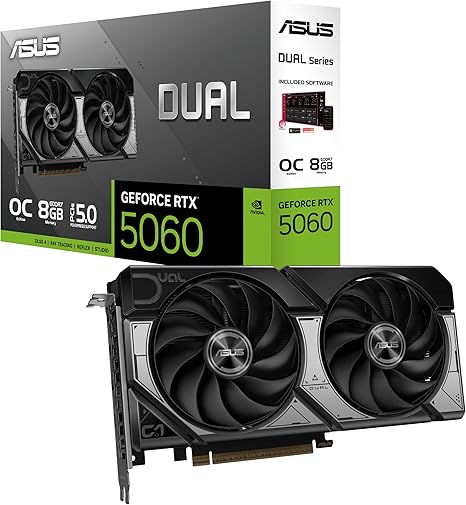 | ASUS Dual NVIDIA GeForce RTX 5060 8GB GDDR7 OC Edition | Check Price |
1. ASUS SFF-Ready Prime NVIDIA GeForce RTX 5070 Graphics Card (PCIe
Experience powerful graphics performance with the ASUS SFF-Ready Prime NVIDIA GeForce RTX Designed for compact systems, it brings advanced technology to small form factor builds without compromising on capability. The latest NVIDIA Blackwell architecture boosts rendering speed and efficiency for demanding tasks.
Equipped with innovative cooling, it maintains steady temperatures even during heavy workloads. The graphics card is ideal for digital creators and gamers needing reliable performance in limited space setups. Its compatibility with modern display standards ensures stunning visuals.
ASUS delivers a graphics card built for small form factor PCs without sacrificing power. The
These fans use a smaller hub and longer blades that create higher downward air pressure, aiding heat dissipation.
The GPU features a phase-change thermal pad that enhances heat transfer and keeps temperatures low. With 12 GB of GDDR7 memory clocked at 4000 MHz, it handles large projects and complex scenes effectively.
Connectivity options include three DisplayPort 1b outputs and one HDMI
1b port, supporting up to 7680 x 4320 resolution. The card’s PCI-Express x16 interface ensures quick data transfer with your desktop. It’s a great choice for creative professionals using Blender, providing reliable power for 3D modeling and animation workflows.
Pros
- Compatible with small form factor builds without overheating
- Advanced cooling with axial-tech fans and thermal pad technology
- High-performance 12 GB GDDR7 memory for intensive rendering tasks
Cons
- Higher power consumption may require a strong power supply
The ASUS SFF-Ready Prime NVIDIA GeForce RTX 5070 balances size, power, and cooling effectively. Its small form factor design makes it suitable for those needing a powerful GPU in compact systems.
With excellent memory capacity and modern video outputs, it supports demanding graphical applications smoothly.
| Specification | Details |
|---|---|
| Graphics Coprocessor | NVIDIA GeForce RTX 5070 |
| Graphics Card RAM | 12 GB |
| GPU Clock Speed | 2542 MHz |
| Video Output Interface | HDCP support, 3x DisplayPort 2.1b, 1x HDMI 2.1b |
| Graphics RAM Type | GDDR7 |
| Compatible Devices | Desktop |
| Graphics Card Interface | PCI-Express x16 |
| Memory Clock Speed | 4000 MHz |
| Number of Fans | 3 |
| GPU Series | NVIDIA RTX 50 Series |
| Display Maximum Resolution | 7680 x 4320 pixels |
In my opinion, this graphics card provides an excellent blend of size and performance for users focused on Blender or other 3D applications. Its specialized cooling and modern features make it worthwhile for compact desktop builders. Compared to other GPUs in its class, it stands out for fitting powerful hardware into smaller cases without sacrificing efficiency.
2. ASUS TUF Gaming GeForce RTX™ 5080 16GB GDDR7 OC Edition
Experience superior graphics performance with the ASUS TUF Gaming GeForce RTX™ 5080 16GB GDDR7 OC Edition. Designed for demanding creative tasks, this GPU blends cutting-edge technology with durable construction to handle heavy workloads effortlessly.
Equipped with NVIDIA’s latest Blackwell architecture alongside DLSS 4, it delivers remarkable rendering speeds and visual clarity. Its robust design ensures stability and longevity, making it a reliable choice for professionals and gamers alike.
The ASUS TUF Gaming RTX 5080 combines power and durability in a compact 6-slot design.
A protective PCB coating shields the card from moisture and dust, minimizing the risk of system interruptions.
Cooling is managed by three Axial-tech fans and a large fin array, maximizing airflow to maintain low temperatures. The unique phase-change GPU thermal pad boosts thermal efficiency far beyond traditional thermal paste, extending hardware lifespan. Supporting native DisplayPort
1a and HDMI 1b interfaces, it handles ultra-high resolutions up to 7680×4320 pixels with ease.
Running at a memory clock speed of 2730 MHz, the 16 GB of GDDR7 video RAM enhances rendering speed in Blender and other 3D applications. This graphics card is well suited for creators seeking dependable performance for design, animation, or video editing tasks.
Pros
- Advanced Blackwell architecture boosts rendering efficiency
- Military-grade components ensure long-lasting durability
- Effective cooling system with three Axial-tech fans and phase-change thermal pad
Cons
- Higher power consumption compared to previous generation cards
The ASUS TUF Gaming GeForce RTX™ 5080 excels in performance and stability, making it a standout choice for content creators and serious gamers demanding consistent output. Its build quality and cooling innovations offer peace of mind during heavy workloads, justifying the investment for intensive Blender projects or graphic-intensive applications.
| Specification | Details |
|---|---|
| Graphics Coprocessor | NVIDIA GeForce RTX 5080 |
| Graphics Card RAM | 16 GB GDDR7 |
| GPU Clock Speed | 2730 MHz |
| Video Output Interface | Native DisplayPort 2.1a x3, Native HDMI 2.1b x2 |
| Graphics Card Interface | PCI-Express x16 |
| Memory Clock Speed | 2730 MHz |
| Number of Fans | 3 |
| GPU Series | NVIDIA RTX 50 Series |
| Display Maximum Resolution | 7680×4320 pixels |
| Compatible Devices | Desktop |
For users focused on Blender workflows or other graphically intensive tasks, this GPU provides an excellent blend of performance and reliability. It competes well with other high-end cards, offering innovative cooling and durability features that add value beyond raw specifications.
3. ASUS Dual NVIDIA GeForce RTX 5060 8GB GDDR7 OC Edition
Discover the power and efficiency of the ASUS Dual NVIDIA GeForce RTX 5060 8GB GDDR7 OC Edition. Designed to boost creative workflows, this GPU offers exceptional graphics performance for complex 3D modeling and rendering.
With cutting-edge architecture and cooling innovations, it stands out as a reliable choice for demanding desktop setups.
Perfect for creators using Blender, it features advanced technology that supports smooth and fast rendering tasks. Its robust memory and clock speeds ensure projects proceed without bottlenecks, enhancing productivity and visual quality.
ASUS brings a sleek, durable design with the Dual NVIDIA GeForce RTX 5060, featuring an axial-tech fan system for effective heat management. The smaller fan hub enables longer blades, increasing airflow and cooling efficiency during intense workloads.
A barrier ring further improves air pressure directed to components, ensuring stable performance.
The graphics card operates at a clock speed of 2535 MHz in default mode, with an overclocked boost reaching 2565 MHz. Equipped with 8 GB of next-gen GDDR7 RAM, it handles high-resolution textures and complex scenes with ease.
1b and HDMI 1b outputs allow seamless connection to 4K and 8K displays.
Its PCI-Express x16 interface ensures compatibility with most desktop systems, making installation straightforward. The NVIDIA RTX 50 Series GPU architecture delivers realistic ray-tracing effects and AI-enhanced workflows, boosting rendering accuracy and speed without sacrificing energy efficiency.
This card is a smart investment for professional and hobbyist 3D artists, video editors, and gamers seeking a solid balance between performance and longevity.
Pros
- Efficient axial-tech cooling design with optimized airflow
- High-speed 8 GB GDDR7 memory for large projects
- Supports up to 7680×4320 resolution with multiple high-bandwidth outputs
Cons
- Performance gains may vary depending on system configuration
This graphics card delivers consistent and smooth performance for creative applications and gaming alike. Its robust cooling, modern architecture, and ample high-speed memory provide a dependable platform for handling intensive rendering tasks. When compared to similar models, it offers a compelling mix of features and efficiency without excessive power draw or noise.
| Specification | Detail |
|---|---|
| Graphics Coprocessor | NVIDIA GeForce RTX 5060 |
| Graphics Card RAM | 8 GB GDDR7 |
| GPU Clock Speed | 2535 MHz (Default) / 2565 MHz (OC) |
| Video Output Interface | Native DisplayPort 2.1b x3, HDMI 2.1b |
| Compatible Devices | Desktop |
| Graphics Card Interface | PCI-Express x16 |
| Number of Fans | 2 (Axial-tech design) |
| GPU Series | NVIDIA RTX 50 Series |
| Max Display Resolution | 7680×4320 pixels |
From my experience, the ASUS Dual NVIDIA GeForce RTX 5060 offers an excellent blend of power and cooling for creative professionals. It handles demanding workloads reliably while keeping temperatures low, which is crucial during extended render sessions.
4. GIGABYTE GeForce RTX 5070 WINDFORCE OC SFF 12G Graphics Card,
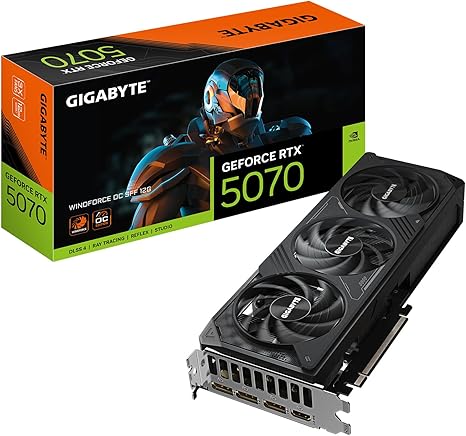
Experience powerful graphics rendering with the GIGABYTE GeForce RTX 5070 WINDFORCE OC SFF 12G Graphics Card. Engineered for high performance, it delivers exceptional visual quality for creative work and gaming alike.
The card features NVIDIA’s Blackwell architecture and DLSS 4 technology, enhancing image clarity and speed. Equipped with 12GB of GDDR7 memory and a PCIe 0 interface, it provides a robust environment for demanding applications like Blender.
0 interface, it provides a robust environment for demanding applications like Blender.
Built to handle complex 3D modeling and rendering tasks, the RTX 5070 offers a clock speed up to 2600 MHz, ensuring smooth performance. The triple-fan WINDFORCE cooling system keeps temperatures low, allowing for extended work sessions.
Thanks to its PCI-Express x16 interface, data transfer speeds are optimized for intensive workflows. The card’s video outputs include DisplayPort and HDMI, providing flexible connectivity options.
Overall, the GIGABYTE RTX 5070 is a well-rounded choice for 3D artists and designers seeking a capable GPU for Blender and similar software. It blends high-speed memory and advanced architecture to accelerate rendering, saving valuable time during creative projects.
Pros
- High-performance NVIDIA GeForce RTX 5070 with DLSS 4 support
- Generous 12GB GDDR7 memory for demanding rendering tasks
- Efficient WINDFORCE triple-fan cooling system for low temperatures
Cons
- Compact size limits additional cooling expansion options
The GIGABYTE GeForce RTX 5070 WINDFORCE OC SFF 12G delivers impressive graphics capabilities suitable for content creators and professionals. It merges powerful specifications with a small form factor design without sacrificing performance. This GPU stands as a compelling option for users needing efficient rendering and smooth multitasking.
| Specification | Details |
|---|---|
| Graphics Coprocessor | NVIDIA GeForce RTX 5070 |
| Graphics Card RAM | 12 GB |
| GPU Clock Speed | 2600 MHz |
| Video Output Interface | DisplayPort, HDMI |
| Graphics RAM Type | GDDR7 |
| Compatible Devices | Desktop |
| Graphics Card Interface | PCI-Express x16 |
| Memory Clock Speed | 2600 MHz |
| Number of Fans | 3 (WINDFORCE Cooling) |
| GPU Series | NVIDIA RTX 50 Series |
| Maximum Resolution | 7680×4320 pixels |
This graphics card uniquely combines advanced NVIDIA technology with effective thermal design. Users who require dependable GPU performance in a compact build will find it particularly beneficial.
5. GIGABYTE GeForce RTX 5060 WINDFORCE OC 8G Graphics Card, Cooling

Experience exceptional 3D rendering and real-time graphics with the GIGABYTE GeForce RTX 5060 WINDFORCE OC 8G Graphics Card. Designed around NVIDIA’s innovative Blackwell architecture, this GPU delivers powerful performance tailored for creative workflows and gaming.
Integrated with 8GB of cutting-edge GDDR7 memory and powered by PCIe 0 support, this graphics card offers striking speed and bandwidth. Ideal for users who demand smooth visualization and accelerated rendering in Blender and other professional software environments.
Precision and speed come together in the GeForce RTX 5060, featuring an impressive 2512 MHz GPU clock speed. Its 128-bit memory interface and an outstanding memory clock speed of 28000 MHz facilitate fast data handling and reduce latency during complex projects. The dual-fan WINDFORCE cooling system maintains low temperatures, promoting stable and reliable operation even under load.
The dual-fan WINDFORCE cooling system maintains low temperatures, promoting stable and reliable operation even under load.
This model supports up to 7680 x 4320 resolution output through multiple DisplayPorts and HDMI connections. The PCI-Express x16 interface ensures seamless communication with modern desktops. Its build is engineered for easy installation and compatibility with a variety of desktop hardware.
Offering a balanced combination of performance and cooling efficiency, the RTX 5060 suits professionals and hobbyists focusing on Blender modeling, rendering, and GPU-accelerated tasks. The NVIDIA RTX 50 Series architecture delivers real-time ray tracing and DLSS 4 support, helping to produce realistic images with faster render times.
The card’s advanced features and specifications place it ahead of many competitors in the mid-range GPU category.
Pros
- Powerful NVIDIA Blackwell architecture with DLSS 4 technology
- Efficient WINDFORCE cooling system with dual fans
- Supports up to 8K resolution for ultra-high definition output
Cons
- Limited availability of GDDR7 memory-compatible motherboards
The GIGABYTE GeForce RTX 5060 WINDFORCE OC 8G offers a highly capable graphics solution with excellent thermal management. This card meets the demands of 3D artists and gamers who value high frame rates and smooth real-time rendering. Its advanced features stand out in a crowded market, providing a solid choice for desktop users upgrading their graphics capabilities.
Its advanced features stand out in a crowded market, providing a solid choice for desktop users upgrading their graphics capabilities.
| Specification | |
|---|---|
| Graphics Coprocessor | NVIDIA GeForce RTX 5060 |
| Graphics Card RAM | 8 GB |
| GPU Clock Speed | 2512 MHz |
| Video Output Interface | DisplayPort, HDMI |
| Graphics RAM Type | GDDR7 |
| Compatible Devices | Desktop |
| Graphics Card Interface | PCI-Express x16 |
| Memory Clock Speed | 28000 MHz |
| Number of Fans | 2 |
| GPU Series | NVIDIA RTX 50 Series |
| Display Maximum Resolution | 7680 x 4320 pixels |
The smooth integration of high-end hardware components and efficient cooling makes this GPU a great match for creative professionals focused on Blender and similar tools. Users upgrading from older generations will notice marked improvements in rendering speed and image quality. While some systems might require careful compatibility checks due to GDDR7 memory, the overall performance gain justifies the setup effort.
While some systems might require careful compatibility checks due to GDDR7 memory, the overall performance gain justifies the setup effort.
6. ASUS Prime AMD Radeon RX 9070 XT 16GB GDDR6 OC

Experience stunning visuals and powerful computing with the ASUS Prime AMD Radeon RX 9070 XT 16GB GDDR6 OC. This graphics card marries advanced cooling technology with robust performance, designed to handle demanding tasks smoothly.
It is a solid choice for creative professionals and gamers seeking reliability and high frame rates.
Equipped with Axial-tech fans featuring a smaller hub and longer blades, it maximizes downward airflow to keep temperatures low during intense workloads. The phase-change thermal pad further enhances heat transfer, maintaining stability under heavy use.
5-slot design offers better compatibility without compromising airflow, making installation simple and effective in various PC builds.
The card’s triple-fan setup utilizes dual-ball bearings, which last twice as long as traditional sleeve bearings, reducing noise and improving longevity. A zero-decibel fan mode allows quiet operation during light tasks, perfect for both work and casual gaming. Powered by the AMD RX9070 coprocessor and 16 GB of GDDR6 RAM, it supports resolutions up to 7680 x 4320, ideal for high-resolution displays and rendering tasks.
Powered by the AMD RX9070 coprocessor and 16 GB of GDDR6 RAM, it supports resolutions up to 7680 x 4320, ideal for high-resolution displays and rendering tasks.
With a GPU clock speed and memory clock speed of 4000 MHz, it offers smooth and efficient processing for Blender modeling and rendering. Connectivity options include three DisplayPort
1b port, ensuring versatile monitors or VR headset support. The PCI-Express x16 interface guarantees high transfer speeds, making it a dependable choice for desktop users focused on creative work and gaming alike.
Pros
- Advanced cooling with Axial-tech fans and phase-change thermal pad
- Durable fan bearings offering extended lifespan
- High clock speeds with 16 GB GDDR6 memory for demanding workloads
Cons
- 2.5-slot design may limit compatibility in very compact cases
Overall, the ASUS Prime AMD Radeon RX 9070 XT offers a strong blend of thermal management and performance tailored for Blender users and gamers requiring excellent graphical output. Compared to similar GPUs, it balances power efficiency with quiet operation, making it suitable for sustained heavy use.
| Specification | Details |
|---|---|
| Graphics Coprocessor | AMD RX9070 |
| Graphics Card RAM | 16 GB GDDR6 |
| GPU Clock Speed | 4000 MHz |
| Memory Clock Speed | 4000 MHz |
| Video Output Interface | Native DisplayPort 2.1a x 3, Native HDMI 2.1b |
| Graphics Card Interface | PCI-Express x16 |
| Number of Fans | 3 |
| Display Maximum Resolution | 7680 x 4320 |
| Cooling Design | Axial-tech fans, Phase-change thermal pad, 2.5-slot |
This model stands out with its focus on quiet, efficient cooling and robust memory speed, making it excellent for detailed 3D rendering and creative workflows in Blender. Those looking for a dependable GPU that blends modern features with stable performance will find this card a worthwhile option.
7. ASUS Dual NVIDIA GeForce RTX 5060 Ti 16GB GDDR7 OC

Experience powerful graphics performance with the ASUS Dual NVIDIA GeForce RTX 5060 Ti 16GB GDDR7 OC. Designed for users seeking advanced rendering capabilities, this GPU delivers smooth visuals and rapid processing speeds.
Built on NVIDIA’s Blackwell architecture, the graphics card supports impressive AI acceleration and enhanced visual effects. This model is equipped with 16 GB of the latest GDDR7 memory, making intensive workflows and high-resolution projects more manageable.
A robust cooling system ensures consistent performance under heavy loads.
The ASUS Dual RTX 5060 Ti offers a compelling balance between raw power and thoughtful design. Its dual axial-tech fans feature smaller hubs and longer blades for improved airflow and lower noise.
A barrier ring boosts downward air pressure, optimizing the cooling efficiency during peak operation. Clock speeds reach up to 2632 MHz in overclock mode, which enhances rendering speed and responsiveness.
Connectivity options include three DisplayPort 1b and one HDMI
This makes it suitable for multi-monitor setups and 8K displays. The PCI-Express x16 interface ensures wide compatibility with modern desktop motherboards, facilitating easy integration.
Its strong build quality and reliable thermal performance provide a stable platform during extended use. The card’s compatibility with a variety of creative applications, including Blender, makes it a solid choice for content creators and 3D artists.
Pros
- Advanced cooling design keeps temperatures low and noise minimal.
- Large 16 GB GDDR7 memory supports high-resolution projects and multitasking.
- Multiple DisplayPort and HDMI connections for versatile display setups.
Cons
- Requires sufficient case space due to dual-fan, 2.5-slot size design.
Offering powerful clock speeds and innovative cooling, the ASUS Dual GeForce RTX 5060 Ti provides a reliable upgrade for creative professionals and gamers seeking enhanced visuals. Its high memory capacity and display capabilities make it a competitive option in its category.
| Specification | Details |
|---|---|
| Graphics Coprocessor | NVIDIA GeForce RTX 5060 Ti |
| Graphics Card RAM | 16 GB GDDR7 |
| GPU Clock Speed | 2632 MHz (OC Mode), 2602 MHz (Default Mode) |
| Video Output Interface | 3 x DisplayPort 2.1b, 1 x HDMI 2.1b |
| Graphics Card Interface | PCI-Express x16 |
| Memory Clock Speed | 2602 MHz |
| Number of Fans | 2 (Axial-Tech Design) |
| GPU Series | NVIDIA RTX 50 Series |
| Maximum Display Resolution | 7680 x 4320 Pixels |
Compared to previous-generation GPUs, this model stands out with faster memory and improved efficiency. It matches the demands of advanced 3D rendering, video editing, and gaming scenarios well.
The ASUS Dual RTX 5060 Ti is recommended for users wanting a dependable and future-ready graphics card.
8. GIGABYTE Radeon™ RX 9060 XT Gaming OC ICE 16G Graphics

Experience powerful graphics performance with the GIGABYTE Radeon™ RX 9060 XT Gaming OC ICE 16G. Designed to meet demanding workloads, this GPU offers a seamless blend of advanced technology and reliable design.
With up to 16GB of high-speed GDDR6 memory and the latest PCI Express Gen 5 support, this graphics card enhances your system’s capabilities. Ideal for users seeking strong visual processing, it delivers smooth rendering and crisp visuals at 4K resolution.
Offering a robust blend of performance and durability, the Radeon RX 9060 XT supports AMD Smart Access Memory technology. It pairs superbly with AMD Ryzen 9000 Series processors, optimizing the AM5 platform’s potential. This card introduces a Radiance Display Engine compatible with DisplayPort
This card introduces a Radiance Display Engine compatible with DisplayPort 1a and HDMI 1b, making it ready for the latest high-refresh monitors.
The WINDFORCE cooling system is a key highlight, featuring server-grade thermal materials and Hawk fans with alternate spinning. These components work together to maintain a stable temperature even during intensive use. The reinforced metal backplate adds structural strength, protecting the hardware against stress.
RGB lighting with 7 million customizable colors allows personal aesthetic control, which can be synchronized with other GIGABYTE devices through the included control software. Users can toggle between Performance and Silent BIOS modes, choosing between maximum power and quiet operation based on needs.
Pros
- Up to 16GB GDDR6 memory for smooth multitasking and rendering
- Advanced cooling system ensures consistent thermal performance
- Customizable RGB lighting enhances visual setup coordination
Cons
- May require a high-power PSU for optimal performance
GIGABYTE’s Radeon RX 9060 XT Gaming OC ICE 16G strikes an excellent balance between strong graphical performance and reliability. It serves creative professionals and serious gamers requiring detailed rendering and smooth visuals. When compared to other graphics cards in its range, it stands out with upgraded connectivity options and durable build quality.
| Specification | Details |
|---|---|
| Graphics Coprocessor | RX 9060 XT |
| Graphics Card RAM | 16 GB |
| GPU Clock Speed | 2780 MHz |
| Video Output Interface | DisplayPort, HDMI |
| Graphics RAM Type | GDDR6 |
| Compatible Devices | Desktop |
| Graphics Card Interface | PCI-Express x16 |
| Memory Clock Speed | 20000 MHz |
| Number of Fans | 3 |
| Display Maximum Resolution | 3840 x 2160 |
| Minimum Required Operating System Version | Windows 11 |
For users seeking a capable and reliable GPU capable of handling both creative applications and high-end gaming, this model delivers well-rounded performance. Its cooling system and structural integrity are particularly commendable, supporting long sessions without overheating.
9. PNY NVIDIA GeForce RTX™ 5080 Epic-X™ ARGB OC Triple Fan,

Experience remarkable graphics performance with the PNY NVIDIA GeForce RTX™ 5080 Epic-X™ ARGB OC Triple Fan. Designed for demanding applications, it delivers exceptional speed and visuals perfect for creative professionals and gamers alike. Featuring advanced technologies, it raises the bar in both performance and efficiency.
Built with a triple fan cooling system and cutting-edge GDDR7 memory, this GPU ensures smooth operation even under high workloads. The ARGB lighting adds a customizable aesthetic to any desktop setup, combining style with robust functionality.
Its PCI-Express x16 interface guarantees fast data transfer and compatibility with a wide range of systems.
The RTX 5080 Epic-X™ is designed to excel in rendering, video editing, and 3D modeling. It integrates NVIDIA DLSS 4 technology, enhancing performance by boosting frame rates while improving image quality.
With fifth-generation Tensor Cores, AI-based rendering accelerates workflows, making complex tasks more manageable.
Reflex 2 technology optimizes responsiveness, reducing latency for faster reaction times during competitive gaming. The graphics coprocessor operates at a clock speed of 2775 MHz, backed by 16 GB of GDDR7 video memory to handle large-scale projects and high-resolution content easily. Its support for up to 7680 x 4320 resolution ensures stunning visual fidelity on ultra-wide monitors.
Its support for up to 7680 x 4320 resolution ensures stunning visual fidelity on ultra-wide monitors.
Installation is user-friendly, with plug-and-play capabilities for desktop systems equipped with PCI-Express x16 slots. The triple fan design maintains optimal temperatures, promoting stable performance during intensive sessions.
Creative professionals and gamers seeking enhanced visual quality and smooth multitasking will find this GPU meets their needs efficiently.
Pros
- Advanced NVIDIA DLSS 4 technology for improved FPS and image quality
- Efficient triple fan cooling ensures consistent performance
- Supports ultra-high resolutions up to 7680 x 4320 for crisp visuals
Cons
- Large size might require ample space in compact cases
The PNY NVIDIA GeForce RTX™ 5080 Epic-X™ combines powerful performance with innovative features designed to enhance creative and gaming experiences. Its build quality and cooling system stand out among similar GPUs, providing a reliable option for demanding tasks.
This graphics card delivers exceptional value for those looking to elevate their setup.
Specification Details Graphics Coprocessor NVIDIA GeForce RTX 5080 Graphics Card RAM 16 GB GDDR7 GPU Clock Speed 2775 MHz Memory Clock Speed 2295 MHz Video Output Interface DisplayPort, HDMI Graphics Card Interface PCI-Express x16 Number of Fans 3 (Triple Fan Cooling) GPU Series NVIDIA RTX 50 Series Maximum Display Resolution 7680 x 4320
For users who depend on powerful visual processing, the RTX 5080 Epic-X™ delivers consistent speed and high-quality output. Its advanced AI-driven features come in handy for creative projects, while the cooling design keeps performance stable.
This model is a solid choice for professionals and gamers seeking upgraded hardware.
10. XFX Swift AMD Radeon RX 9060 XT OC Gaming Edition

The XFX Swift AMD Radeon RX 9060 XT OC Gaming Edition stands out as a powerful graphics card designed for high-performance gaming and creative workflows. Its advanced cooling system and impressive clock speeds make it suitable for demanding tasks without overheating. With 16 GB of fast GDDR6 memory, it supports detailed visuals and complex projects smoothly.
Whether you are rendering 3D models or enjoying graphically intense games, this GPU promises a reliable and fluid experience. The dual fan cooling solution helps maintain optimal temperature allowing continuous high-speed performance.
Crafted for desktop systems, it integrates well with modern setups and offers versatile video output options including DisplayPort and HDMI.
The RX 9060 XT OC variant from XFX is tailored for users needing robust graphical power. It features a boost clock reaching 3320 MHz, which elevates frame rates and minimizes rendering times significantly.
Built with PCI-Express x16 compatibility, it fits seamlessly into most current desktop motherboards.
The dual fan cooling technology efficiently dissipates heat, enabling longer intensive sessions without throttling. This model supports 4K resolution output up to 3840×2160, making it perfect for both gaming and creative applications like Blender. Users will appreciate the balance between quiet operation and keeping temperatures low.
It blends high performance with practical usability, suitable for advanced users and content creators aiming to elevate their productivity.
Pros
- High boost clock speed up to 3320 MHz for smooth performance
- 16 GB GDDR6 memory supporting complex visual workloads
- Efficient dual fan design for enhanced cooling and quiet operation
Cons
- Relatively high memory clock speed may increase power consumption
The XFX Swift AMD Radeon RX 9060 XT OC Gaming Edition combines strong performance with effective cooling, making it a solid choice for serious gamers and 3D artists alike. Its technical specifications support high-resolution outputs and demanding applications without compromise.
| Specification | Details |
|---|---|
| Graphics Coprocessor | RX 9060 XT |
| Graphics Card RAM | 16 GB |
| GPU Clock Speed | 1900 MHz |
| Boost Clock Speed | Up to 3320 MHz |
| Memory Clock Speed | 20 GHz |
| Graphics RAM Type | GDDR6 |
| Video Output Interface | DisplayPort, HDMI |
| Number of Fans | 2 (Dual Fan Cooling Solution) |
| Display Maximum Resolution | 3840×2160 |
| Compatible Devices | Desktop |
| Graphics Card Interface | PCI-Express x16 |
In my experience, this graphics card delivers dependable and consistent results across various applications. It balances speed and thermal management effectively, making it a versatile component in both gaming and creative setups. Its smooth integration with software like Blender provides an advantage for users needing efficient rendering and high frame rates.
Best GPU for Blender: Top Picks & Buying Guide 2024
Power and cooling requirements
Choosing the right graphics card for Blender involves paying close attention to power supply unit compatibility since GPUs can vary greatly in their wattage demands. Ensuring your PSU can provide sufficient and stable power without strain helps maintain overall system reliability during intense 3D modeling and rendering sessions.
Thermal design and cooling solutions found in a GPU greatly affect performance and longevity; some models feature advanced cooling systems with multiple fans or vapor chambers to dissipate heat effectively, preventing thermal throttling that can slow down rendering tasks. Noise levels during rendering tasks are another practical consideration because quieter operation makes long work hours more comfortable, especially in home studios or shared spaces where excessive fan noise might become distracting. Selecting a GPU that balances performance with efficient power use and effective cooling ultimately contributes to a smoother Blender experience with less worry about overheating or power limitations.
Understanding gpu requirements for blender
Choosing the right graphics processing unit for Blender involves understanding the differences between GPU rendering and CPU rendering, where GPUs handle parallel tasks more efficiently, speeding up processes like rendering complex 3D scenes. Compatibility with technologies such as CUDA and OpenCL plays a significant role, as CUDA is designed for NVIDIA cards, allowing Blender to perform accelerated calculations, while OpenCL supports a wider range of hardware including AMD GPUs.
When selecting a GPU, users should consider their specific use cases, such as the complexity of their projects and whether real-time viewport rendering or final frame production is the priority, since this affects the choice between cards optimized for raw compute power or those with better support for advanced rendering engines. Budget limitations and future-proofing are also important, as investing in a well-supported GPU with ample VRAM can handle larger scenes and textures, enabling smoother workflows and less frequent upgrades.
Budget and value for money
When selecting a graphics processor for Blender, finding a balance between performance and cost is key. Paying attention to the price to performance ratio helps identify options that deliver strong rendering capabilities without overspending.
This approach allows for acquiring hardware that handles complex 3D modeling tasks efficiently while staying within a reasonable budget. Considering the long term investment aspect, choosing a GPU with ample VRAM and support for newer technologies can extend the device’s useful life, making it a wise choice that remains viable as software demands evolve. Market availability and current pricing trends often fluctuate due to external factors like supply shortages or new product releases, so monitoring these patterns can lead to better deals and avoid paying inflated prices.
Ultimately, prioritizing a graphics card that offers consistent performance gains and durability offers value far beyond the initial expenditure, making it more rewarding both for immediate creative projects and future Blender updates.
Performance metrics to evaluate
When selecting the best gpu for blender, several features play a significant role in determining how well it performs for 3D modeling and rendering tasks. The amount of VRAM capacity directly affects how complex scenes can be handled, as larger memory allows for smoother manipulation of detailed textures and high-polygon models without slowing down the workflow. The number of CUDA or Stream processors is another critical factor because these cores execute the parallel computations necessary to accelerate rendering speeds, which is particularly beneficial when working on animations or heavy simulations.
Additionally, clock speed and memory bandwidth influence how fast data moves within the GPU, impacting the responsiveness and efficiency during real-time viewport interactions and final rendering processes. When choosing a gpu, consider the typical size and detail level of your projects; a balance between ample VRAM, a high core count, and fast memory can provide a more seamless experience.
Matching the gpu’s capabilities with specific use cases, such as sculpting, texturing, or rendering large scenes, will help achieve smoother operation and reduce wait times, making the creative process more enjoyable for those just getting started with Blender.
Compatibility and software support
Choosing the best gpu for blender involves considering several key features to match your workflow and project needs. A strong graphics processor accelerates rendering times and improves viewport responsiveness, making a model or scene easier to work with.
When buying, pay attention to the VRAM capacity since Blender’s complex scenes and high-resolution textures demand ample memory. Additionally, higher CUDA or OpenCL core counts can boost performance in GPU-accelerated rendering engines.
Energy consumption and cooling solutions also affect long-term reliability and comfort during extended sessions. Keeping device drivers updated supports compatibility with the latest Blender updates and helps maintain stability. Many users run Blender on Windows, macOS, or Linux systems, so checking how well the GPU performs on your operating system can prevent potential headaches.
Many users run Blender on Windows, macOS, or Linux systems, so checking how well the GPU performs on your operating system can prevent potential headaches. Making sure the GPU fits physically inside your PC case and matches the power supply unit’s capacity rounds out the practical considerations. This blend of technical specifications, real-world use, and system compatibility makes it easier to find a graphics card that accelerates creativity and enhances productivity in Blender projects.
Additional features and connectivity
Choosing a graphics card suitable for Blender involves paying attention to the number and types of display outputs since they determine how many monitors and what kinds of connections you can use simultaneously. Some GPUs provide multiple HDMI and DisplayPort outputs, allowing flexibility in setting up a multi-monitor workstation.
Support for multiGPU configurations can be highly beneficial when working on complex 3D projects that require extra rendering power. This feature allows users to link two or more compatible GPUs to boost performance, reducing rendering times significantly. Modern GPUs also often come with ray tracing capabilities that enhance the realism of lighting and shadows in your 3D scenes, which is particularly valuable when previewing or finalizing renders.
AI supersampling, a technology that uses artificial intelligence to upscale images efficiently, can improve viewport performance and visual clarity without heavily taxing the hardware. Paying attention to these aspects will help in selecting a GPU that not only meets Blender’s demands but also offers flexibility and future-proofing through connectivity and advanced rendering technologies.
Frquently Asked Questions
How Does Gpu Performance Impact Rendering Speed In Blender?
GPU performance significantly impacts rendering speed in Blender by accelerating the processing of complex calculations involved in image rendering. A powerful GPU can handle more parallel tasks simultaneously, reducing the time needed to generate high-quality images and animations. Blender’s Cycles renderer, for example, leverages GPU cores to efficiently manage ray tracing, light calculations, and shading, leading to faster render times compared to CPU-only rendering. Therefore, upgrading to a high-performance GPU can greatly enhance workflow efficiency and productivity in Blender projects.
Is Nvidia Or Amd Better For Blender’S Cycles Rendering Engine?
NVIDIA is generally considered better for Blender’s Cycles rendering engine due to its superior CUDA and OptiX support, which Blender leverages for faster GPU rendering. NVIDIA GPUs often deliver higher performance and better driver stability, especially with RTX cards featuring dedicated ray-tracing cores. While AMD has improved with its ROCm support and OpenCL compatibility, it still lags in efficiency and speed compared to NVIDIA for Cycles rendering. Thus, for most Blender users seeking optimal Cycles performance, NVIDIA GPUs are the preferred choice.
What Is The Best Budget-Friendly Gpu For Blender Beginners?
For Blender beginners seeking a budget-friendly GPU, the NVIDIA GeForce GTX 1650 is an excellent choice. It offers good performance for 3D modeling and rendering without breaking the bank. With 4GB of VRAM, it handles most beginner-level Blender projects smoothly, supporting CUDA acceleration for faster rendering. Additionally, its energy efficiency and compatibility with Blender make it ideal for those starting out. While not the most powerful, the GTX 1650 provides a great balance between cost and performance for entry-level users.
What Are The Top Gpus Recommended For Blender In 202
The top GPUs recommended for Blender in 2024 include NVIDIA’s RTX 4090, RTX 4080, and RTX 4070 Ti, known for their exceptional CUDA core counts and AI-accelerated rendering via OptiX. AMD’s Radeon RX 7900 XTX and RX 7900 XT also offer strong performance with competitive pricing and robust OpenCL support. For budget-conscious users, the NVIDIA RTX 3060 Ti and AMD RX 6750 XT provide solid performance for smaller projects. Overall, NVIDIA GPUs are preferred for Cycles rendering due to better driver support, while AMD cards excel in viewport performance.
How Much Vram Is Necessary For Optimal Performance In Blender?
For optimal performance in Blender, the amount of VRAM needed depends on the complexity of your projects. Generally, 4GB of VRAM is the minimum for basic modeling and rendering tasks. However, for more detailed scenes, high-resolution textures, and complex simulations, 8GB or more is recommended. Professionals working with advanced features like heavy sculpting, large textures, or GPU rendering (e.g., using Cycles) often benefit from 12GB to 24GB of VRAM. Ultimately, more VRAM enables smoother handling of larger assets and faster rendering times.
Conclusion
Choosing the best GPU for Blender depends heavily on your specific needs and budget. High-performance GPUs accelerate rendering times and handle complex scenes with ease, making them well-suited for professionals working on detailed 3D modeling and animations. However, these powerful cards can come with a higher price and increased power consumption, which may not be necessary for casual users or beginners.
Balancing performance and cost is key, as mid-range GPUs often provide sufficient capability for most Blender projects without the premium expense. Ultimately, the best GPU for Blender offers a combination of rendering speed, memory capacity, and compatibility with Blender’s rendering engines.
Careful consideration of these factors will help you make an informed choice that matches both your workflow and financial requirements.