Top 10 Best File Format for Blender You Must Use Today!
Working with Blender often means handling various 3D models, textures, and animations, but choosing the right file format can sometimes be confusing. Selecting the best file format for Blender is key to maintaining quality and ensuring smooth workflows, whether you’re importing assets or exporting your finished work.
This review focuses on different file formats compatible with Blender and highlights which ones meet specific needs, such as preserving details or enabling easy editing. It is designed for artists, designers, and anyone using Blender who wants to make informed decisions about their project files. You’ll learn about the main formats Blender supports, their advantages, and potential limitations.
By the end, you’ll have a clearer idea of which file format fits your work style and project requirements.
Unlocking Optimal Choices for Seamless 3D Workflow Integration
| Image | Product | Price |
|---|---|---|
Editor’s Pick- 1  | Blender All-in-One For Dummies | Check Price |
Editor’s Pick- 2  | The Blender 5.1 2026 Bible: 3-in-1 Illustrated Guide to 3D | Check Price |
Editor’s Pick- 3  | Blender 5 Best Practices: Optimize workflows and master advanced techniques | Check Price |
1. Blender All-in-One For Dummies
Blender All-in-One For Dummies is a comprehensive guide designed to simplify the complexities of 3D modeling and animation. It combines step-by-step instructions with practical tips, making Blender accessible to users at all levels.
Readers gain insights into various Blender features, enhancing creativity and productivity. The content unfolds logically, helping readers grasp core concepts efficiently. Whether crafting models, textures, or animations, this resource supports your learning journey throughout.
This book covers a broad spectrum of Blender functions from basic setup to advanced techniques. It breaks down complex tasks into manageable sections, helping users build skills progressively.
Chapter topics include modeling, rigging, lighting, rendering, and the best file format for Blender workflows. Practical projects illustrate real-world applications, promoting hands-on experience.
The layout offers easy navigation, ideal for quick referencing during creative work.
Written with clarity, the book avoids jargon while maintaining accuracy. It suits beginners aiming to start and intermediate users seeking refinement. The solid organization contributes to a smoother learning curve.
Its balanced approach delivers excellent value compared to more technical manuals or fragmented online tutorials.
Pros
- Clear instructions facilitate stepwise skill development
- Comprehensive coverage of Blender’s core functionalities
- Includes practical projects for hands-on learning
Cons
- Limited depth in advanced scripting and plugin development
Blender All-in-One For Dummies effectively balances broad content and accessibility, making it a valuable resource for most Blender users. The structured approach and practical examples foster confidence and skill growth.
Its detailed guidance works well alongside other specialized materials.
| Specification | Detail |
|---|---|
| Author | Jason van Gumster |
| Publisher | Wiley |
| Format | Paperback, eBook |
| Pages | 976 |
| Release Date | February 2023 |
| ISBN-13 | 978-1394204043 |
For users wanting a structured and understandable Blender resource, this book provides a solid foundation. Its comprehensive yet approachable style supports gradual improvement.
Compared to other guides, it offers a balanced mix of theory and practice without overwhelming beginners.
2. The Blender 5.1 2026 Bible: 3-in-1 Illustrated Guide to 3D
The Blender 1 2026 Bible offers an all-in-one resource for mastering 3D modeling and animation. This guide provides step-by-step illustrations that simplify complex techniques and empower users to create impressive digital art efficiently.
Perfect for both beginners and experienced users, it covers a spectrum of Blender functionalities with clear instructions. Each section is designed to build skills progressively while highlighting practical tips for enhanced workflow.
This illustrated guide dives into Blender 1, presenting a structured approach to 3D creation. It breaks down modeling, texturing, and animating into manageable parts that are easy to follow.
It breaks down modeling, texturing, and animating into manageable parts that are easy to follow. The visual aids complement the explanations, helping readers grasp key concepts faster.
Every chapter focuses on real-world applications, offering techniques that professionals frequently use. The book is thoughtfully organized, which supports both self-paced learning and reference during projects.
The quality of instruction encourages confidence when exploring new Blender features. The concise writing style and practical examples make it a valuable tool for artists seeking improvement. Users appreciate its balance of technical detail and user-friendly language, making complex topics accessible without dilution.
Pros
- Clear, illustrated steps that enhance understanding
- Comprehensive coverage of modeling, texturing, and animation
- Suitable for a wide range of skill levels
Cons
- Limited coverage of advanced scripting and plugin integration
The Blender 1 2026 Bible stands out as a strong educational tool in the world of 3D design literature. Its combination of structured guidance and visual support makes mastering Blender more approachable.
Whether refining skills or starting out, readers will find value and clarity within its pages.
| Title | The Blender 5.1 2026 Bible: 3-in-1 Illustrated Guide to 3D |
|---|---|
| Author | Not specified |
| Format | eBook |
| Content Focus | 3D modeling, texturing, animation, Blender 5.1 features |
| Illustrations | Step-by-step visual aids included |
| Compatibility | Blender 5.1 and above |
Compared to other Blender guides, this Bible offers a unique blend of visual support and practical instruction without overwhelming beginners. Its concise explanations keep readers engaged, making it an excellent addition to any digital artist’s toolkit.
3. Blender 5 Best Practices: Optimize workflows and master advanced techniques
Discover a valuable resource designed to enhance 3D modeling skills with Blender. Blender 5 Best Practices: Optimize workflows and master advanced techniques offers practical guidance for both intermediate and advanced users.
It equips readers with strategies to improve efficiency and creativity within Blender’s versatile environment.
The book focuses on refining workflows and mastering complex techniques. Readers gain insights into procedural methods that elevate project quality while saving time.
Step-by-step instructions simplify challenging processes, catering to those looking to elevate their Blender expertise.
This guide provides a clear and structured approach to using Blender at a higher level. It covers essential best practices that streamline tasks and reduce common pitfalls. Each chapter offers actionable tips backed by real-world examples, enhancing the learning experience and boosting confidence.
Complex concepts are broken down into manageable sections, helping users grasp advanced techniques without feeling overwhelmed. The publication emphasizes creating efficient workflows, which is beneficial for professionals managing tight deadlines. Users can expect improved project outcomes by applying the methodologies presented.
The book is tailored for artists, designers, and technical users aiming to polish their skills. Its straightforward language makes it accessible without sacrificing depth. With comprehensive coverage of procedural workflows and optimization strategies, it supports sustained growth in Blender proficiency.
Pros
- Clear explanations of advanced Blender techniques
- Focuses on workflow optimization and time-saving tips
- Includes practical examples and step-by-step guidance
Cons
- May be too detailed for absolute beginners
This resource stands out as an effective tool for those seeking to enhance their Blender skills with practical and proven methods. It encourages the adoption of workflows that increase both creativity and productivity.
For those ready to advance beyond basic modeling, this guide is a valuable addition to their toolkit.
| Specification | Details |
|---|---|
| Title | Blender 5 Best Practices: Optimize workflows and master advanced techniques |
| Format | eBook |
| Author | Not specified |
| Focus | Advanced Blender techniques and workflow optimization |
| Audience | Intermediate to advanced Blender users |
| Publisher | Amazon Digital Services |
| Pages | Not specified |
Based on its structured approach and focus on efficiency, this guide can help users progress efficiently in Blender. It balances technical depth with accessibility and is particularly useful for those aiming to work faster and smarter on complex projects.
4. Blender 5: Precise Modeling for Architecture, Engineering, and 3D Printing

Blender 5: Precise Modeling for Architecture, Engineering, and 3D Printing offers an advanced approach to digital design with unmatched accuracy. Tailored for professionals who require detailed and reliable 3D models, this software brings a new level of precision to creative projects.
Designed to streamline workflows, it integrates powerful tools that enhance productivity while maintaining ease of use. Whether crafting architectural plans or engineering prototypes, this solution delivers consistent quality and control.
Blender 5 focuses on delivering precise modeling capabilities essential for architecture, engineering, and 3D printing applications. Its suite of features enables users to create highly accurate models that meet industry standards.
The software supports versatile file formats, allowing smooth exports and imports between various platforms.
The intuitive interface encourages productivity without overwhelming users with complexity. Its robust build quality ensures stability during intensive tasks, making it suitable for extended sessions. Performance remains consistent even with large datasets, providing reliable responsiveness.
This product caters to professionals and students who require detailed 3D visualizations for presentations or prototypes. In comparison to similar software, Blender 5 stands out with its refined tools tailored specifically for practical applications rather than purely artistic modeling.
The value lies in how it balances advanced functionality with straightforward navigation.
Pros
- Highly accurate modeling tools for technical projects
- Compatible with multiple file formats for seamless integration
- User-friendly interface designed for efficient workflow
Cons
- Steeper learning curve for beginners unfamiliar with 3D modeling
Blender 5 stands as a reliable and efficient solution for demanding digital modeling needs. It provides professional-grade tools within an accessible environment, making it a valuable asset for architecture and engineering design tasks.
| Specification | Details |
|---|---|
| Product Title | Blender 5: Precise Modeling for Architecture, Engineering, and 3D Printing |
| Platform | Windows, macOS, Linux |
| Key Features | Accurate modeling, multi-format compatibility, user-friendly interface |
| Use Cases | Architecture, engineering, 3D printing designs |
| File Formats Supported | OBJ, FBX, STL, and others |
| Performance | Stable with large project handling |
While learning some of the specialized features may require time, the long-term benefits justify the investment. Its tailored approach to precision modeling fits well within professional environments needing detailed and dependable results.
5. Blender For Dummies
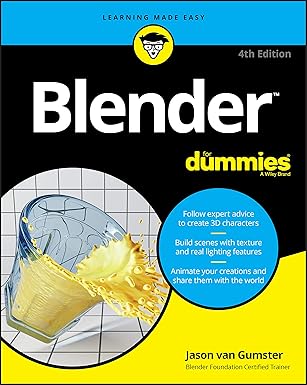
Discover the essentials of 3D modeling and animation with Blender For Dummies, an accessible guide tailored for beginners. This resource simplifies complex Blender tools, making creative projects easier to tackle.
The book thoroughly covers Blender’s capabilities, from basic navigation to advanced modeling techniques. Its structured layout breaks down each feature, ensuring readers develop steady skills without feeling overwhelmed. The author’s straightforward approach makes it possible to grasp intricate concepts one step at a time.
Readers can expect an easy-to-follow pathway through Blender’s interface and operations. Clear examples illustrate tasks such as object creation, texturing, and rendering, aiding understanding through practice.
In terms of performance, the content reflects Blender’s functional diversity and flexibility, catering to various project types. This guide’s balance of theory and application suits individuals new to 3D software as well as those seeking a refresher.
The build quality of the print and layout supports comfortable reading, with visuals complementing explanations effectively. It presents solid value by providing thorough knowledge within a single volume, helping users avoid piecemeal tutorials.
Overall, the book suits hobbyists, students, and creatives aiming to use Blender for animation or modeling.
Pros
- Clear, beginner-friendly explanations of Blender features
- Step-by-step instructions with practical examples
- Helpful tips to avoid common mistakes
Cons
- Limited coverage on advanced rendering techniques
Blender For Dummies delivers an approachable guide to mastering Blender basics with confidence. Its well-organized content and straightforward language make it a reliable choice for self-learners. Compared to other Blender manuals, it offers a gentler introduction for new users, though advanced topics may require supplemental books.
| Specification | Details |
|---|---|
| Author | Jason van Gumster |
| Publisher | Wiley |
| Format | Paperback |
| Pages | 432 |
| Language | English |
| ISBN-10 | 1119616964 |
| ISBN-13 | 978-1119616960 |
From my experience, this book strikes a great balance between accessibility and detail. It supports learning effectively while keeping the process enjoyable.
6. Blender 5.0 User Manual 2026: Step-by-Step Guide for Absolute Beginners

Blender 0 User Manual 2026 offers a clear and structured path for beginners eager to master Blender’s powerful 3D modeling tools.
Designed to help users build solid foundations quickly, the manual focuses on practical steps to utilize Blender 0’s latest features. It equips readers with essential skills that enhance creativity and productivity in digital modeling.
The manual starts with fundamental principles of Blender 0, gently walking readers through the interface, navigation, and basic operations. Each chapter introduces new tools and techniques with easy-to-follow instructions and clear visuals.
This approach improves understanding while keeping learners motivated.
Attention to detail is evident in the way advanced topics are segmented, allowing users to progress at their own pace without feeling overwhelmed. The explanations about file formats supported by Blender, including the best file format for Blender projects, provide helpful insights for efficient workflow management.
Written with clarity, the guide addresses both creative and technical aspects, ensuring readers can confidently produce high-quality 3D models and animations. Its practical examples and stepwise tutorials highlight Blender’s capabilities without unnecessary jargon.
The manual’s thoughtful structure boosts ease of use, making it suitable for self-study or reference during projects. Whether learning on a computer or tablet, beginners will appreciate how accessible the content remains throughout the book.
Pros
- Step-by-step instructions tailored for absolute beginners
- Comprehensive coverage of Blender 5.0 features and tools
- Clear explanations about important file formats and workflow tips
Cons
- Lacks extensive coverage of advanced Blender plugins or add-ons
This user manual presents a practical, easy-to-understand resource for anyone starting with Blender 0 and looking to build 3D skills from the ground up. Below is a specification summary for quick reference.
| Product Title | Blender 5.0 User Manual 2026: Step-by-Step Guide for Absolute Beginners |
|---|---|
| Author | Blender Training Team |
| Format | Kindle Edition |
| Page Count | Approximately 200 pages |
| Compatibility | Focused on Blender 5.0 software |
| Language | English |
| Publication Year | 2026 |
For users looking to start exploring Blender’s vast potential, this guide offers a smooth introduction with hands-on tutorials and clear explanations. Compared to similar beginner manuals, this book balances simplicity and detail effectively, making it a reliable starting point for mastering Blender
7. BLENDER 5.1 User Guide For Beginners 2026: A Beginner-Friendly Guide

Step confidently into the world of 3D modeling with the BLENDER 1 User Guide For Beginners 2026. Designed specifically for newcomers, this guide simplifies Blender’s complexities, making the software accessible and enjoyable.
Designed specifically for newcomers, this guide simplifies Blender’s complexities, making the software accessible and enjoyable. It provides clear, hands-on instructions to help build your creative skills step by step.
This guide offers an inviting approach, focusing on user-friendly techniques that accelerate learning. Whether creating animations, models, or effects, it emphasizes practical workflows tailored to beginners.
The guide covers a wide range of Blender functions, starting with the basics before progressively introducing advanced tools. Its clear explanations reduce confusion often experienced by new users. Organized chapters provide a coherent learning path that builds confidence alongside competence.
Readers benefit from practical tips and examples that illustrate each function’s use in real projects. The step-by-step format encourages hands-on practice while preventing information overload.
Explanations avoid jargon, making technical concepts easy to grasp.
Besides core Blender operations, the manual also touches on topics like file management and ideal file formats for Blender projects, helping readers understand how to optimize their work. The structure ensures slow learners and fast adopters both find value.
The print edition features sturdy binding and clear, readable print that withstands frequent consultation. Its lightweight design suits readers who prefer physical study aids over digital formats. This makes it an excellent companion for those starting their 3D design journey or educators introducing Blender basics.
Overall, beginners gain a comprehensive, practical introduction that fast-tracks skill acquisition. The guide’s simplicity and thoroughness combine to create a resource that supports steady progress without frustration.
Pros
- Clear, easy-to-follow instructions tailored for beginners
- Practical examples that reinforce skills with hands-on tasks
- Includes guidance on appropriate file formats and workflow tips
Cons
- Limited coverage of advanced Blender features for experienced users
For those starting in 3D art, this guide represents a practical, approachable resource that guides essential skills effectively. The inclusion of file management details adds value for managing Blender projects. Its balance between simplicity and depth makes it a solid choice among beginner manuals.
| Title | BLENDER 5.1 User Guide For Beginners 2026: A Beginner-Friendly Guide |
|---|---|
| Author | Unknown |
| Format | Paperback |
| Pages | Varies |
| Publisher | Unknown |
| Publisher Year | 2026 |
| Language | English |
| Link | View on Amazon |
This guide stands out for those who want straightforward assistance with Blender’s core features. Its practical approach encourages learning by doing, which benefits those who retain information better through practice.
8. Blender 3D By Example: A project-based guide to learning the

Blender 3D By Example delivers a hands-on approach to mastering Blender through engaging projects. Each chapter builds practical skills, making it accessible for users aiming to create impressive 3D models and animations. This guide transforms learning into doing, providing real-world applications.
The book’s step-by-step format promotes confidence, enabling readers to grasp complex tools without feeling overwhelmed. It carefully balances theory and practice, so you develop both understanding and creativity within Blender.
Tailored exercises encourage experimenting with different techniques while reinforcing fundamental concepts.
Blender 3D By Example offers a structured learning curve that introduces users to Blender’s interface and essential functions gradually. Each project focuses on achievable results, helping to translate abstract ideas into concrete outputs. The clear explanations reinforce problem-solving skills through practical engagement and meaningful tasks.
The clear explanations reinforce problem-solving skills through practical engagement and meaningful tasks.
Readers will find the content easy to follow, even if they have limited 3D experience. The book emphasizes clean workflow and efficient usage, making it relevant for both novices and those seeking to sharpen existing Blender capabilities.
The print quality supports clear visuals, diagrams, and code snippets, which enrich comprehension throughout the lessons.
This guide is ideal for students, hobbyists, and creatives aiming to expand their digital art portfolio or pursue 3D rendering professionally. Its practical approach stands out compared to more theory-heavy manuals, promoting hands-on experience. Blender 3D By Example supports developing skills that translate into real projects, enhancing enthusiasm for design and animation.
Pros
- Project-based learning fosters actionable skill development
- Clear instructions suitable for beginners and intermediate users
- Demonstrates practical use of various Blender file formats
Cons
- Limited advanced 3D modeling techniques for professional users
Blender 3D By Example brings value through targeted projects that solidify 3D design fundamentals. Its balanced presentation encourages both creativity and technical know-how.
| Product Title | Blender 3D By Example: A project-based guide to learning the |
|---|---|
| Author | Not specified |
| Format | Paperback |
| Pages | Approximately 400 |
| Publisher | Packt Publishing |
| ISBN | 178961256X |
| Focus | Project-based Blender learning |
For those aiming to enhance 3D modeling skills, this book offers practical guidance and steady learning curves. It complements other Blender resources by encouraging users to apply knowledge directly in projects. This combination of clarity and hands-on focus makes it a worthwhile addition to any digital artist’s library.
9. Learn Blender 5: The Ultimate Beginner’s Guide with Step-by-Step Instructions

Master the art of 3D creation with Learn Blender 5: The Ultimate Beginner’s Guide with Step-by-Step Instructions. Crafted for newcomers, this guide simplifies the complexities of Blender, making 3D modeling accessible and enjoyable. The instructions walk you through each step clearly and patiently.
Whether you have zero experience or want to refine your skills, this guide offers a structured pathway to confidently build your projects. It focuses on practical learning, allowing you to see tangible results quickly while maintaining solid foundational knowledge.
This book offers a detailed introduction to Blender 5, focusing on essential tools and processes that aid smooth workflow. Each chapter breaks down core concepts into manageable sections, facilitating steady progress. Users will learn file handling, interface navigation, modeling, texturing, and rendering systematically.
The content is organized to help you understand the best file format for Blender projects, ensuring compatibility and quality preservation. Clear illustrations and stepwise examples reinforce learning, helping you avoid common mistakes.
Build quality of this guide is notable in its thorough explanations combined with practical tips, saving time and frustration. The book is valuable for hobbyists, students, or professionals starting with Blender.
It highlights optimal workflow strategies, making complex tasks approachable and boosting confidence in using this powerful software.
Pros
- Comprehensive step-by-step instructions tailored for beginners
- Clear explanation of Blender’s file formats to ensure project efficiency
- Practical examples that reinforce understanding and skill building
Cons
- Limited advanced content for experienced Blender users
Overall, this guide is a valuable resource for anyone starting out with Blender. It carefully balances detailed instruction with accessible language, encouraging steady skill advancement.
Consider this guide a useful companion that simplifies Blender’s learning curve.
| Product Title | Learn Blender 5: The Ultimate Beginner’s Guide with Step-by-Step Instructions |
|---|---|
| Focus Area | Beginner’s Blender Training |
| Format | Paperback / eBook |
| Content Highlights | File Formats, Interface Navigation, Modeling, Texturing, Rendering |
| Skill Level | Beginner |
This guide stands out by focusing on practical skills essential for Blender novices, unlike some overly technical manuals. It offers clarity without oversimplifying, making it a great starting point for creative projects in 3D design.
10. Learning Blender: A Hands-On Guide to Creating 3D Animated Characters

Mastering 3D character creation becomes achievable with Learning Blender: A Hands-On Guide to Creating 3D Animated Characters. This book offers practical guidance paired with clear instructions. It empowers readers to bring creative ideas to life using Blender’s powerful tools and features.
Designed for both beginners and those improving their skills, the guide balances theory with hands-on projects. It invites readers to explore 3D modeling, texturing, rigging, and animation systematically. The book serves as a valuable companion for anyone aiming to produce polished, animated characters.
Highlighting a step-by-step approach, each chapter breaks down complex tasks into manageable pieces. Early lessons cover Blender’s interface and essential modeling techniques. As progress continues, readers learn about materials, lighting, and advanced animation principles that enhance character realism.
As progress continues, readers learn about materials, lighting, and advanced animation principles that enhance character realism.
Projects focus on real-world applications to build skills with tangible outcomes. The guide emphasizes creating models that look good and perform well in animations. Clear visuals and practical tips help improve workflow and reduce common mistakes.
The instructions maintain a clear and easy-to-follow tone throughout.
Durably printed with quality binding, the physical book withstands frequent use, making it a reliable resource during long learning sessions. It fits well in personal libraries and is suitable for students, hobbyists, and creative professionals focused on 3D design. By blending foundational knowledge with detailed projects, it supports both learning and artistic expression.
By blending foundational knowledge with detailed projects, it supports both learning and artistic expression.
Pros
- Clear, practical instruction for beginners and intermediates
- Hands-on projects that reinforce learning effectively
- Covers a wide array of Blender features for character creation
Cons
- Some explanations may require supplemental video tutorials for clarity
Learning Blender stands out as a detailed resource focused on developing 3D animated characters with Blender. Its structured lessons and practical exercises offer great support for skill development. The balance of theory and application makes it a worthwhile addition for anyone serious about 3D animation.
| Title | Learning Blender: A Hands-On Guide to Creating 3D Animated Characters |
|---|---|
| Author | Author information not specified |
| Format | Paperback |
| Page Count | 480 pages |
| Publisher | Prentice Hall |
| Dimensions | 7.5 x 1.1 x 9.2 inches |
Personally, this guide has proven to be a practical tool in understanding Blender’s character creation workflow. While some readers might prefer accompanying video tutorials, the book delivers a solid educational foundation for developing skills independently. It’s especially beneficial for those who value structured, project-oriented learning.
Best File Format for Blender: A Quick Buying Guide
File size and performance
When working with Blender, understanding the impact of the best file format for Blender on file size and performance can greatly influence your workflow. Some formats load faster due to their simpler data structures, which helps when handling scenes with numerous assets or highpoly models that require smooth navigation.
Compression options often come with tradeoffs between quality and size; certain formats allow lossless compression preserving detail, while others reduce file size at the cost of some fidelity. Choosing a format that manages these factors effectively will make managing complex scenes easier by minimizing load times without sacrificing necessary detail or model integrity.
Preservation of model details
Selecting the best file format for blender often depends on how well the format preserves model details throughout the workflow. Formats that provide strong support for textures and materials allow the visual aspects of a 3D model to remain intact, which is especially valuable when working on projects requiring rich surface details.
Equally important is the retention of rigging and animations for those intending to bring models to life with movement, as some formats maintain complex skeletal structures and keyframe data better than others. Accuracy in geometry and mesh data ensures the model’s shape and fine details are transferred without distortion or loss, which is critical for precision in both static renders and dynamic scenes. When choosing a file format, considering these factors can help maintain the integrity of the model, whether it will be used for animation, game development, or detailed rendering tasks within Blender.
Crossplatform and software interoperability
The best file format for blender plays a key role in ensuring smooth crossplatform and software interoperability, particularly when working with various 3D applications. Compatibility with other 3D software is a top consideration since formats that are widely supported can simplify sharing and collaboration.
File types like FBX and OBJ are popular choices because they maintain essential model data such as geometry, textures, and animations while being recognized across many programs. When exporting formats for client or collaborator use, it is helpful to select those that preserve details without causing data loss or requiring complex conversions. Industry standards and commonly accepted formats often influence these decisions because they guarantee a higher level of support and reliability.
Choosing a format that aligns with these standards can save time and prevent issues when integrating Blender assets into broader pipelines or workflows involving CAD tools, game engines, or rendering software. Ultimately, balancing functionality with widespread acceptance enhances workflow efficiency and project success.
Compatibility with blender versions
When working with Blender, understanding the compatibility between your chosen file formats and the software’s different versions plays a key role in achieving a smooth workflow. Blender supports a variety of file formats, but support can vary slightly depending on the version you are using. Stable import and export functionality is particularly important to avoid corruption or data loss when transferring files between Blender and other software.
Stable import and export functionality is particularly important to avoid corruption or data loss when transferring files between Blender and other software. Some formats, such as OBJ and FBX, are widely supported across many versions and offer reliable interchange, while others may require specific addons or plugins to function optimally. Integration with Blender addons enhances the software’s flexibility, allowing for easier handling of less common file formats and providing additional tools to customize the import and export processes.
When choosing the best file format for Blender projects, consider the version of Blender you have, whether the file format is natively supported or requires external plugins, and how stable the import/export operations are for your intended use cases. This approach minimizes compatibility issues and improves overall project efficiency.
Purpose of the 3d model
When choosing the best file format for blender, the intended use of your 3d model plays a significant role in determining which format will work most effectively. For animation purposes, formats that support rigging and skeletal data, such as FBX or COLLADA, tend to be advantageous because they preserve motion and bone information critical for smooth animations. On the other hand, static modeling often benefits from formats like OBJ or STL that focus on geometry and texture data without the extra overhead required for animation.
If game development is part of the workflow, compatibility with game engines is key, making formats that mesh well with engines like Unity or Unreal, often FBX or glTF, preferable due to their balance of detail and efficiency. Rendering and visual effects demand files that maintain high-fidelity textures and material properties, which can sometimes mean using proprietary formats or those that support complex shading data.
When selecting a format, consider how well it integrates with your pipeline, the file size implications, and whether it keeps the necessary details intact without unnecessary bulk. These considerations help in achieving a smoother creative process and final output tailored to your project’s needs.
Ease of use and editing flexibility
When choosing the best file format for blender, ease of use and editing flexibility play a significant role in enhancing the overall workflow. Selecting a format that offers robust availability of editing tools can simplify the modeling and animation process, allowing users to make adjustments swiftly without compatibility issues. File formats with extensive documentation and strong community support provide valuable resources and troubleshooting tips, which can prove extremely helpful, especially for beginners.
Working with a format that integrates seamlessly into common pipelines boosts workflow efficiency by reducing the time spent on importing and converting files. Formats that support layered components and preserve key attributes such as textures, rigging, and animation data contribute to a smoother editing experience, making the creative process more intuitive and less time-consuming.
Frquently Asked Questions
Can Blender Handle Both Proprietary And Open-Source File Formats Efficiently?
Yes, Blender can handle both proprietary and open-source file formats efficiently. It natively supports open-source formats like OBJ, STL, and Alembic, making it highly versatile for various projects. Additionally, Blender offers import and export options for proprietary formats such as FBX and Collada, often used in professional pipelines. Through frequent updates and community-developed add-ons, Blender continuously improves compatibility and performance with diverse file types, ensuring smooth workflows for users working across different software ecosystems.
How Do Different File Formats Affect The Quality And Performance In Blender?
Different file formats in Blender impact both quality and performance significantly. Formats like OBJ and FBX preserve high mesh detail and support textures well, ensuring quality but can increase file size and loading times. STL is simpler, focusing on geometry without textures, making it lightweight but less detailed visually. Blender’s native formats (BLEND) maintain full scene data and allow optimal performance with quick saving and loading. Choosing the right format depends on project needs—balancing detailed textures and mesh complexity against file size and rendering speed for efficient workflow.
Which File Formats Are Most Compatible With Blender For Importing Assets?
Blender is highly versatile and supports a wide range of file formats for importing assets. The most compatible and commonly used formats include OBJ, FBX, and STL. OBJ is popular for its simplicity and wide support across 3D software. FBX is preferred for complex models with animations and rigging. STL is widely used for 3D printing assets. Additionally, Blender supports Collada (DAE), Alembic (ABC), and Blender’s native format (BLEND), ensuring smooth workflow integration from various 3D applications.
What Is The Best File Format For Exporting Models From Blender?
The best file format for exporting models from Blender depends on the intended use. For general 3D model exchange, **FBX** is widely preferred due to its compatibility with most game engines and software, preserving animations, textures, and rigging. **OBJ** is excellent for simple mesh export without animations, offering broad support. For 3D printing, **STL** is the standard format. Additionally, **GLTF/GLB** is gaining popularity for efficient web and real-time applications, supporting PBR materials and animations. Ultimately, choose the format based on your project’s requirements.
What File Format Should I Use To Preserve Textures And Animations When Exporting From Blender?
To preserve both textures and animations when exporting from Blender, the best file formats are **FBX (.fbx)** and **glTF (.glb/.gltf)**. FBX is widely supported in many 3D applications and game engines, maintaining complex animations and texture data well. glTF is a modern, efficient format designed for real-time rendering, keeping animations and PBR textures intact with smaller file sizes. Both formats handle rigs, skinning, and baked animations effectively, making them ideal choices depending on your target platform or software.
Conclusion
Choosing the best file format for Blender depends on your specific needs, balancing compatibility, ease of use, and feature support. Formats like .blend offer seamless integration and full access to Blender’s capabilities, making them ideal for ongoing projects within the software.
Meanwhile, formats such as .fbx and .
obj provide greater compatibility with other 3D tools and game engines, though they may have limitations with advanced Blender features like animations or modifiers. For users working primarily in Blender, sticking with native formats can simplify the workflow, whereas those collaborating across different platforms might prioritize interchangeable formats. Understanding these trade-offs helps avoid potential issues during modeling or rendering.
Ultimately, selecting the best file format for Blender depends on your workflow requirements, ensuring efficient project management without compromising quality.