Top 10 Best 3D Model Format for Blender You Must Use!
Choosing the right 3D model format can be a challenge when working with Blender. Different formats offer varying levels of compatibility and detail, which can affect your workflow and final results.
Whether you create game assets, animations, or architectural visualizations, the format you use can impact everything from file size to texture support. This review will explore popular 3D model formats compatible with Blender.
It will cover their main features, advantages, and any limitations you should be aware of. By the end, you’ll have a clearer idea of which format fits your specific needs and project goals.
Top File Types That Unlock Blender’s Full Creative Potential
| Image | Product | Price |
|---|---|---|
Editor’s Pick- 1  | Blender 3D Incredible Models: A comprehensive guide to hard-surface modeling, | Check Price |
Editor’s Pick- 2  | The Blender 5.1 2026 Bible: 3-in-1 Illustrated Guide to 3D | Check Price |
Editor’s Pick- 3 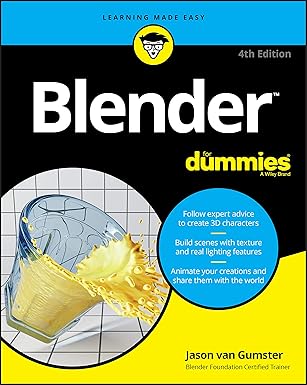 | Blender For Dummies | Check Price |
2. Blender 3D Incredible Models: A comprehensive guide to hard-surface modeling,
Blender 3D Incredible Models offers a thorough exploration of hard-surface modeling techniques tailored for Blender users. This guide is designed to elevate your modeling skills with detailed instructions and practical examples.
Whether you’re progressing from beginner to intermediate or wish to deepen your understanding of Blender’s capabilities, this guide lays out the essentials clearly. The structured approach aids in mastering complex surface details and realistic model construction. Each chapter focuses on enhancing both technique and creative execution, fostering improved results in less time.
Each chapter focuses on enhancing both technique and creative execution, fostering improved results in less time.
This eBook provides a careful balance between theory and hands-on practice. Readers gain insight into advanced workflows, useful shortcuts, and effective troubleshooting tactics. The explanations remain accessible, avoiding overwhelming jargon while maintaining depth.
Hard-surface modeling concepts are broken into manageable sections that build upon one another. High-quality visuals accompany each step, making learning intuitive.
The guidance covers various object types including mechanical parts, vehicles, and other intricate designs.
Its detailed content supports artistic flexibility and increased precision, enhancing overall model fidelity. The practical tips and clear presentation make it appropriate for hobbyists and professionals alike. This level of focused expertise contributes to faster project completion without sacrificing quality.
Pros
- Clear step-by-step instructions with visual aids
- Covers a wide range of hard-surface modeling topics
- Balances technical guidance with creative techniques
Cons
- Primarily focused on hard-surface, less on organic modeling
Blender 3D Incredible Models is an enriching resource that sharpens modeling skills through detailed and approachable content. Its well-organized structure helps pace learning effectively.
| Specification | Details |
|---|---|
| Title | Blender 3D Incredible Models: A comprehensive guide to hard-surface modeling |
| Format | eBook (Digital) |
| Content Focus | Hard-surface Modeling Techniques |
| Skill Level | Beginner to Intermediate |
| Compatibility | Blender Software |
| Delivery | Instant Download |
Compared to other Blender guides, this one narrows its focus on mechanical and hard-surface models, providing more depth in this niche. It’s ideal for users looking to improve specific skills rather than broad modeling concepts.
Overall, it is a streamlined and practical learning tool that can significantly improve your crafting of realistic 3D assets.
3. The Blender 5.1 2026 Bible: 3-in-1 Illustrated Guide to 3D
The Blender 1 2026 Bible offers an insightful and approachable guide to mastering 3D modeling. It combines detailed illustrations with clear instructions, making complex techniques accessible for users at various skill levels.
This guide serves as a valuable resource for anyone aiming to expand their understanding of Blender’s powerful tools and capabilities. It highlights practical approaches to creating stunning 3D designs step-by-step.
Covering a broad range of topics, this 3-in-1 guide presents an overview of Blender’s interface, essential modeling techniques, and rendering workflows. Each section is clearly illustrated to support a hands-on learning experience.
The content is detailed but organized to maintain focus and avoid overwhelming readers. It reviews different 3D file formats, helping users understand which is the best 3D model format for Blender to optimize compatibility and workflow efficiency.
Build quality in terms of content is thorough, designed to support progressive learning. The guide offers practical tips to improve modeling speed without sacrificing quality.
It suits beginners aspiring to master fundamentals and intermediate users seeking to sharpen their skills efficiently.
Pros
- Clear, illustrated step-by-step instructions suitable for various skill levels
- Comprehensive coverage of 3D modeling, animation, and rendering techniques
- Helpful guidance on choosing and using the best 3D model formats for Blender
Cons
- Primarily focused on Blender 5.1 and may require updates for future software versions
Overall, The Blender 1 2026 Bible stands out as a practical and instructive resource that supports users in expanding their 3D design capabilities effectively.
Whether new to Blender or enhancing current skills, this guide provides firm foundations and useful techniques.
| Specification | Details |
|---|---|
| Title | The Blender 5.1 2026 Bible: 3-in-1 Illustrated Guide to 3D |
| Format | eBook |
| Edition | 2026 |
| Focus | Blender 3D modeling, animation, and rendering |
| Content Type | Illustrated guide with step-by-step instructions |
| Suitable For | Beginners and intermediate Blender users |
Personally, I found this guide well-structured and approachable compared to other Blender books. Its clear visual instructions help smooth the learning curve. The focus on practical workflows and model formats offers added value for everyday Blender projects.
4. Blender For Dummies
Discover the essential guide that simplifies Blender’s powerful 3D modeling software. Blender For Dummies delivers approachable tutorials and clear instructions, helping users build confidence quickly.
Whether new to 3D design or seeking to enhance existing skills, this resource opens doors to creative possibilities.
Designed to be a friendly companion, it breaks down complex features into manageable lessons. The book accelerates the learning curve by focusing on accessible explanations and practical examples. Let your creativity flourish with hands-on guidance tailored for everyday users.
Blender For Dummies presents a thorough overview of Blender’s interface, tools, and core functions. The content walks readers through modeling basics, texturing, animation, and rendering techniques.
Each chapter builds progressively, making it suitable for individuals who are new or casually familiar with 3D design software.
The writing style is straightforward, avoiding jargon that might confuse beginners. High-quality illustrations and step-by-step instructions strengthen comprehension. The book encourages experimentation and offers troubleshooting tips, enhancing user experience.
Its solid structure supports learning by doing, with projects that integrate learned skills into practical outcomes. The material is designed to foster creativity, enabling users to create their own 3D scenes and models with confidence.
Pros
- Clear and accessible language simplifies complex Blender functions
- Step-by-step tutorials facilitate hands-on learning and quick skill building
- Comprehensive coverage of modeling, animation, and rendering basics
Cons
- May not cover advanced Blender features desired by professional artists
Ideal as a starter guide, Blender For Dummies effectively demystifies the software. Its beginner-focused approach encourages experimentation and steadily builds foundational skills.
For those exploring Blender formats or wondering about the best 3D model format for Blender, this book provides useful context within its practical lessons.
| Product Title | Blender For Dummies |
|---|---|
| Author | Jason van Gumster |
| Publisher | For Dummies |
| Format | Paperback |
| Pages | 384 |
| Release Date | January 2022 |
Compared to other Blender guides, this book balances ease of use with a broad scope. It doesn’t overwhelm with heavy technical detail, yet covers enough ground to empower everyday users.
5. Blender for 3D Printing and Product Design: A Beginner-Friendly, Step-by-Step

Discover the perfect guide for those starting with Blender in the fields of 3D printing and product design. This book offers a clear, approachable path to mastering modeling techniques and practical applications.
Its step-by-step layout allows readers to build skills with confidence and precision.
Whether you aim to create prototypes or detailed product visuals, the instructional content covers essential concepts. The methodical approach suits beginners looking to expand their creative toolkit effectively.
The book Blender for 3D Printing and Product Design presents a comprehensive overview of Blender software’s capabilities tailored for 3D production. It introduces readers to best practices in designing printable 3D models without overwhelming technical jargon. The instructions emphasize understanding formats and settings ideal for Blender projects.
Key features include guided walkthroughs for modeling, texturing, and preparing files for 3D printers. Attention to design principles improves the overall quality of printed outcomes.
Build quality in the content stands out through detailed illustrations and practical examples. Performance in conveying usable knowledge is high, making it easier to produce efficient models. The presentation maintains clarity that supports easy comprehension and real-world application.
The presentation maintains clarity that supports easy comprehension and real-world application.
Stringent focus on software navigation and file format selection addresses common challenges faced by new users. Suitable for hobbyists, designers, and beginners interested in 3D printing, it adds value by offering current insights and proven techniques.
Pros
- Step-by-step instructions crafted for beginner accessibility
- Covers essential Blender functions tailored for 3D printing
- Helps understand the best 3D model formats suitable for Blender
Cons
- May lack advanced material for more experienced Blender users
Overall, this guide provides a solid foundation for those venturing into Blender-based 3D printing and product design. It balances technical detail with simplicity, allowing gradual skill development.
Specification Details Title Blender for 3D Printing and Product Design: A Beginner-Friendly, Step-by-Step Format eBook (Kindle) Author Step-by-Step Tutorial Author Pages Approximate length varies by device Publisher Amazon Digital Services LLC Language English Available At Amazon
For beginners exploring 3D printing or product design, this ebook offers a thoughtful and practical resource. It balances foundational theory with actionable steps, making the learning curve manageable. Readers benefit from a guided approach that enhances confidence in digital modeling within Blender’s environment.
Readers benefit from a guided approach that enhances confidence in digital modeling within Blender’s environment.
6. 400+ Mixed STL Mega Bundle | 3d STL File Format

Explore an extensive collection of over 400 STL files designed to elevate your 3D modeling and CNC projects. This mega bundle provides a diverse mix of designs, ranging from intricate military themes to striking wall art, suited for various creative tasks.
Compatible with multiple machines like Plasma CNC Routers, Laser Cutters, and Water Jets, these files offer versatility and convenience right from the start. Get ready to bring unique digital models to life with ease and precision.
The 400+ Mixed STL Mega Bundle offers ready-to-use digital files crafted for different fabrication methods. Each STL is created in a clean round orientation and square shape, ensuring smooth integration with your CNC or laser setup. The inclusion of military-themed patterns and black wall art designs adds a distinctive edge to your projects.
Since this is a strictly digital product, there is no physical item shipped, which means instant access after purchase. The files work perfectly with popular design platforms like Photoshop and Canva, expanding usage beyond 3D printing alone. The bundle’s versatility means it fits a wide range of users including hobbyists, small business owners, and digital artists.
The bundle’s versatility means it fits a wide range of users including hobbyists, small business owners, and digital artists.
The quality and variety provided ensure that it is a valuable addition for anyone needing reliable 3D models. Performance-wise, these STL files are optimized for clean cuts and precise results across various machines.
Overall, this package delivers a practical solution without complex setup or adjustments.
Pros
- Extensive variety with over 400 STL files included
- Compatible across multiple CNC and laser cutting machines
- Military and art-themed designs for diverse creative use
Cons
- Digital-only format, no physical items provided
This STL file bundle combines quantity, quality, and compatibility to support various digital fabrication needs efficiently. It is ideal for those looking to expand their design library with diverse models that can be used immediately. Below is a summary of the technical details for quick reference.
| Feature | Details |
|---|---|
| Orientation | Round |
| Item Shape | Square |
| Theme | Military, Wall Art |
| Form | Art Print |
| Color | Black |
In my experience, the convenience of accessing a large and versatile STL collection makes this bundle a practical asset. It suits those who want dependable digital files without the need for further editing.
This makes it an excellent choice for users involved in CNC routing or laser cutting projects.
7. How to Use Blender for 3D Printing in 2026: A

Discover the comprehensive guide to mastering Blender for 3D printing with the 2026 edition of How to Use Blender for 3D Printing. This book offers clear instructions on using Blender’s features effectively, making it easier to create precise 3D models ready for printing.
Perfect for both beginners and those looking to refresh their skills.
Step-by-step tutorials walk you through the entire process, from designing high-quality models to preparing files compatible with 3D printers. The content is updated to include the latest Blender interface changes and printing workflows, ensuring you stay current. With practical tips and real-world examples, the book demystifies complex techniques and makes them accessible.
This guide provides an in-depth overview of Blender’s capabilities tailored specifically for 3D printing applications. It covers essential aspects such as choosing the best 3D model format for Blender, mesh repair, and slicing preparation. The clear explanations allow users to avoid common pitfalls during model creation and printing setup.
The clear explanations allow users to avoid common pitfalls during model creation and printing setup.
Build quality of the instructions is evident in its logical structure and approachable language. The book balances technical accuracy and ease of understanding, making complex topics manageable for readers. Additionally, performance tips help users optimize their designs for smoother printing results.
Additionally, performance tips help users optimize their designs for smoother printing results. This resource caters well to hobbyists, educators, and professionals seeking to enhance their 3D printing projects with Blender.
With its focused coverage and practical approach, the guide offers excellent value for anyone eager to improve their 3D printing workflow. Users will appreciate how it simplifies the conversion between digital models and physical objects, bringing their creative ideas to life with greater confidence and accuracy.
Pros
- Clear, updated instructions for Blender’s 3D printing use case
- Practical tips on file formats and mesh preparation
- Structured tutorials suited for various skill levels
Cons
- Limited coverage of advanced sculpting and animation tools
How to Use Blender for 3D Printing in 2026 stands out as a valuable tool for learning how to produce printable models efficiently. It balances thoroughness and readability, making it a preferable choice over many generic Blender guides. This book can significantly boost anyone’s ability to prepare files that meet 3D printer requirements and avoid costly printing errors.
| Specification | Details |
|---|---|
| Title | How to Use Blender for 3D Printing in 2026 |
| Author | Not specified |
| Format | Paperback / Kindle |
| Pages | Not specified |
| Publish Year | 2026 |
| Main Focus | 3D printing workflows in Blender |
In my opinion, this guide is an accessible resource for anyone aiming to refine 3D printing projects using Blender. While not exhaustive, it hits the key points necessary for effective printing preparation. New users will find the guided approach especially helpful to build confidence and produce higher-quality prints without frustration.
8. How to Create 3D Models for Printing in 2026: A

Discover the art of 3D modeling for printing with the guide How to Create 3D Models for Printing in 2026: A. This resource provides clear, step-by-step instructions tailored for those aiming to bring their creative visions to life through 3D printing technology. Whether you’re a beginner or upgrading your skills, this guide simplifies complex concepts into digestible content.
Learn to design accurate and printable 3D models with practical tips and techniques. The guide covers essential formats, software tips, and printing considerations that make your projects successful and enjoyable. It helps bridge the gap between idea and physical object efficiently.
It helps bridge the gap between idea and physical object efficiently.
The ebook offers a comprehensive overview of 3D modeling suited for printing purposes. It explains standard file formats, focusing on compatibility and usability within Blender, aligning with the best 3D model format for Blender needs. Readers will appreciate the methodical breakdown of each step, making the process accessible without overwhelming details.
Readers will appreciate the methodical breakdown of each step, making the process accessible without overwhelming details.
Key features include detailed tutorials on model creation, troubleshooting advice for common printing errors, and guidance on optimizing models for various 3D printers. The content maintains clarity and relevance, enhancing the learning curve for readers.
Performance-wise, it effectively enables readers to produce high-quality printable models via Blender and associated software. Its structure promotes simple, actionable instructions, making it a helpful tool for hobbyists and professionals alike. Ideal for users interested in 3D printing, it balances technical detail with accessible language, delivering excellent value through thorough yet concise explanations.
Ideal for users interested in 3D printing, it balances technical detail with accessible language, delivering excellent value through thorough yet concise explanations.
Pros
- Clear and practical step-by-step modeling instructions
- Covers the most compatible 3D model formats for Blender
- Helpful tips for troubleshooting common 3D printing issues
Cons
- Digital format only, no physical copy available
This guide stands out as a practical tool for anyone wanting to create printable 3D models using Blender. Its straightforward approach enables both novices and experienced users to improve their workflow efficiently.
The included specifications table below summarizes key product aspects to aid quick reference.
| Title | How to Create 3D Models for Printing in 2026: A |
|---|---|
| Format | eBook (Digital) |
| Focus | 3D Modeling and Printing Techniques |
| Software Guidance | Blender and Compatible Formats |
| Key Content | Model Creation, File Formats, Printing Tips |
From a personal viewpoint, this ebook excels at demystifying the modeling process for 3D printing. The instructions are coherent and well-paced, making it a valuable tool for learning or refining skills. It is a worthy addition to any digital library related to 3D printing design.
It is a worthy addition to any digital library related to 3D printing design.
9. Blender For Beginners: The Dummy-Proof Guide to Blender Explained So

Blender For Beginners: The Dummy-Proof Guide to Blender Explained So offers a straightforward introduction to mastering Blender. This guide simplifies complex concepts, making 3D modeling accessible for everyone.
Designed specifically to assist new users, the guide supports learning with practical instructions. It paves the way for a smooth entry into 3D creation without overwhelming jargon.
Perfect for those wanting a solid foundation in Blender.
The guide provides an easy-to-follow overview of Blender’s essential tools and workflows. Each section breaks down tasks into manageable steps, allowing learners to progress at their own pace. It specifically focuses on the best 3d model format for Blender to enhance compatibility and workflow efficiency.
It specifically focuses on the best 3d model format for Blender to enhance compatibility and workflow efficiency.
The content balances theory with hands-on practice, offering tips and tricks along the way. Layout and language prioritize simplicity, making it comfortable for beginners aged five and above.
Besides clarity, the guide emphasizes practical results. By the end, readers gain both technical skills and creative confidence.
This book suits aspiring 3D artists looking for a reliable, no-nonsense manual that delivers concise, usable knowledge.
Pros
- Clear, simple language ideal for beginners
- Focuses on practical use of Blender features
- Guides through the best 3D model formats for compatibility
Cons
- Limited depth for advanced Blender users
Overall, this guide delivers a user-friendly experience for those new to Blender. It prioritizes clarity and straightforward instructions over overwhelming detail.
| Title | Blender For Beginners: The Dummy-Proof Guide to Blender Explained So |
|---|---|
| Format | eBook (Kindle) |
| Publisher | Self-published |
| Length | Approximately 150 pages |
| Content Focus | Basic Blender techniques and 3D model formats |
For anyone ready to start learning Blender with minimal confusion, this guide suits well. Its step-by-step approach and emphasis on compatibility make it a practical choice. Compared with denser manuals, it stands out by making Blender approachable from day one.
10. 10 Minute Blender: Learn to create a 3D model with

Master the art of 3D modeling with 10 Minute Blender: Learn to create a 3D model with. This concise guide simplifies complex Blender techniques, making 3D design accessible even for beginners.
Designed for users seeking an efficient learning process, this resource offers clear instructions and practical examples. Whether starting fresh or enhancing existing abilities, this guide helps streamline your Blender workflow effectively.
Experience a straightforward approach to creating 3D models using Blender. The book presents step-by-step tutorials, focusing on essential tools and techniques.
Clarity in instruction ensures that readers grasp the visualization process and workflows necessary for producing professional-quality results. The content encourages hands-on practice, which boosts retention and skills application.
Suitable for hobbyists, students, and professionals seeking a quick refresher, the guide balances depth and brevity. Its layout supports easy navigation, saving time while building foundational knowledge.
The combination of practical advice and accessible language enhances user experience.
Pros
- Clear, easy-to-follow instructions for beginners
- Concise format that saves learning time
- Focuses on core Blender modeling skills
Cons
- Limited coverage of advanced Blender features
10 Minute Blender offers valuable insight for anyone aiming to quickly develop 3D modeling skills in Blender. It provides a practical foundation while encouraging hands-on learning to build real-world competence. The included specifications below outline key details of this resource.
| Title | 10 Minute Blender: Learn to create a 3D model with |
|---|---|
| Format | eBook (Kindle) |
| Author | Not specified |
| Page Count | Not specified |
| Focus | Blender 3D modeling basics |
| Available At | Amazon |
This guide stands out by prioritizing simplicity and practical learning. It offers a helpful starting point for anyone interested in Blender without inundating readers with overly technical material.
Users looking for a quick, efficient way to get started with 3D modeling should find this resource quite useful.
Top 3D Model Formats for Blender: Best Choices Guide
Performance and file size
When selecting the best 3d model format for blender, performance and file size play a significant role in the overall experience. Models with optimized file size allow for quicker loading times, making it smoother to work on projects without long waits.
Additionally, resource usage during import and export influences how efficiently blender handles the data; formats that require fewer system resources reduce lag and make the workflow more responsive. The impact on blender’s viewport and rendering speed is another important aspect, as lighter models enhance real-time navigation and faster rendering outputs. Choosing a format that balances detail with manageable size helps create a seamless blend between quality and speed, leading to a more productive and enjoyable 3d modeling process.
File format features and capabilities
When choosing a 3D model format for Blender, it is helpful to focus on how well the format handles mesh data and geometry since this directly affects the accuracy and detail of the models you work with. The compatibility with animation and rigging is another key aspect, especially if your projects involve character movement or any form of dynamic transformations.
Some formats offer better support for preserving skeletal structures and animation data, which can save time and effort during the rigging process. Additionally, attention to material and texture preservation is important because high-quality textures and realistic materials contribute significantly to the final visual appeal of your 3D scenes. Formats that maintain these elements allow for smoother workflow integration and reduce the need to recreate materials after import.
Considering these features together will help in selecting a format that complements the type of work being done in Blender, whether it is detailed modeling, animation, or rendering.
Community and industry adoption
When choosing the best 3d model format for blender, community and industry adoption plays a significant role in making a practical decision. Formats that are widely used by blender artists and professionals tend to have a strong presence in online resources and tutorial databases, which makes learning and troubleshooting much easier for beginners.
Commonly favored formats are usually supported by various asset libraries and marketplaces, allowing users to find models, textures, and related resources effortlessly. This availability facilitates smooth workflows and compatibility with a wide range of tools and plugins, enhancing the overall creative experience. Opting for a model format recognized by both the blender community and the broader industry ensures access to continual updates and improved support, while also increasing opportunities for collaboration and sharing within creative networks.
Ease of import and export
Choosing the best 3d model format for blender involves understanding the ease of import and export to streamline your workflow. A smooth import process means models load quickly without errors, which is invaluable when working on complex projects.
When exporting, having versatile options and customization features allows you to tailor the output to fit different platforms or purposes, such as gaming, animation, or 3d printing. Blender’s export capabilities often come with adjustable settings that help maintain quality or reduce file size.
Occasionally, issues may arise during either import or export, so being familiar with common troubleshooting tips like checking mesh integrity or format compatibility can save time and effort. This attention to the nuances of import process reliability and export customization ultimately helps in making the best choice for a format that enhances productivity and project success.
Compatibility with blender versions
When choosing a 3D model format for Blender, it is helpful to understand the compatibility of different file types with various versions of the software. Blender supports numerous file formats including OBJ, FBX, STL, and its native BLEND format in current releases, allowing users to import and export models with relative ease. While the latest versions of Blender generally handle these formats well, some older versions may not support newer features embedded in more recent files, which can occasionally cause issues when working with complex models or animations.
While the latest versions of Blender generally handle these formats well, some older versions may not support newer features embedded in more recent files, which can occasionally cause issues when working with complex models or animations. Looking ahead, Blender’s development community continuously updates the software to enhance format support and backward compatibility, making newer releases more versatile and able to work with a broader range of file types. When selecting a format, consider the version of Blender being used and how frequently you plan to update, as this influences the smoothness of your workflow and ensures your models remain accessible across different setups.
Use case and project requirements
Choosing the best 3d model format for blender depends largely on the intended use and specific project needs. For those working on game development or animation projects, formats like FBX and OBJ stand out because they maintain animations and textures while being widely supported within Blender as well as other popular game engines. Compatibility with other 3d software workflows is essential when collaborating across different platforms; in such cases, using formats such as Collada (DAE) or GLTF offers smooth interchange and preserves scene hierarchy and materials effectively.
File format flexibility for future edits and collaborations should also influence the decision, with Blender’s native BLEND format being ideal for complex scenes that require ongoing modification within Blender itself. Considering these factors helps ensure the chosen format aligns not only with the type of project but also with ease of sharing and editing throughout the production pipeline.
Frquently Asked Questions
Can Blender Import And Export All Major File Formats, And Which One Is Recommended For Beginners?
Blender supports importing and exporting many major file formats, including OBJ, FBX, STL, COLLADA (DAE), and glTF, making it versatile for various 3D workflows. However, it doesn’t cover every format natively, especially some proprietary ones. For beginners, the OBJ format is recommended due to its simplicity, wide compatibility, and ease of use. OBJ files store geometry and texture information without complex features, making them ideal for learning basic import/export processes in Blender without encountering compatibility issues or advanced settings.
What Is The Best Model Format To Use In Blender For Compatibility And Performance?
The best model format to use in Blender for compatibility and performance is the glTF (GL Transmission Format) format. glTF is widely supported, lightweight, and optimized for real-time rendering, making it ideal for both animation and static models. It efficiently handles textures, materials, and animations while maintaining good file size and fast loading times. Additionally, glTF integrates smoothly with Blender’s workflow and is compatible with many game engines and 3D applications, ensuring versatility and excellent performance across different platforms.
What Are The Advantages And Disadvantages Of Using Obj Vs. Fbx Formats In Blender?
OBJ and FBX formats each have pros and cons in Blender. OBJ is widely supported, simple, and ideal for static meshes, making it great for basic models and easy sharing. However, it lacks support for animations, complex materials, and rigging. FBX, on the other hand, supports animations, armatures, textures, and complex scene data, making it suitable for game development and advanced workflows. Its disadvantage is that it can be more complex, sometimes causing import/export inconsistencies and requiring careful version matching. Choosing between them depends on your project needs.
How Do Different Model Formats Affect The Quality And Detail Of Models Imported Into Blender?
Different model formats impact the quality and detail of imported models in Blender due to variations in how they store geometry, textures, and materials. Formats like OBJ and FBX are widely used and preserve detailed mesh data and UV mapping well, but FBX supports more complex features like animations and hierarchies. STL is simple and mainly for 3D printing, lacking color and texture data. Formats such as GLTF/GLB efficiently handle PBR materials and animations, maintaining high visual fidelity. Choosing the right format ensures better detail retention and compatibility with Blender’s features.
Which Model Format Offers The Best Support For Textures And Animations In Blender?
The FBX (Filmbox) format offers the best support for textures and animations in Blender. It is widely used for exchanging 3D models with detailed animations, rigging, and texture information intact. FBX preserves complex animation data, including skeletal rigs, shape keys, and camera movements, making it ideal for game development and film production. Additionally, Blender’s FBX importer/exporter is well-developed, ensuring smooth workflow integration with other 3D software while maintaining high fidelity for both textures and animations.
Conclusion
Choosing the best 3d model format for Blender depends on balancing compatibility, ease of use, and project requirements. Formats like .
blend offer seamless integration and preserve all native Blender features, ideal for complex projects and full editing control. Alternatively, .obj and .
fbx provide broader cross-software compatibility, which is beneficial for collaboration or using models from different sources. While some formats may lose certain data or require additional tweaking, the choice ultimately hinges on the specific needs of the user, whether it’s high fidelity, animation support, or quick import/export. Those seeking efficient workflow within Blender often find .
blend files best, whereas users working across multiple platforms might prefer .fbx.
Carefully weighing these factors will help select the best 3d model format for Blender suited to individual workflows and goals.