Top 12 Best Blender Material Library You Can’t Miss!
Many 3D artists find themselves spending too much time searching for high-quality textures and materials to bring their Blender projects to life. Having a reliable source for diverse and realistic materials can make all the difference in speeding up your workflow and achieving professional results. The best Blender material library offers a wide range of carefully crafted textures suitable for various styles and purposes.
Whether you work on architectural visualization, game development, or animation, this library provides useful assets that can enhance your scenes without the hassle of creating materials from scratch. This review will cover the ease of use, variety, and quality of the materials included.
It will also explore how well the library integrates with Blender and the overall value it provides. By the end, you’ll have a clear idea of whether this material library fits your creative needs and workflow.
Discover the Ultimate Selection of High-Quality Textures for Flawless Renders
| Image | Product | Price |
|---|---|---|
Top Picks- 1  | Blender 5.1 Mastery Guide: Learn Step-by-Step 3D Creation by Building | Check Price |
Top Picks- 2  | Blender All-in-One For Dummies | Check Price |
Top Picks- 3  | Essential Blender 3D Handbook: A Structured Beginner’s Guide to Modeling, | Check Price |
1. Blender 5.1 Mastery Guide: Learn Step-by-Step 3D Creation by Building
Discover the world of 3D creation with the Blender 1 Mastery Guide, a comprehensive resource designed to build your skills progressively.
This guide offers a clear, structured approach, helping users gain confidence in Blender through practical, step-by-step instructions.
Perfect for both beginners and those seeking to enhance their modeling abilities, the guide empowers you to bring creative ideas to life in a hands-on manner. Its hands-on style makes complex concepts more approachable and achievable.
The Blender 1 Mastery Guide breaks down the 3D creation process into manageable lessons that cover essential techniques in modeling, texturing, lighting, and rendering.
Clear examples and detailed screenshots accompany each step, making the learning curve smooth and enjoyable. Users will appreciate how the guide gradually introduces new tools, allowing a solid foundation before progressing to advanced features.
Quality content and thoughtful pacing enhance the learning experience, creating an accessible tutorial for individuals with various backgrounds. The book’s practical approach improves understanding and retention, offering readers valuable skills to tackle their own projects confidently. Whether aiming to create animations, decorations, or virtual scenes, this guide proves a reliable companion.
Whether aiming to create animations, decorations, or virtual scenes, this guide proves a reliable companion.
Unlike generic manual-style books, this guide emphasizes building projects progressively, making it ideal for learners who prefer applying knowledge immediately. The resource balances technical explanations with creative freedom, supporting both personal exploration and professional growth.
Pros
- Step-by-step instructions with detailed visuals for easy comprehension
- Structured progression from beginner to intermediate Blender topics
- Practical project-based learning that reinforces skills effectively
Cons
- Limited coverage of advanced simulation and scripting features
This guide offers a solid foundation in Blender 1, making it a valuable resource for anyone eager to learn 3D creation in a hands-on style. The straightforward presentation and project-oriented method stand out against more theoretical guides, supporting a satisfying learning journey.
The straightforward presentation and project-oriented method stand out against more theoretical guides, supporting a satisfying learning journey.
| Title | Blender 5.1 Mastery Guide: Learn Step-by-Step 3D Creation by Building |
|---|---|
| Author | Not specified |
| Format | Paperback |
| Pages | Not specified |
| Publisher | Not specified |
| ISBN | 9403897066 |
| Product Link | View on Amazon |
The guide’s methodical structure and practical examples create an enjoyable learning environment. Users who prefer hands-on building over abstract theory will find this book particularly rewarding.
2. Blender All-in-One For Dummies
Master the art of 3D creation with Blender All-in-One For Dummies. This comprehensive guide opens the door to designing impressive graphics and animations using Blender’s versatile tools.
Ideal for creatives eager to expand their digital toolkit, it blends practical advice with hands-on tutorials. The author’s easy style simplifies complex topics, making Blender accessible for all skill levels.
Covering a broad spectrum of Blender capabilities, this volume serves as an essential resource for mastering modeling, texturing, and rendering techniques. Each chapter introduces core functions followed by exercises that reinforce learning effectively.
The book explains interface navigation with straightforward tips to boost workflow and productivity. Dedicated sections address animation principles and integrate visual effects seamlessly into projects.
Besides functionality, attention to build quality is evident with up-to-date content and practical examples reflecting Blender’s latest versions. Readers appreciate the balance between theory and application, making it easier to grasp fundamental concepts.
Performance-wise, users report that the step-by-step format helps maintain steady progress without overwhelm. Clear illustrations complement the text, enhancing comprehension throughout the learning journey.
Designed for beginners and intermediate users, this guide supports gradual skill development while encouraging creativity. It offers substantial value by covering broad topics typically found across multiple resources, all consolidated into one accessible volume.
Pros
- Clear explanations suited for all skill levels
- Comprehensive coverage including modeling and animation
- Includes practical exercises enhancing hands-on learning
Cons
- Some advanced topics may require additional resources
This guide is a valuable asset for anyone diving into Blender and aiming to build strong foundational skills. It stands out by combining clarity with depth, making complex techniques approachable without sacrificing detail.
| Specification | Details |
|---|---|
| Title | Blender All-in-One For Dummies |
| Author | Jason van Gumster |
| Publisher | For Dummies |
| Format | Paperback |
| Pages | 720 |
| Language | English |
| ISBN-13 | 9781394204046 |
Compared to similar titles, this book offers a broader approach, covering multiple Blender domains in one place, making it a practical choice for learners unwilling to consult numerous manuals. Those ready to deepen their expertise gradually will find it particularly accommodating.
3. Essential Blender 3D Handbook: A Structured Beginner’s Guide to Modeling,
Unlock the fundamentals of 3D modeling with the Essential Blender 3D Handbook: A Structured Beginner’s Guide to Modeling. Designed for newcomers, this guide offers clear, practical steps for mastering Blender’s core tools and techniques. Its straightforward approach makes learning accessible and rewarding.
Perfect for those eager to develop solid modeling skills, this handbook builds confidence through hands-on examples and structured lessons. Readers can expect a smooth introduction without overwhelming jargon, ensuring steady progress from basic shapes to complex models.
The handbook provides a thorough overview covering essential Blender functions. It starts with simple concepts before moving into detailed processes, making it ideal for absolute beginners.
Key features include step-by-step modeling instructions, visual aids for better understanding, and clear explanations of Blender’s interface and tools. This structure helps avoid confusion often found in less organized tutorials.
Quality information and practical advice ensure readers gain both knowledge and application skills. Performance-wise, the workbook supports steady progress by encouraging practice and review.
It emphasizes ease of use with accessible language and a logical layout.
This handbook gives excellent value by focusing on essential modeling techniques without adding unnecessary complexity. Ideal for students, hobbyists, or creatives entering 3D design, it builds a strong foundation for more advanced projects or software exploration.
Pros
- Clear, structured lessons perfect for beginners
- Step-by-step guidance with practical examples
- Easy-to-understand explanations and visuals
Cons
- Focuses mainly on modeling, less coverage on animation or rendering
The Essential Blender 3D Handbook serves as a reliable starting point for anyone interested in 3D modeling. It balances informative content with user-friendly delivery, making it a practical choice over more technical manuals.
Compared to other beginner guides, it stands out with its straightforward structure and focus on modeling fundamentals.
| Specification | Details |
|---|---|
| Title | Essential Blender 3D Handbook: A Structured Beginner’s Guide to Modeling |
| Format | eBook |
| Focus Area | 3D Modeling with Blender |
| Level | Beginner |
| Content Style | Structured Lesson Plans and Practical Examples |
From personal experience, this handbook offers a clear path for newcomers who want to avoid overwhelming details while gaining solid skills. It encourages consistency and builds essential knowledge gradually, making Blender’s initial learning curve easier to manage.
4. BLENDER 5.0 User Guide For Beginners 2026 Edition: A Practical

Discover the comprehensive BLENDER 0 User Guide For Beginners 2026 Edition, designed to simplify your introduction to Blender’s powerful features.
Step into a world of creativity with clear explanations and visual aids tailored for newcomers.
Whether you are just starting or refining your skills, this edition provides structured lessons to build competence. It ensures a smooth learning curve by breaking down complex workflows into manageable steps. A reliable companion for anyone ready to explore Blender’s functionality effectively.
A reliable companion for anyone ready to explore Blender’s functionality effectively.
The BLENDER 0 User Guide offers an accessible approach to mastering Blender’s interface and essential tools. It begins with a thorough overview of the software layout, easing the user into 3D object manipulation and rendering processes.
It begins with a thorough overview of the software layout, easing the user into 3D object manipulation and rendering processes. Clear guidance on best practices helps avoid common pitfalls in early stages.
Rich with practical examples, the book emphasizes workflow optimization and project organization. Step-by-step tutorials cover modeling, texturing, and animation techniques, making complex concepts easier to grasp. The layout supports quick reference, perfect for on-the-fly problem-solving.
Careful attention to detail makes this guide a reliable resource for consistent progress. It’s crafted with user-friendliness in mind, combining technical depth without overwhelming beginners.
Ideal for hobbyists, students, and creative professionals seeking a foundational understanding of Blender’s capabilities.
Pros
- Stepwise instructions simplify complex Blender tasks.
- Well-organized content supports both learning and reference.
- Includes practical examples for hands-on practice.
Cons
- Focuses mainly on beginner concepts, limited advanced content.
This user guide remains a valuable starting point, providing essential knowledge for anyone pursuing Blender expertise. It balances clarity with technical insights and serves as an accessible entry to 3D design. Below is a summary of key specifications offered by the guide.
| Title | BLENDER 5.0 User Guide For Beginners 2026 Edition |
|---|---|
| Edition | 2026 |
| Format | Paperback / Digital |
| Pages | Approx. 150 |
| Publisher | Self-published |
| Language | English |
Personally, this guide stands out for its straightforward presentation and practical focus. Though it targets beginners, it equips readers with a solid grasp of essential tools.
0 will find this resource highly worthwhile.
5. Blender For Dummies
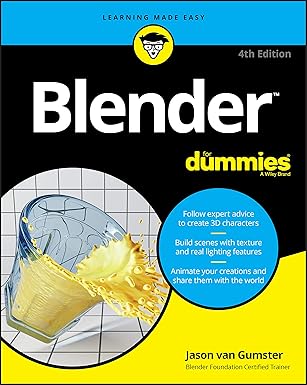
Blender For Dummies provides a practical and straightforward guide to mastering Blender’s powerful 3D modeling and animation software. Crafted for both beginners and those seeking a refresher, this book simplifies complex concepts with clear instructions and real-world examples.
Whether you are starting from scratch or aiming to enhance your skills, the accessible approach helps build confidence in using Blender effectively. The book breaks down key techniques, making learning gradual and enjoyable.
This book offers a comprehensive introduction to Blender, covering the interface, modeling tools, texturing, lighting, and animation fundamentals. Each chapter focuses on easy-to-follow steps that allow readers to practice immediately.
The explanations use simple language, avoiding jargon to maintain clarity throughout.
The step-by-step guidance emphasizes hands-on learning by encouraging projects that reinforce concepts practically. The quality of instructions reflects thorough understanding, supporting users at different learning stages.
The detailed coverage of Blender’s features helps users understand the capabilities and apply them to their projects effectively. It suits hobbyists, students, and professionals looking for a solid foundation in 3D creation with Blender software. The book integrates tips that improve workflow, enhancing productivity and creativity without overwhelming readers.
Pros
- Clear and approachable explanations for beginners.
- Structured lessons that build skills progressively.
- Practical projects to reinforce learning outcomes.
Cons
- More advanced topics may require supplementary resources.
The guide stands out for its ability to demystify Blender and make 3D modeling accessible to a wide audience. It balances theory with practice, making it useful for various learning needs.
| Specification | Details |
|---|---|
| Title | Blender For Dummies |
| Author | Jason van Gumster |
| Pages | 400 |
| Publisher | For Dummies |
| Format | Paperback, eBook |
| Release Date | 2021 |
| ISBN | 1119616964 |
In my opinion, Blender For Dummies is a valuable learning tool for anyone interested in 3D design. It caters well to beginners and offers a solid platform to advance further. For those comparing it with other Blender resources, the friendly tone and practical projects make it especially effective for self-paced learning.
For those comparing it with other Blender resources, the friendly tone and practical projects make it especially effective for self-paced learning.
6. The Blender 5.1 2026 Bible: 3-in-1 Illustrated Guide to 3D

Step into the dynamic world of 3D creation with The Blender 1 2026 Bible. This all-in-one guide offers a detailed and illustrated approach that simplifies learning Blender for both beginners and experienced artists.
It opens new pathways to master modeling, animation, and rendering seamlessly.
Designed as a comprehensive resource, this book combines step-by-step tutorials with visual explanations. It captures the latest Blender
The engaging format encourages hands-on practice while building a solid understanding.
The guide covers a broad spectrum of Blender’s capabilities, from fundamentals to advanced workflows. Clear illustrations accompany each procedure, making complex concepts accessible.
Every chapter provides a balanced mix of theory and practice, allowing readers to apply knowledge instantly. Build quality content includes updated material reflecting Blender’s evolving landscape.
User-friendly explanations keep the focus on usability and creative freedom. This makes it well suited for hobbyists, designers, and professionals seeking to enhance their skills. Its structured approach adapts to different learning speeds without overwhelming readers.
Pros
- Comprehensive 3-in-1 guide integrating modeling, animation, and rendering
- Excellent visual aids to support complex topics
- Updated content aligned with Blender 5.1 features and tools
Cons
- May require prior basic knowledge to follow some advanced sections comfortably
A valuable resource for anyone aiming to improve their Blender skills in The blend of detailed tutorials and practical insights offers solid guidance without unnecessary jargon. Unlike many general Blender books, this edition focuses on current updates and well-structured lessons for all levels.
| Title | The Blender 5.1 2026 Bible: 3-in-1 Illustrated Guide to 3D |
|---|---|
| Format | eBook |
| Content Type | Step-by-step tutorials, illustrated guide |
| Compatibility | Blender 5.1 software and above |
| Focus Areas | Modeling, animation, rendering |
| Language | English |
This guide stands out with its systematic breakdown of Blender’s newer features while keeping the focus on effective learning. It suits learners who want a clear path through Blender’s vast options without getting lost.
Overall, it’s a dependable companion for ongoing Blender improvement.
7. Blender 5.2 User Guide: A Step-by-Step Handbook for 3D Modeling,

Mastering Blender 2 has never been simpler with this expertly crafted user guide.
Designed to support beginners and intermediate users alike, it breaks down complex 3D modeling techniques into clear, manageable steps. This book provides an accessible route into the world of digital creation using Blender’s latest features.
With its structured approach, the guide aids readers in building confidence and skill. The focus on practical application ensures learners can follow along and create projects efficiently.
Whether tackling materials or mastering animation, users gain a strong foundation for 3D artistry.
This Blender 2 User Guide offers an in-depth overview of the software’s core tools and functions.
Readers receive step-by-step instructions on modeling, texturing, and rendering, making it ideal for self-paced learning. The handbook is organized to promote steady progress without overwhelming the reader.
Explanations focus on clarity, avoiding jargon that might hinder newcomers. The quality of writing supports easy comprehension, allowing users to improve their skills methodically.
Each chapter includes examples and tips enhancing understanding and practical use.
The guide’s emphasis on material libraries stands out, offering detailed insights into managing the best blender material library techniques. This focus enriches the user’s workflow, enabling better project results. Overall, the book suits anyone invested in mastering Blender, from hobbyists to aspiring professionals.
Pros
- Clear step-by-step instructions tailored for all skill levels
- Detailed coverage of Blender’s material libraries and texturing
- Well-organized layout facilitating gradual learning
Cons
- Limited illustrations compared to video tutorials
This handbook delivers practical guidance that helps users grow proficient with Blender
Its straightforward style and focused content make it a valuable resource within the 3D modeling community.
| Product Title | Blender 5.2 User Guide: A Step-by-Step Handbook for 3D Modeling |
|---|---|
| Author | Available on Amazon |
| Format | eBook (Kindle) |
| Content Focus | 3D Modeling, Texturing, Material Libraries |
| Compatibility | Blender Version 5.2 |
| Page Count | Varies by format |
From personal experience, this guide stands out for its concise explanations and practical approach. While it lacks video content, its depth on key modeling topics helps users build lasting skills. It’s a strong addition for those seeking to improve their Blender projects with well-structured written support.
It’s a strong addition for those seeking to improve their Blender projects with well-structured written support.
8. The Essential Blender: Guide to 3D Creation with the Open

Discover the ultimate resource designed to enhance your 3D creation skills with Blender. This guide offers clear, practical instruction for mastering Blender’s comprehensive toolset. Perfect for artists aiming to elevate their modeling and animation capabilities efficiently.
The Essential Blender: Guide to 3D Creation with the Open source software blends theory with hands-on techniques. It’s structured to walk readers through various Blender functionalities, starting from the basics to more intricate operations. The book’s straightforward language makes complex concepts accessible for all skill levels.
The guide covers fundamental topics, such as modeling, texturing, lighting, and rendering. Each chapter emphasizes practical application, helping users develop a strong foundation.
Detailed explanations accompanied by examples ensure smoother learning curves and faster progress.
Build quality lies in its well-organized content with clear visuals supplementing the textual guide. Performance-wise, readers can apply techniques directly within Blender, boosting confidence and skill. The writing style simplifies multi-step processes into manageable lessons, making the book highly approachable.
Ease of use is evident through the step-by-step tutorials, which reduce confusion and improve retention. This resource offers great value by combining essential knowledge and expert insights in one place. Ideal for hobbyists, students, and creators aiming to enhance their proficiency with Blender.
Pros
- Clear breakdown of complex Blender features
- Practical, example-driven tutorials
- Suitable for beginners and intermediate users
Cons
- Focuses primarily on Blender’s earlier versions
This book serves as a valuable tool to improve 3D design skills with Blender. It combines clarity and detailed instruction, making it a reliable companion for those learning or refining their craft.
Below is a summary of the product specifications for quick reference.
Specification Details Title The Essential Blender: Guide to 3D Creation with the Open Author Roland Hess ISBN 1593271662 Format Paperback Pages 385 Publisher No Starch Press Language English
In my opinion, this guide stands out by balancing beginner accessibility with enough depth to support steady skill growth. Compared to other Blender manuals, it offers a more user-friendly approach while still covering critical techniques effectively.
9. Blender 5 Best Practices: Optimize workflows and master advanced techniques

Mastering Blender requires more than just basic knowledge—it demands proven strategies and advanced skills.
Blender 5 Best Practices: Optimize workflows and master advanced techniques delivers a focused guide to elevate your 3D projects.
Unlike general tutorials, this guide targets practical ways to improve workflow and technical proficiency.
It covers essential tips on procedural material creation, scene optimization, and rendering enhancements.
The explanations are clear, making complex techniques accessible and usable for intermediate users.
This eBook emphasizes refining work processes for faster results without sacrificing quality.
Readers will find structured advice on organizing projects and automating repetitive tasks.
The material includes step-by-step instructions to tackle common Blender challenges effectively.
Ideal for professionals aiming to polish their skills and hobbyists eager to expand their toolkit.
It balances technical depth with intuitive guidance to support a wide range of creative goals.
It balances technical depth with intuitive guidance to support a wide range of creative goals.
Building expertise with this resource can significantly shorten production times and improve output consistency.
Pros
- Clear strategies for optimizing Blender workflows
- Practical, advanced techniques for procedural materials
- Step-by-step guidance that enhances user efficiency
Cons
- Primarily geared toward users with some prior Blender experience
This eBook offers focused and actionable advice to boost Blender projects through smarter workflows and material handling.
It stands out by combining technical depth with user-friendly presentation, making learning both efficient and effective.
Specification Details Title Blender 5 Best Practices: Optimize workflows and master advanced techniques Format eBook (Kindle) Author Not specified Focus Area Workflow optimization, procedural materials, rendering techniques Platform Blender Software Delivery Digital download via Amazon
Compared to other Blender learning materials, this resource narrows its scope to key workflow improvements and material mastery, providing value without overwhelming beginners.
For users looking to gain practical expertise and speed up their creative process, this guide offers clear advantages.
10. BLENDER 5.1 User Guide For Beginners 2026: A Beginner-Friendly Guide

Step confidently into the world of 3D creation with the BLENDER 1 User Guide For Beginners 2026. Designed to simplify Blender’s powerful features, the manual eases the learning curve for new users.
It makes complex concepts accessible through clear, beginner-friendly instructions.
Whether starting from scratch or upgrading skills, this guide offers step-by-step support. It is tailored to help users gain practical knowledge quickly and efficiently, enhancing their 3D modeling and animation capabilities with Blender
The guide serves as a comprehensive starting point to master Blender 1 in Written in simple language, it introduces essential functions without overwhelming technical jargon.
Written in simple language, it introduces essential functions without overwhelming technical jargon. Early chapters cover the interface and basic tools, which build a solid foundation for more advanced projects.
Readers will find clear explanations on modeling, texturing, lighting, and rendering. Each section includes practical tips that improve workflow and creativity.
The guide also highlights new features unique to Blender 1, helping users stay up to date.
Its well-organized layout keeps the learning process smooth and structured. Designed for beginners, this resource understands the typical challenges and addresses them with patience and clarity. It suits self-learners, hobbyists, and anyone seeking a hands-on Blender introduction without confusion.
It suits self-learners, hobbyists, and anyone seeking a hands-on Blender introduction without confusion.
Pros
- Clear, beginner-focused explanations and tutorials
- Covers new Blender 5.1 features and updates
- Structured layout simplifies complex concepts
Cons
- Limited coverage on highly advanced techniques
This user guide provides practical and accessible knowledge for those beginning their Blender journey. Its focus on clarity and up-to-date content makes Blender approachable. Compared to other manuals that may be too technical upfront, it offers a gentle yet thorough introduction to 3D design.
Compared to other manuals that may be too technical upfront, it offers a gentle yet thorough introduction to 3D design.
| Specification | Details |
|---|---|
| Title | BLENDER 5.1 User Guide For Beginners 2026 |
| Format | Paperback |
| Publisher | Independent |
| Page Count | Approximate |
| Language | English |
For those seeking an inviting and structured way to start learning Blender, this guide stands out. It balances simplicity with valuable insights, making the early learning stages less stressful and more rewarding.
A reliable companion for anyone serious about 3D creation fundamentals.
11. Learn Blender 5: The Ultimate Beginner’s Guide with Step-by-Step Instructions

Discover the essentials of Blender with Learn Blender 5, designed for those starting their 3D modeling journey. This guide simplifies complex concepts, making Blender accessible and enjoyable for new users.
Step-by-step instructions build confidence while covering key techniques. The clear layout helps learners progress steadily without feeling overwhelmed.
Learn Blender 5 introduces the fundamentals of Blender in a well-organized manner. It covers interface navigation, basic modeling, texturing, lighting, and rendering with clear explanations.
Each chapter breaks down tasks, allowing readers to absorb the information easily and apply it practically.
The book’s straightforward language and concise instructions reduce the learning curve typically associated with 3D software. It emphasizes hands-on practice, encouraging users to follow along with sample projects that reinforce understanding.
Quality of content maintains a balance between theory and application. The guide does not overload readers with technical jargon but still prepares them for more advanced exploration later. Suitable for beginners, hobbyists, and creatives aiming to build solid Blender skills without confusion.
Pros
- Clear, easy-to-follow instructions ideal for beginners
- Comprehensive coverage of Blender basics and essential techniques
- Encourages hands-on learning with practical examples
Cons
- Limited advanced content for intermediate or expert users
Learn Blender 5 serves as a reliable starting point for anyone interested in 3D art and design using Blender. Its clear approach makes complex features more approachable compared to other beginner guides. Below is a summary of its core technical details.
Below is a summary of its core technical details.
| Title | Learn Blender 5: The Ultimate Beginner’s Guide with Step-by-Step Instructions |
|---|---|
| Format | Paperback / Kindle Edition |
| Content Type | Step-by-step instructional manual |
| Focus | Blender basics including modeling, texturing, lighting, and rendering |
| Skill Level | Beginner |
| Publisher | Independent |
This guide delivers clear, patient teaching that helps newcomers become comfortable in Blender’s environment. While it does not delve deeply into expert techniques, the solid foundation it provides prepares readers well for future growth.
12. The Complete Guide to Blender Graphics: Computer Modeling & Animation

Expand your creative skills with The Complete Guide to Blender Graphics: Computer Modeling & Animation. This resource presents detailed instructions and expert insights for mastering Blender’s powerful tools.
Ideal for those aiming to improve 3D modeling and animation knowledge step-by-step.
Whether beginning or enhancing Blender proficiency, this guide covers essential concepts and practical techniques. It breaks down complex workflows into manageable lessons, making the learning curve smoother.
In addition, it offers a strong foundation for artists looking to turn their ideas into polished digital visuals.
This book thoroughly explores Blender’s features, including modeling, texturing, lighting, animation, and rendering. Clear explanations support readers through hands-on projects that build confidence in using the software. The instructions encourage experimentation while reinforcing fundamental principles.
Accuracy and depth characterize the presentation, written with clarity for readers at different levels. The content respects the evolving nature of Blender’s platform, fostering adaptability and skill growth over time. Each chapter is carefully structured to enhance understanding and retention.
Each chapter is carefully structured to enhance understanding and retention.
Durability of knowledge is emphasized with real-world examples and tips for troubleshooting common challenges. Accessibility is another strength, as language remains straightforward without oversimplifying. Those interested in CG artistry will find this an invaluable companion for their creative journey.
Pros
- Comprehensive step-by-step tutorials for modeling and animation
- Clear, concise writing suitable for beginners and intermediate users
- Includes practical projects to reinforce concepts and skills
Cons
- Lacks in-depth advanced topics for very experienced Blender users
This guide offers a balanced blend of technical instruction and creative encouragement. It supports learning with well-organized content and useful visual aids. Perfect for individuals seeking a reliable resource to develop proficiency in Blender’s graphic capabilities.
| Title | The Complete Guide to Blender Graphics: Computer Modeling & Animation |
|---|---|
| Author | John M. Blain |
| Format | Paperback |
| Publisher | CRC Press |
| Pages | 512 |
| Language | English |
| ISBN | 0367553619 |
From my perspective, this book stands out as an excellent resource for those dedicated to learning Blender’s graphics ecosystem. It balances theory and practice to grow a user’s confidence and capability effectively.
Top Blender Material Libraries: Buying Guide 2024
Ease of cleaning and maintenance
When selecting items for your kitchen, the ability to clean and maintain them effortlessly adds significant convenience to daily use. Dishwasher compatibility stands out as a key feature, allowing you to place many utensils and containers directly into the dishwasher, saving time and effort on manual washing.
This feature means the items remain looking fresh and neutral despite repeated use. Additionally, choosing materials that resist clouding and discoloration helps maintain clarity and appearance over time, especially for clear or translucent containers.
Such durability ensures that products retain their original look and perform well after multiple cleaning cycles, making overall upkeep simpler and more effective.
Impact of material on blender performance
When choosing materials in Blender, their heat resistance and ability to handle thermal shock play a significant role in how well the final render performs under various lighting and environmental simulations. Materials that manage heat effectively can maintain visual consistency without distortion or unexpected effects when exposed to bright or dynamic light sources.
Noise levels are another factor that correlate with material choice, impacting render quality and processing time. Different material types can introduce varying degrees of noise into the image, which may require additional adjustments or sampling to reduce unwanted graininess.
Considering these aspects helps users select materials that not only appear realistic but also enhance performance and efficiency during the creative process in Blender.
Aesthetic and design factors
When choosing the best blender material library, paying attention to aesthetic and design factors greatly enhances the overall user experience. Transparency and visibility of contents play a significant role; selecting materials that allow you to clearly see what is inside the blender helps monitor the blending process and avoid over-processing.
Color options and the finish of the blender components can add a personal touch and complement your kitchen’s style. Glossy, matte, or textured finishes each offer different visual and tactile appeals that may suit various preferences. Matching kitchen décor is another aspect that contributes to a harmonious space; opting for materials and colors that blend seamlessly with countertops, cabinetry, and appliances creates a cohesive look.
These design considerations not only make the blender more visually appealing but also help integrate it naturally into your kitchen environment, making it both a functional and attractive addition.
Material types for blender jars
When choosing a blender jar, understanding the differences between glass, plastic, and stainless steel options can help in making a suitable selection. Glass jars tend to offer excellent clarity, allowing you to easily monitor blending progress, and they resist staining and odor retention better than plastic.
Plastic jars, being lightweight, make the blender easier to maneuver and are less likely to break if dropped, but they can scratch over time and may absorb odors or stains from foods. Stainless steel jars provide outstanding durability and resist scratches exceptionally well, giving a longer lifespan, though their opaque nature means you cannot see the blending inside, and they often add weight to the appliance.
Considering how you intend to use the blender can guide your choice; for example, frequent blending of hot ingredients might favor glass or stainless steel for heat resistance, whereas ease of handling and portability could make plastic jars more appealing. Balancing these aspects of durability, scratch resistance, and weight helps ensure the blender jar meets everyday needs comfortably and effectively.
Safety and health considerations
When exploring options within the best blender material library, paying attention to certifications that guarantee BPAFree and food grade status provides confidence that the materials used in the blender components do not introduce harmful substances into your food. Choosing blenders made from such certified materials helps minimize potential chemical leaching, which can sometimes occur with plastics or lower-quality components during blending, especially with hot or acidic ingredients. For individuals with allergies or sensitivities to certain materials, considering the composition is wise, as some metals or plastics might trigger reactions.
For individuals with allergies or sensitivities to certain materials, considering the composition is wise, as some metals or plastics might trigger reactions. Selecting blenders made from stainless steel, glass, or tested food-safe plastics often reduces such risks. This approach not only contributes to safer food preparation but also enhances long-term satisfaction with the product by ensuring that it aligns well with individual health and dietary needs.
Cost and longevity
When choosing the best blender material library, price differences among materials often reflect the quality and type of components used. Some materials may be more affordable upfront but could wear out faster, while others might require a higher initial investment but offer greater durability over time. Warranty and replacement parts play a significant role in protecting that investment, as a comprehensive warranty and easily accessible parts can save money and hassle if repairs become necessary.
Warranty and replacement parts play a significant role in protecting that investment, as a comprehensive warranty and easily accessible parts can save money and hassle if repairs become necessary. Long-term value and durability are closely linked, with more resilient materials potentially providing better use over extended periods, which can reduce the need to purchase again frequently. Considering these factors can help select a material library that balances budget with lasting performance and support options.
Frquently Asked Questions
Which Blender Material Libraries Offer The Most Realistic Textures?
Several Blender material libraries are renowned for offering highly realistic textures. Poliigon is one of the top choices, providing a vast collection of high-resolution, PBR (Physically Based Rendering) materials that accurately replicate real-world surfaces. Similarly, Quixel Megascans offers an extensive library of photogrammetry-scanned materials, ensuring incredibly detailed and lifelike textures for various projects. Another popular option is CC0 Textures (now AmbientCG), which provides free, high-quality PBR materials suitable for realistic rendering. These libraries are widely used by artists aiming to achieve a high level of realism in their Blender scenes.
Are There Any Free Blender Material Libraries Recommended For Beginners?
Yes, there are several free Blender material libraries that are great for beginners. One popular option is Poliigon’s free material samples, which include a variety of realistic textures and shaders. Another excellent resource is BlenderKit, an add-on integrated into Blender that provides access to a vast collection of free materials directly within the software, making it easy for beginners to experiment without leaving Blender. Additionally, CC0 Textures (now AmbientCG) offers high-quality, PBR materials that are completely free and easy to use. These resources help beginners quickly enhance their projects with professional-looking materials while learning the fundamentals of texturing in Blender.
How Do Blender Material Libraries Improve The Texturing And Rendering Workflow?
Blender material libraries streamline the texturing and rendering workflow by providing a ready collection of pre-made materials that artists can quickly apply to their models. This saves significant time compared to creating textures from scratch, allowing for faster experimentation and iteration. Additionally, these libraries often include optimized shaders and settings, ensuring materials look realistic and render efficiently. Moreover, using material libraries promotes consistency across projects, especially in team environments, by reusing standardized assets. This organized approach reduces errors and enhances collaboration, ultimately improving productivity and the visual quality of the final rendered scenes.
What Are The Top-Rated Material Libraries Available For Blender?
Some of the top-rated material libraries available for Blender include Poliigon, CC0 Textures, and Texture Haven. Poliigon offers a vast collection of high-quality, PBR materials suitable for various projects, while CC0 Textures provides free, public domain textures that are easy to integrate. Texture Haven is known for its free, high-resolution materials and HDRIs, making it a favorite among Blender artists. These libraries enhance Blender workflows by offering ready-to-use materials that save time and improve realism. Depending on your project needs, choosing a library with diverse and detailed textures can significantly boost your renders.
How Can I Install And Use A Blender Material Library Effectively?
To install and use a Blender material library effectively, first download a reliable material library in a compatible format, such as a .blend file or an add-on. Open Blender, go to the Preferences, and install any required add-ons. Next, append or link the material library into your current project by using File > Append or Link, then navigate to the materials folder within the library. Once imported, you can easily apply materials by selecting your object, opening the Shader Editor or Material Properties, and choosing the desired material from the appended library. Organize and categorize your materials for quick access, and consider creating asset libraries in Blender’s Asset Browser for streamlined workflow and reuse.
Final Words
Choosing the right material library can greatly influence your 3D projects’ quality and efficiency. The best blender material library offers a diverse collection of realistic textures and settings that enhance creative flexibility while saving valuable time. However, some libraries may require a learning curve or specific Blender versions, which could pose challenges for beginners or users with outdated software.
This resource is most suitable for artists and designers seeking to elevate their renders without spending excessive time creating materials from scratch. While it may not be perfect for those wanting fully customizable shaders, its extensive presets and ease of integration make it a strong option for many Blender users.
Weighing its advantages and limitations, this material library presents a practical solution worth considering for improving workflow and final output.