Top 10 Best CPU For Blender That Will Boost Your Renders
Working with Blender requires a CPU that can handle demanding tasks like 3D modeling, rendering, and animation smoothly. Choosing the right processor can make a big difference in your workflow and project completion time.
Whether you’re creating detailed scenes or running complex simulations, having a capable CPU is key to improving efficiency. This review will cover some of the leading processors suited for Blender users.
We’ll look at performance, compatibility, and value to help you decide which CPU matches your specific needs and budget. By the end, you’ll have a clearer idea of what to expect from each option on the market.
Top Processors That Bring Your 3D Creations to Life with Unmatched Speed and Precision
| Image | Product | Price |
|---|---|---|
Editor’s Pick- 1  | AMD RYZEN 7 9800X3D 8-Core, 16-Thread Desktop Processor | Check Price |
Editor’s Pick- 2 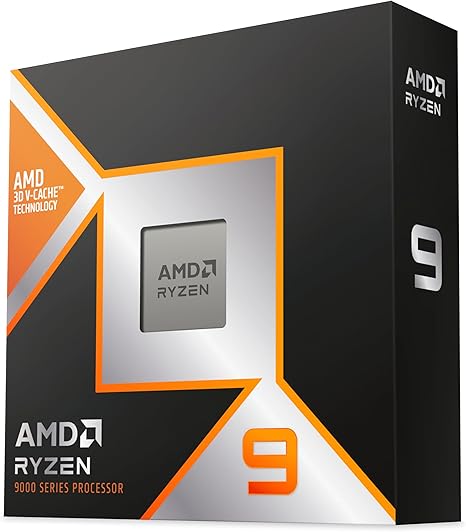 | AMD Ryzen 9 9950X3D 16-Core Processor | Check Price |
Editor’s Pick- 3  | AMD Ryzen 7 7800X3D 8-Core, 16-Thread Desktop Processor | Check Price |
1. AMD RYZEN 7 9800X3D 8-Core, 16-Thread Desktop Processor
The AMD RYZEN 7 9800X3D Desktop Processor sets a new benchmark for performance with its advanced Zen5 architecture. Designed to deliver a smooth and efficient computing experience, it stands out for both gaming and creative workloads.
Equipped with innovative 3D V-Cache technology, it boosts processing speed and thermal management. This model is engineered for users who seek reliable multitasking and accelerated application performance.
Built on the AMD Zen5 technology, the Ryzen 7 9800X3D offers 8 cores and 16 threads enabling excellent multitasking capabilities. The processor achieves up to
2 GHz clock speed while maintaining impressive power efficiency thanks to the enhanced 96MB L3 cache. Users will find notable improvements in IPC, delivering a roughly 16% boost compared to previous generations.
The large cache size also contributes to smoother performance in applications such as Blender, making this CPU a strong contender for creative professionals. Its compatibility with the Socket AM5 infrastructure ensures easy integration into existing setups without hassle.
With an external cooling setup, the CPU maintains stability under pressure, enabling longer rendering sessions without throttling. The Ryzen 7 9800X3D stands out as an ideal choice for content creators, gamers, and professionals who demand speed and reliability.
Pros
- High IPC uplift with Zen5 and 3D V-Cache technology
- Strong multitasking ability with 8 cores and 16 threads
- Improved thermal performance enabling higher clock speeds
Cons
- Requires separate external cooler, not included in the package
Overall, the AMD RYZEN 7 9800X3D combines powerful processing with efficient design, offering versatility for demanding tasks like 3D rendering and gaming. Its advanced cache and chip layout outperform many competitors in its class.
| Specification | Details |
|---|---|
| Processor Series | Ryzen 7 |
| Processor Speed | 4.7 GHz (Base), Up to 5.2 GHz (Boost) |
| Processor Socket | Socket AM5 |
| Secondary Cache | 8 MB |
| Wattage | 140 Watts |
| Cache Memory Installed Size | 104 MB (96 MB L3 + 8 MB Secondary Cache) |
| Processor Count | 8 |
| Number of Concurrent Threads | 16 |
| Cooling Method | External Cooler (Not Included) |
| Platform | Windows 11 |
For users focused on demanding software like Blender, this CPU delivers consistent performance enhancements. Its architecture emphasizes thermal efficiency and multi-threaded workloads.
2. AMD Ryzen 9 9950X3D 16-Core Processor
The AMD Ryzen 9 9950X3D is engineered for those demanding cutting-edge processing power in gaming and content creation. This high-performance CPU combines advanced technology with impressive clock speeds to handle intensive workloads effortlessly.
Its design caters to both creative professionals and gamers who require speed and efficiency without compromise. With a robust core count and smart architecture, it stands out in the desktop CPU market.
Featuring a base clock of 3 GHz and boosting up to an extraordinary
7 GHz, the Ryzen 9 9950X3D delivers remarkable single-thread and multi-thread performance. Its 16-core Zen 5 architecture supports demanding applications and multitasking with ease. The substantial 144 MB cache augments responsiveness and processing speed, reducing latency during complex tasks.
The AM5 socket compatibility ensures future-proof upgrades and seamless integration with modern motherboards. Designed as a boxed processor for desktops, it’s straightforward to install and suitable for building powerful workstations or gaming rigs. With a power draw of 170 watts, it balances energy consumption with high performance.
With a power draw of 170 watts, it balances energy consumption with high performance.
Ideal for users focused on intensive 3D rendering, video editing, and gaming, the processor manages concurrent threads efficiently. Its secondary cache of 16 MB complements the large primary cache for smoother operations.
Pros
- High boost clock speed up to 5.7 GHz for fast processing
- 16 cores and 144 MB total cache improve multitasking and rendering
- Supports AM5 socket for modern motherboard compatibility
Cons
- 170-watt power consumption may require advanced cooling solutions
The AMD Ryzen 9 9950X3D offers a compelling package for professionals and gamers aiming for peak performance and reliability. Its combination of clock speed, core count, and large cache delivers significant efficiency gains.
| Processor Model | AMD Ryzen 9 9950X3D |
|---|---|
| Core Count | 16 |
| Base Clock Speed | 4.3 GHz |
| Max Boost Clock | Up to 5.7 GHz |
| Architecture | Zen 5 (Granite Ridge) |
| Socket | AM5 |
| Cache | 144 MB |
| Secondary Cache | 16 MB |
| Power Consumption | 170 Watts |
| Platform Compatibility | Windows |
For individuals who handle complex rendering or multitasking environments, this processor stands as a powerful tool. Though it demands proper thermal management due to power use, the performance gains justify the setup.
3. AMD Ryzen 7 7800X3D 8-Core, 16-Thread Desktop Processor
Discover the AMD Ryzen 7 7800X3D, a powerful desktop processor built for high-efficiency computing. Designed to handle demanding workloads, it offers reliable multitasking and fast execution speeds that boost productivity.
With integrated graphics capabilities, it supports a variety of multimedia tasks with ease.
Experience seamless multitasking with its octa-core design and 16 threads, allowing programs to run concurrently without lag. The 20 GHz clock speed ensures swift processing for both single and multi-threaded applications.
Built on a 5 nm process, the processor delivers efficient power consumption while maintaining impressive performance. Supporting 8 MB L2 and 96 MB L3 cache, it reduces latency and improves data access speeds for faster workload completion.
The inclusion of AMD Radeon Graphics controller adds versatile graphics handling without needing a separate GPU. Its maximum operating temperature of 89°C offers stability during intensive tasks.
Whether for rendering, gaming, or content creation, this processor suits users who demand reliable, fast, and efficient solutions without compromise.
Pros
- High-performance 8-core, 16-thread processor for smooth multitasking
- Large 104 MB combined cache improves system responsiveness
- Integrated AMD Radeon Graphics delivers quality visuals without extra hardware
Cons
- Power consumption of 120 watts may require adequate cooling solutions
Providing robust performance paired with efficient technology, the AMD Ryzen 7 7800X3D stands out as a strong contender for desktop users needing speed and reliability. Its balance of processing power and built-in graphics makes it versatile among similar processors. Below is a detailed specification summary to assist your choice.
Specification Details Processor Series Ryzen 7 Processor Speed 4.2 GHz Processor Socket Socket AM5 Secondary Cache 8 MB Wattage 120 Watts Cache Memory Installed Size 104 MB Processor Count 1 Number of Concurrent Threads 16 Processor Core Count 8 Platform Compatibility Windows 10, Windows 11
The AMD Ryzen 7 7800X3D effectively blends speed and efficiency, making it a solid choice for those who demand strong daily performance. Its well-rounded features cater to creatives and professionals seeking dependable computing power without excessive complexity.
4. AMD Ryzen 5 5500 6-Core, 12-Thread Unlocked Desktop Processor with

Experience impressive computing power with the AMD Ryzen 5 5500, designed to handle demanding tasks efficiently. Its six cores and twelve threads provide seamless multitasking for gaming and creative work alike.
With a high boost clock and support for modern memory speed, it offers reliable performance for desktop users seeking a solid processor. The bundled cooler adds convenience for effective heat management during extended sessions.
AMD’s Ryzen 5 5500 delivers reliable speed with a max boost clock of 2 GHz, balancing power and efficiency.
Equipped with six cores and twelve threads, it handles multitasking with ease, ideal for rendering, content creation, and daily computing.
The processor supports DDR4-3200 memory, allowing for smooth data flow and enhanced responsiveness. It also includes 19 MB of combined cache that helps speed up computing tasks by reducing latency. Included is the AMD Wraith Stealth cooler, which maintains optimal temperatures without adding noise or bulk.
Built on the Socket AM4 platform, it’s compatible with various motherboards, ensuring adaptability for upgrades. This CPU’s unlocked design permits overclocking for users who want to push their hardware further. Its balance between performance and power consumption makes it suitable for gamers, creatives, and general users.
Pros
- Six cores and twelve threads for smooth multitasking
- Boost clock up to 4.2 GHz for fast processing
- Comes with AMD Wraith Stealth cooler for reliable cooling
Cons
- Requires a discrete graphics card for gaming
Offering excellent core count and clock speed, the AMD Ryzen 5 5500 stands out as a competent choice for users seeking solid performance. It combines affordability with features that support gaming and creative software. Below is a detailed specification table for quick reference.
Below is a detailed specification table for quick reference.
| Specification | Details |
|---|---|
| Processor Series | Ryzen 5 |
| Processor Speed | 4.2 GHz Max Boost |
| Processor Socket | Socket AM4 |
| Secondary Cache | 16 MB |
| Total Cache | 19 MB |
| Processor Core Count | 6 |
| Threads | 12 |
| Wattage | 65 Watts |
| Cooling Method | Air (AMD Wraith Stealth) |
| Memory Support | DDR4-3200 |
| Platform | Windows Compatible |
In my experience, this processor strikes a good balance between price and performance. Its multicore setup is well-suited for rendering projects and gaming sessions when paired with the right graphics card.
5. AMD Ryzen 7 5800X3D 8-core, 16-Thread Desktop Processor with AMD

AMD Ryzen 7 5800X3D redefines desktop processing with a unique 3D V-Cache design. It delivers a perfect balance of high core count and innovative cache technology, ensuring smooth multitasking and excellent gaming performance.
Designed to push the limits of computing power, this processor suits complex workloads and rendering tasks, making it a strong choice for creators and gamers alike.
Featuring eight cores and sixteen threads, the Ryzen 7 5800X3D excels at parallel processing demands. Its AMD 3D V-Cache technology adds an impressive 100 MB of cache, boosting data access speeds for demanding applications.
With a maximum boost clock of 5 GHz, it handles intensive tasks efficiently without compromising stability. Built on the AM4 platform, it supports PCIe
0 on compatible X570 and B550 motherboards, accommodating modern expansion needs.
The absence of a bundled cooler allows users to choose a high-performance cooling solution tailored to their setup. DDR4-3200 memory support further enhances system responsiveness, suitable for rendering and content creation workflows.
This processor suits users needing strong multi-threaded capabilities and fast cache access, such as 3D artists and video editors. It balances performance and power consumption with a 105-watt TDP, delivering efficiency while maintaining high speeds.
Pros
- Innovative 3D V-Cache technology improves data access performance
- Eight cores with sixteen threads support demanding multitasking
- Supports PCIe 4.0 and DDR4-3200 for modern system compatibility
Cons
- Does not include a stock cooler, requiring separate purchase
The AMD Ryzen 7 5800X3D offers a compelling mix of speed, cache size, and core count that suits both gaming and professional applications. It stands out among desktop processors for users prioritizing fast cache access and multitasking power. Its socket AM4 compatibility means a broad range of motherboard options, though cooling solutions must be selected independently.
| Specification | Details |
|---|---|
| Processor Series | Ryzen 7 |
| Processor Speed | 4.5 GHz Max Boost |
| Processor Socket | Socket AM4 |
| Secondary Cache | 100 MB |
| Wattage | 105 watts |
| Processor Count | 8 |
| Number of Threads | 16 |
| DDR4 Memory Support | DDR4-3200 |
| PCIe Support | PCIe 4.0 (X570/B550 motherboards) |
In my experience, this processor brings excellent responsiveness and efficiency to demanding computing tasks. It competes well against alternatives in its class, especially for workloads that benefit from larger cache sizes. Choosing an appropriate cooler will ensure it runs optimally under heavy loads, unlocking its full potential for creative and gaming setups.
6. Intel® Core™ Ultra 7 Processor 270K Plus 24 cores (8

Experience powerful computing with the Intel® Core™ Ultra 7 Processor 270K Plus. Equipped with 24 cores, this processor delivers a perfect blend of performance and efficiency for demanding tasks. It supports the latest platform technologies, ensuring compatibility and speed for modern systems.
It supports the latest platform technologies, ensuring compatibility and speed for modern systems.
Designed for creators and gamers alike, it pushes performance boundaries with a maximum turbo frequency of 5 GHz.
The advanced core layout combines performance and efficiency cores, making multitasking and heavy workloads smoother than ever.
The Intel Core Ultra 7 Processor 270K Plus offers a robust core configuration with 8 performance cores and 16 efficiency cores. This design provides excellent multitasking while handling professional creative software seamlessly.
0 and DDR5 memory up to 7200 MT/s.
With a base power of 125W and maximum turbo power reaching 250W, it maintains stable performance under demanding loads. The unlocked processor allows users to customize performance when paired with Intel Z-series chipsets, making it adaptable for those who want to tune their systems further.
Cooling is managed through air solutions, ensuring effective heat dissipation in most standard builds.
This processor fits users who need high responsiveness in rendering, 3D design, and content creation workflows. It balances power consumption and speed without compromising on reliability. The large 36 MB secondary cache and 40 MB installed cache memory help improve data access speeds, which is crucial for intensive tasks.
The large 36 MB secondary cache and 40 MB installed cache memory help improve data access speeds, which is crucial for intensive tasks.
Pros
- Up to 24 cores designed for high-performance multitasking
- Supports PCIe 5.0 and DDR5 memory for fast data throughput
- Unlocked for performance tuning with compatible chipsets
Cons
- High power consumption requiring an efficient cooling system
Overall, the Intel Core Ultra 7 Processor 270K Plus brings a solid combination of speed, core count, and modern platform support. It is well-suited for creators, gamers, and power users seeking substantial processing power.
The inclusion of PCIe 0 and DDR5 memory compatibility future-proofs your PC build while delivering swift performance in demanding applications.
| Specification | Details |
|---|---|
| Processor Series | Intel Core Ultra 7 |
| Processor Speed | 3.7 GHz |
| Processor Socket | LGA 1851 |
| Secondary Cache | 36 MB |
| Wattage | 125 watts |
| Cache Memory Installed Size | 40 MB |
| Processor Count | 24 |
| Number of Concurrent Threads | 24 |
| Processor Core Count | 24 |
| Cooling Method | Air |
This processor stands out by combining excellent core density with cutting-edge platform features. Users looking for reliable performance in Blender or other content creation tools will find it highly capable.
Its potential for tuning adds extra flexibility that can cater to power users and system builders.
7. Boxed INTEL CORE Ultra 9 Processor 285K (36M Cache, UP

Experience the blend of power and efficiency with the Boxed INTEL CORE Ultra 9 Processor 285K. Designed to handle demanding tasks seamlessly, this processor offers a unique combination of speed and advanced architecture. It’s tailored to deliver a cooler, quieter computing experience, making it a robust choice for high-performance setups.
It’s tailored to deliver a cooler, quieter computing experience, making it a robust choice for high-performance setups.
Ideal for users requiring multi-threaded performance, it adapts to various workloads by intelligently distributing tasks. Whether working on creative projects or intensive computing, its versatile capabilities enhance productivity without compromise.
The Boxed INTEL CORE Ultra 9 Processor 285K stands out with its hybrid architecture that combines 8 performance cores with 16 efficiency cores. This setup supports 24 threads, enabling smooth multitasking and faster processing of complex workloads.
Its integrated Intel Graphics eliminates the need for a separate GPU for many tasks, adding convenience.
Running up to 7 GHz, the unlocked performance allows for responsive speed bursts when needed. It supports PCIe
It supports PCIe 0 and 0, alongside Intel Optane Memory, enhancing compatibility and expanding system capabilities.
The processor fits Intel 800 series chipset motherboards and requires the LGA 1851 socket.
Without a thermal solution included, adequate cooling should be planned to maintain optimal operation. Thanks to its 40MB cache and 125-watt power consumption, it balances performance with power efficiency.
Ideal for users working in content creation, 3D rendering, or software development, it offers high reliability and future-proof compatibility.
Pros
- Hybrid architecture with 24 cores and 24 threads for efficient multitasking.
- Unlocked up to 5.7 GHz for fast, responsive performance bursts.
- Supports advanced technologies like PCIe 5.0 and Intel Optane Memory.
Cons
- No included thermal solution, requiring separate cooling arrangements.
With a compelling balance of core count, speed, and technology support, this processor delivers strong computational power suited for complex applications. Its hybrid design distinguishes it from conventional processors, contributing to enhanced performance across varied tasks.
Users seeking a future-forward upgrade with scalable capabilities will find it a solid investment.
| Specification | Details |
|---|---|
| Processor Series | Core i9 |
| Core Count | 24 (8 P-cores + 16 E-cores) |
| Thread Count | 24 |
| Processor Speed | Up to 5.7 GHz (Unlocked) |
| Cache Memory | 40 MB |
| Processor Socket | LGA 1851 |
| Wattage | 125 Watts |
| Platform | Windows 11 |
| Graphics | Integrated Intel Graphics |
| Compatibility | Intel 800 Series chipset motherboards |
| PCIe Support | PCIe 5.0 and 4.0 |
| Special Features | Turbo Boost Max Technology 3.0, Intel Optane Memory Support |
The balance of efficiency and processing power combined with advanced features makes this processor a versatile option for professionals and demanding users alike. For those working with complex software or multitasking intensely, this CPU provides a notable improvement over many alternatives in its class.
8. AMD Ryzen™ 5 9600X 6-Core, 12-Thread Unlocked Desktop Processor

Experience exceptional desktop computing with the AMD Ryzen™ 5 9600X processor. Designed around the advanced AMD Zen 5 architecture, it offers a powerful combination of six cores and twelve threads that handle demanding tasks efficiently.
Its 4 GHz maximum boost speed delivers swift performance across gaming and productivity workflows.
The processor suits users seeking robust processing capabilities packed into a compact, modern platform supporting the latest technology. It brings strong multitasking and responsiveness to any compatible PC build configured with the AM5 socket.
AMD’s Ryzen 5 9600X ensures fast and smooth operation, ideal for intense gaming or content creation. The six physical cores work with twelve processing threads, allowing simultaneous handling of multiple applications. Boosted clock speeds up to
Boosted clock speeds up to 4 GHz provide extra bursts of power, enhancing frame rates and rendering speeds.
Compatibility with DDR5-5600 RAM and PCIe 0 optimizes data throughput and future-proofs the system.
The unlocked multiplier permits flexible overclocking, letting advanced users push the processor further for specialized needs.
Though a cooler isn’t included, selecting an effective air cooler keeps operation safe and quiet. Its 65-watt TDP means energy consumption remains moderate.
Pros
- High clock speed reaching up to 5.4 GHz for excellent single-threaded performance
- Six cores and twelve threads provide efficient multitasking and parallel processing
- Supports DDR5 RAM and PCIe 5.0 for enhanced speed and future-ready compatibility
Cons
- Does not include a cooling solution, requiring separate purchase of a compatible cooler
AMD Ryzen™ 5 9600X offers a compelling upgrade for those building high-performance desktops. Its blend of swift clock speeds and multiple cores optimizes both gaming and professional workloads.
Below is a detailed specification overview for technical clarity.
| Specification | Details |
|---|---|
| Processor Series | Ryzen 5 |
| Processor Speed | 3.9 GHz (Base), 5.4 GHz (Max Boost) |
| Processor Socket | Socket AM5 |
| Secondary Cache | 6 MB |
| Total Cache Memory | 38 MB |
| Processor Cores | 6 |
| Concurrent Threads | 12 |
| Wattage (TDP) | 65 Watts |
| Cooling Method | Air Cooling (Cooler not included) |
| Platform Compatibility | Windows 11 |
| Memory Support | DDR5-5600 |
| PCIe Support | PCIe 5.0 (on select motherboards) |
In my view, the Ryzen 5 9600X stands out in the mid-range processor category for its solid performance per core and thread count. Those assembling powerful gaming rigs or PC workstations will appreciate its modern features and upgrade path. Compared to similar processors, it balances price and technological advancement effectively, making it a practical choice for versatile desktop builds.
9. AMD Ryzen™ 7 9850X3D Desktop Processor

Experience powerful computing performance tailored for demanding creative applications with the AMD Ryzen™ 7 9850X3D Desktop Processor. Designed to handle intensive workloads, it offers a seamless balance between speed and efficiency for digital artists and designers.
This processor stands out with its innovative architecture and impressive cache size, delivering smooth rendering and multitasking capabilities. It’s an ideal choice for users aiming to elevate their Blender projects and other 3D modeling tasks.
AMD Ryzen™ 7 9850X3D brings an advanced 8-core, 16-thread configuration to the table, operating at a base speed of 7 GHz.
Its 104 MB cache memory significantly reduces latency, improving overall data access speeds and enhancing complex scene processing.
Built for the Socket AM5 platform, it guarantees compatibility with the latest motherboards, allowing for future-proof upgrades. The 140-watt power rating reflects a balance between performance and power consumption, keeping thermal output manageable under heavy loads.
Whether creating intricate 3D animations or engaging in CPU-intensive simulations, this processor excels in delivering reliable, consistent performance. Its large secondary cache and rapid threading capabilities make multitasking efficient.
Pros
- High 8-core, 16-thread performance ensures smooth multitasking.
- Massive 104 MB cache enhances data access speed for rendering.
- Compatible with new Socket AM5 motherboards for latest upgrades.
Cons
- Higher wattage may require quality cooling solutions.
The AMD Ryzen™ 7 9850X3D Desktop Processor offers a compelling combination of power and efficiency for creators who demand speed and reliability. Its large cache and multi-threaded design help reduce rendering times in Blender, making it a strong candidate among processors in its class.
| Specification | Detail |
|---|---|
| Processor Series | AMD Ryzen 7 |
| Processor Speed | 4.7 GHz |
| Processor Socket | Socket AM5 |
| Secondary Cache | 8 MB |
| Wattage | 140 watts |
| Cache Memory Installed Size | 104 MB |
| Processor Count | 8 |
| Number of Concurrent Threads | 16 |
| Processor Core Count | 8 |
This CPU is particularly well-suited for content creators who want high performance without compromise on multitasking capabilities. It compares favorably with other processors in the Ryzen 7 lineup, offering a unique cache advantage that benefits Blender workflows and other creative software.
10. AMD Ryzen™ 9 9950X3D2 Dual Edition

Enhance your creative workflow with the AMD Ryzen™ 9 9950X3D2 Dual Edition, designed for demanding applications like 3D rendering and content creation. This powerful processor offers remarkable speed and multi-threading capabilities that accelerate complex computing tasks seamlessly.
Built on the cutting-edge Socket AM5 platform, it delivers excellent performance for professional workloads. The advanced cache and high clock speed empower users to handle intensive Blender projects and multitasking with ease.
The AMD Ryzen 9 9950X3D2 Dual Edition combines 16 cores with 16 concurrent threads to provide impressive processing power. Its base speed of
6 GHz maximizes responsiveness and reduces rendering times in Blender. The massive 208 MB cache further supports rapid data access during high-demand operations, enhancing overall system efficiency.
Equipped with a robust 200-watt power specification, this processor maintains stability under heavy loads. The eighth-generation Ryzen architecture ensures compatibility with the latest Windows platforms, making integration straightforward. Its build quality reflects AMD’s commitment to reliability and sustained performance during prolonged usage.
This CPU is ideal for professionals seeking to balance speed and efficiency without compromise. Blender artists, 3D modelers, and digital content creators will find this processor well suited to their workflows. Its powerful configuration makes multitasking smoother and accelerates rendering significantly compared to many competitors in the same class.
Its powerful configuration makes multitasking smoother and accelerates rendering significantly compared to many competitors in the same class.
Pros
- High clock speed of 5.6 GHz for rapid processing
- Large 208 MB cache to optimize data throughput
- 16-core, 16-thread design for efficient multitasking
Cons
- High power consumption at 200 watts requires robust cooling
With its exceptional core count and cache size, the Ryzen 9 9950X3D2 Dual Edition is a solid choice for demanding creative applications. It offers a capable blend of speed and workload management, especially for Blender users seeking reliable acceleration.
| Specification | Details |
|---|---|
| Processor Series | Ryzen 9 |
| Processor Speed | 5.6 GHz |
| Processor Socket | Socket AM5 |
| Secondary Cache | 8 MB |
| Wattage | 200 watts |
| Cache Memory Installed Size | 208 MB |
| Processor Count | 1 |
| Processor Number of Concurrent Threads | 16 |
| Processor Core Count | 16 |
| Platform | Windows |
Compared to similar processors, the 9950X3D2 Dual Edition stands out due to its extensive cache and high clock speed. It requires sufficient cooling due to its power demands but rewards users with swift rendering and efficient multitasking. For creatives focusing on Blender, this CPU offers excellent balance between performance and future-proofing.
For creatives focusing on Blender, this CPU offers excellent balance between performance and future-proofing.
Top CPUs for Blender: Best Picks for 3D Rendering 2024
Thermal design and cooling solutions
When choosing a processor, paying attention to the power consumption and TDP ratings can make a significant difference in how the system performs and stays cool. Chips with higher TDP values often generate more heat, which means the cooling solution must be able to handle sustained workloads without causing thermal throttling. Stock coolers that come bundled with many processors may offer adequate performance for everyday tasks, but for longer or more intensive use, aftermarket coolers provide enhanced cooling capabilities that help maintain consistent speeds and prevent overheating.
Effective cooling is especially important because it allows the CPU to operate at higher clock speeds for extended periods, improving overall performance and system stability. Selecting the right cooling setup alongside a processor with an appropriate TDP rating ensures a balanced system that runs quietly, efficiently, and reliably under heavy use.
Performance requirements for blender
Choosing the right processor for Blender involves balancing the number of CPU cores and threads with clock speed, as each factor influences different types of tasks within the software. Many rendering operations in Blender benefit from multiple cores and threads, allowing for faster completion through multithreading efficiency, while modeling and certain viewport tasks often rely more on higher single-core performance for smooth interaction. CPUs with more cores handle concurrent processing well, speeding up render times by dividing workloads, but achieving a high clock speed ensures that tasks dependent on single-core performance run smoothly without lag.
Understanding whether your typical Blender projects involve more rendering or interactive modeling can guide your choice. A processor that strikes a good balance between multicore capabilities and strong single-core speeds will generally provide a versatile experience across various use cases.
When selecting a CPU, it helps to check benchmarks specific to Blender workloads and consider how the processor’s architecture handles multithreaded instructions, as this can impact efficiency during computationally intensive tasks.
Compatibility with blender versions
Choosing a CPU that works well with Blender involves understanding which processor architectures Blender supports and how the software’s optimizations have evolved. Blender is designed to take advantage of multi-core CPUs that offer high thread counts and strong single-core performance, adapting through updates to better utilize modern processors. Different render engines within Blender, such as Cycles and Eevee, respond uniquely to CPU capabilities.
Cycles relies heavily on the CPU’s raw computational power for ray tracing calculations, benefiting from more cores and higher clock speeds, while Eevee emphasizes real-time rendering and may depend more on the GPU, though the CPU still plays a role in handling the scene’s data and assets. When choosing a processor, consider how the CPU architecture fits Blender’s supported instruction sets and whether recent Blender versions optimize for that architecture.
Opting for a CPU with a balanced core count and frequency can provide smoother performance across rendering tasks and viewport interactions, making it a practical choice for beginners who want both creativity and efficiency in their workflow.
Motherboard and platform considerations
Choosing the right motherboard and platform plays a significant role in building a system around the best cpu for blender. Socket compatibility dictates whether a particular processor will physically fit and work with the motherboard, so checking that the chip and board share the same socket is necessary. Alongside this, RAM compatibility and support matter because the motherboard determines the type, speed, and maximum amount of memory that can be installed, which influences overall performance for rendering tasks in Blender.
Alongside this, RAM compatibility and support matter because the motherboard determines the type, speed, and maximum amount of memory that can be installed, which influences overall performance for rendering tasks in Blender. Expansion options and the number of PCIe lanes offered by the motherboard also impact future upgrades and connectivity, including the ability to add graphics cards, storage devices, or other peripherals that can accelerate workflow. Balancing these hardware aspects helps create a well-rounded setup that maximizes efficiency and flexibility for Blender users starting out or upgrading their systems.
Budget and pricetoperformance ratio
Choosing the right processor for Blender involves weighing the differences between entrylevel and highend CPUs while keeping cost and performance balance in mind. Entrylevel processors often provide sufficient power for hobbyists or those just starting out with 3D modeling and rendering tasks, making them attractive for users who want to manage expenses without sacrificing too much capability.
When shopping, it is helpful to assess how long you plan to use the system before upgrading; opting for a slightly more powerful processor now may save time and money in the future by extending the workstation’s relevance. This futureproofing approach involves considering not only current Blender requirements but also potential software updates and increasing project complexity.
Balancing these factors with your budget will guide you toward a processor that meets both your immediate needs and long-term ambitions without unnecessary overspending.
Additional features to consider
Choosing the right processor for Blender depends largely on how you plan to use the software and the type of projects you will be working on. A CPU with multiple cores and high clock speeds typically benefits rendering tasks, while single-thread performance can be important for modeling and viewport responsiveness.
When deciding between integrated graphics and a dedicated GPU, the latter generally offers superior performance for 3D rendering, although some CPUs with integrated graphics might help for lighter workloads or as a backup. Overclocking capabilities might appeal to those who want extra performance, but this requires compatible hardware and adequate cooling solutions. It is also wise to consider the warranty and manufacturer support since reliable assistance can save time and money if problems occur.
Balancing these factors will help find a CPU that suits your Blender projects and budget effectively.
Frquently Asked Questions
How Does Cpu Performance Affect Blender’S Rendering Speed?
CPU performance significantly affects Blender’s rendering speed because rendering relies heavily on the processor’s ability to perform complex calculations quickly. A faster CPU with more cores and higher clock speeds can process rendering tasks more efficiently, reducing the time it takes to generate images or animations. Multi-core CPUs enable Blender to perform parallel processing, improving rendering times. Conversely, a slower or less powerful CPU will increase rendering times, making the workflow less efficient, especially for high-resolution or complex scenes. Thus, a strong CPU is crucial for faster Blender rendering.
Which Cpus Offer The Best Value For Blender Users On A Budget?
For Blender users on a budget, AMD Ryzen processors generally offer the best value. The Ryzen 5 5600X and Ryzen 7 5800X provide excellent multi-core performance crucial for rendering, often outperforming similarly priced Intel CPUs. Additionally, AMD’s newer Ryzen 7000 series, like the Ryzen 5 7600X, offers strong single-thread and multi-thread performance, benefiting modeling and animation tasks. These CPUs combine affordability with solid performance, making them ideal for budget-conscious Blender users looking to maximize rendering speed and workflow efficiency without overspending.
Is A Multi-Core Cpu More Beneficial Than A High Clock Speed Cpu For Blender?
A multi-core CPU is generally more beneficial than a high clock speed CPU for Blender, especially for rendering tasks. Blender’s rendering engine, Cycles, is highly optimized to utilize multiple cores, allowing it to process complex scenes faster by distributing the workload across cores. While high clock speeds improve single-threaded tasks like viewport manipulation and modeling responsiveness, multi-core CPUs significantly reduce render times. Therefore, for efficient rendering in Blender, investing in a CPU with more cores typically offers greater performance gains compared to solely focusing on higher clock speeds.
How Do Amd And Intel Cpus Compare For Blender Workloads?
AMD and Intel CPUs both perform well in Blender workloads, but their strengths differ. AMD’s Ryzen and Threadripper processors often excel in multi-threaded tasks like rendering due to their higher core counts and competitive price-to-performance ratio. Intel CPUs, especially recent generations, offer strong single-thread performance, benefiting tasks like viewport navigation and simulation. For Blender users focused mainly on rendering, AMD may provide better value, while Intel can shine in overall responsiveness and mixed workloads. Ultimately, the best choice depends on specific Blender tasks and budget.
What Is The Best Cpu For Rendering In Blender?
The best CPU for rendering in Blender depends on your budget and needs, but generally, AMD Ryzen Threadripper and AMD Ryzen 9 series are highly recommended due to their high core counts and strong multi-threading performance, which significantly speed up rendering times. Intel’s high-end Core i9 processors also perform well but often at a higher cost. For professional workloads, CPUs like the AMD Threadripper 3990X with 64 cores deliver exceptional performance. Ultimately, prioritize CPUs with many cores and high clock speeds to optimize Blender rendering efficiency.
Conclusion
Choosing the best CPU for Blender depends largely on your specific needs, such as budget, project complexity, and rendering speed requirements. High-core-count processors offer faster rendering times, making them ideal for users who handle complex scenes or seek to reduce wait times.
On the other hand, mid-range CPUs provide a balanced performance suitable for most Blender tasks, combining efficiency and affordability. Buyers concerned about compatibility and future-proofing should evaluate factors like core count, clock speed, and cache size to find the best fit.
Ultimately, the best CPU for Blender strikes a balance between performance and cost, tailored to your workflow demands, helping you achieve smoother and more efficient 3D creation without unnecessary overspending.