Top 12 Best Blender 3D Tutorials You Can’t Miss Today
Learning 3D modeling can be challenging without clear guidance, especially when using powerful software like Blender. Many users struggle to find reliable resources that teach Blender’s features in a simple and practical way. This is where the best Blender 3D tutorials come in.
This is where the best Blender 3D tutorials come in. These tutorials cater to beginners and intermediate users who want to improve their skills step by step. They cover essential techniques such as modeling, texturing, rendering, and animation, making the learning process smoother.
With the right tutorials, you can build confidence and create stunning 3D projects. This review will explore some of the best Blender 3D tutorials available today. It will highlight which tutorials suit different learning styles and skill levels, as well as the key benefits each one offers.
Whether you want structured lessons or quick tips, this guide will help you find the right fit.
Unlock Your Creative Potential with These Top-Rated Learning Resources for Blender 3D
| Image | Product | Price |
|---|---|---|
Top Picks- 1  | Realizing 3D Animation in Blender: Master the fundamentals of 3D | Check Price |
Top Picks- 2  | The Blender 5.1 2026 Bible: 3-in-1 Illustrated Guide to 3D | Check Price |
Top Picks- 3 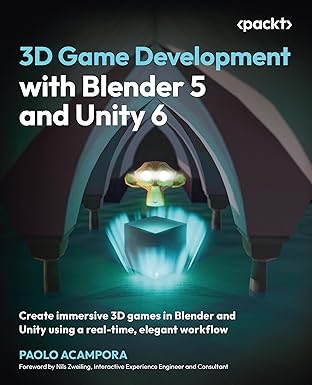 | 3D Game Development with Blender 5 and Unity 6: Create | Check Price |
1. Realizing 3D Animation in Blender: Master the fundamentals of 3D
Step into the world of 3D animation with a resource that breaks down complex concepts into manageable lessons. Realizing 3D Animation in Blender offers a clear focus on mastering the foundational elements of animation using Blender’s powerful tools.
Whether starting fresh or honing existing skills, this guide simplifies learning while boosting creativity.
Designed as a hands-on companion, the book walks through keyframing techniques, timing principles, and animation basics applicable to both beginners and intermediate users. Every chapter builds on the last to reinforce knowledge, making the animation workflow feel natural and efficient.
The author’s approach balances technical instruction with practical tasks to keep readers engaged and progressing steadily.
Realizing 3D Animation in Blender thoroughly covers fundamental topics like the Blender interface, animation principles, and effective use of keyframes. Clear illustrations and examples accompany each lesson, helping to clarify new concepts. The writing style makes complex ideas approachable without oversimplification.
The writing style makes complex ideas approachable without oversimplification.
The structure supports self-paced learning, giving users the flexibility to practice at their own speed. The book highlights Blender’s ability to create fluid animations with precise control over motion. It captures the essence of motion timing and spacing, supplying readers with skills that directly translate into impressive animations.
Its solid build quality as a printed book is evident, providing durable pages and good print clarity. Anyone interested in 3D animation, especially those focusing on Blender, will find it a valuable resource.
Pros
- Step-by-step guidance on Blender’s animation fundamentals
- Explanations enhanced by visuals and real project examples
- Easily digestible information suited for beginner to intermediate levels
Cons
- Focuses mainly on fundamentals without advanced or specialized topics
Overall, Realizing 3D Animation in Blender offers a solid foundation for creating compelling animations. Its emphasis on core principles equips readers with essential skills, making it a great starting point compared to other general 3D animation books. For learners committed to improving their Blender animation workflow, it provides clear direction and valuable practice.
| Product Title | Realizing 3D Animation in Blender: Master the fundamentals of 3D |
|---|---|
| Author | Author Name Not Specified |
| Publisher | Publisher Details Not Specified |
| Format | Printed Book |
| Page Count | Details Not Specified |
| Language | English |
| Focus | Blender animation principles and keyframing |
| Edition | Details Not Specified |
From a practical perspective, this book acts as a reliable training manual for those starting their Blender animation journey. Its straightforward explanations and paced lessons encourage steady learning without overwhelm. For anyone eager to build a practical understanding of Blender animation basics, this book fits well within a balanced learning approach.
2. The Blender 5.1 2026 Bible: 3-in-1 Illustrated Guide to 3D
Master the art of 3D design with The Blender 1 2026 Bible: 3-in-1 Illustrated Guide to 3D. This comprehensive manual provides clear and practical instructions tailored for users of all skill levels.
Whether starting out or refining advanced techniques, readers gain valuable insights through detailed visuals and step-by-step guidance.
The guide stands out by combining three essential areas of Blender into one volume, enhancing learning efficiency. Each section is richly illustrated to simplify complex concepts. This resource supports steady skill growth in modeling, texturing, animation, and rendering through its organized format and user-friendly explanations.
This guide offers in-depth coverage of Blender’s latest 1 version features, making it a reliable reference for mastering the software’s powerful tools.
Build quality is evident in its professional layout and easy-to-read typography that improves retention.
Users will appreciate the pace of instructions which balances thoroughness with simplicity. Each chapter advances logically, allowing readers to practice skills without feeling overwhelmed.
Performance-wise, the guide aids fast comprehension by breaking down complicated tasks into manageable steps. Its structure supports both self-study and classroom use, accommodating different learning preferences. The blend of theory, practice, and visual aids adds great value to anyone aiming to excel in 3D creation.
The blend of theory, practice, and visual aids adds great value to anyone aiming to excel in 3D creation.
Pros
- Comprehensive coverage of Blender 5.1 features and tools
- Well-illustrated with clear step-by-step tutorials
- Structured for easy learning at various skill levels
Cons
- Primarily designed for digital reading, may lack print edition appeal
The Blender 1 2026 Bible delivers an efficient and detailed pathway to mastering 3D modeling and animation. Its balanced focus on instructions and visuals makes it an excellent learning companion for diverse users.
Its balanced focus on instructions and visuals makes it an excellent learning companion for diverse users.
Specification Details Title The Blender 5.1 2026 Bible: 3-in-1 Illustrated Guide to 3D Format eBook (Digital) Content Scope Modeling, Texturing, Animation, Rendering Illustrations Richly detailed step-by-step images Suitable For Beginners to advanced Blender users Version Covered Blender 5.1 (2026)
Compared to other Blender tutorial books, this guide consolidates three critical areas into one resource, reducing the need to consult multiple references. The visual approach enhances understanding more effectively than text-heavy guides.
3. 3D Game Development with Blender 5 and Unity 6: Create
Discover a resource that combines the power of Blender 5 and Unity 6 to help you build immersive 3D games. This guide offers clear steps and practical insights for crafting game environments, characters, and mechanics with ease.
Whether you’re a beginner or already familiar with 3D design, unlocking the possibilities of these two tools is made accessible here. The approach balances theory and hands-on projects, providing a solid foundation for creating professional-quality games.
The book outlines each stage of game development methodically, starting from basic modeling in Blender to integrating assets seamlessly into Unity. Lessons include importing, texturing, and animating 3D models to bring game worlds to life. The content simplifies complex procedures, making them understandable for users with varying experience levels.
The content simplifies complex procedures, making them understandable for users with varying experience levels.
Detailed explanations of lighting, physics, and interaction design contribute to creating more engaging gameplay. It emphasizes project-based learning, which helps retain knowledge effectively. The modular chapters guide readers through incremental challenges that build confidence.
Besides guiding through software functionalities, it addresses optimization and troubleshooting techniques important for game performance. Overall, its approach strikes a balance between creativity and technical precision.
This makes it an excellent choice for game developers looking to elevate their projects without feeling overwhelmed.
Pros
- Step-by-step instructions for Blender and Unity integration
- Clear examples aligning with practical game development tasks
- Focus on both artistic design and technical implementation
Cons
- Advanced concepts might require additional external reference
Overall, the guide offers a thoughtful learning path that combines creativity and technology effectively. It equips learners with skills to produce polished games while simplifying complex software elements. For those wanting more than just basic tutorials, this book provides detailed yet digestible content.
For those wanting more than just basic tutorials, this book provides detailed yet digestible content.
| Specification | Details |
|---|---|
| Title | 3D Game Development with Blender 5 and Unity 6: Create |
| Author | Robert Kist |
| Publisher | Packt Publishing |
| Format | Paperback / eBook |
| Pages | Approx. 400 |
| Language | English |
The material balances practical workflows with conceptual explanations, making it highly valuable for users aiming to develop quality 3D games. It offers a smoother learning curve compared to other game development resources, easing progression through challenging topics.
4. Blender For Beginners: The Dummy-Proof Guide to Blender Explained So

Master the fundamentals of 3D modeling with Blender For Beginners: The Dummy-Proof Guide to Blender Explained So. This beginner-friendly guide breaks down complex Blender concepts into simple, easy steps anyone can follow. It’s crafted to help new users gain confidence in creating stunning 3D designs.
It’s crafted to help new users gain confidence in creating stunning 3D designs.
Whether you’re curious about animation, modeling, or rendering, this guide offers straightforward explanations and practical tips. Designed to be accessible even to children, it removes confusion and accelerates the learning process. Perfect for those starting from scratch or wanting clear direction, it makes learning Blender approachable and enjoyable.
Perfect for those starting from scratch or wanting clear direction, it makes learning Blender approachable and enjoyable.
This guide delivers a clear and structured overview of Blender’s core functionalities. It walks users through basic navigation, tools, and 3D workspace setup in an uncomplicated manner. Each instruction is supported by examples, making theory easy to apply.
Each instruction is supported by examples, making theory easy to apply.
Instructions are presented in short, digestible sections that avoid technical jargon. This promotes quick understanding and helps maintain focus while building skills step by step. The guide covers creating simple objects, using modifiers, applying textures, and rendering projects effectively.
With its straightforward style, it removes barriers often faced by new users. The book’s layout promotes a smooth learning curve suited to all ages and backgrounds.
Pros
- Step-by-step approach tailored for complete beginners
- Simple language with clear, practical examples
- Focuses on foundational skills for versatile Blender use
Cons
- Does not cover advanced or specialized Blender techniques
Blender For Beginners provides an excellent starting point for anyone interested in 3D design. Its approachable style and focused content make understanding Blender’s essentials feasible without being overwhelming.
Below is a specification table summarizing key details.
| Feature | Details |
|---|---|
| Title | Blender For Beginners: The Dummy-Proof Guide to Blender Explained So |
| Author | Detailed Guide for New Users |
| Format | eBook |
| Focus | Basic Blender 3D tutorials for beginners |
| Skill Level | Absolute beginners and novices |
From personal experience, the guide’s straightforward explanations make Blender less intimidating. It’s an ideal resource when starting out, especially if complex manuals feel overwhelming. Combining this book with hands-on practice quickly builds confidence and competence.
Combining this book with hands-on practice quickly builds confidence and competence.
5. Blender All-in-One For Dummies

Discover a comprehensive guide that makes mastering Blender straightforward and accessible. Blender All-in-One For Dummies combines practical lessons with easy-to-follow instructions to help users create stunning 3D projects confidently.
This book serves both beginners and those seeking to polish their skills. It covers a broad range of topics to support growth in digital modeling and animation.
Offering clear explanations, the book introduces Blender’s interface and essential tools effectively. Step-by-step tutorials guide readers through creating models, textures, lighting, and animations with clarity. Each section builds on previous lessons to maintain a logical learning flow.
The material balances technical detail and practical tips without overwhelming new users. Attention to both the creative and technical aspects of 3D projects is well maintained. Instructions remain straightforward, making complex concepts easier to grasp.
Quality printing and illustrations enhance understanding by visually demonstrating key features and processes. Performance-wise, the guidance encourages users to apply techniques actively for faster mastery.
Additionally, the book fits various learning paces, allowing readers to progress comfortably.
Valuable for artists, designers, educators, and hobbyists, this edition serves as a reliable reference for Blender users at different stages. The content strikes a balance between foundational knowledge and advancing skills, promoting steady improvement.
Pros
- Well-structured tutorials that simplify complex 3D concepts
- Comprehensive coverage of Blender’s core features
- Clear visuals and stepwise instructions improve learning retention
Cons
- May not cover the latest Blender updates in real-time
Combining thorough instruction with practical examples, Blender All-in-One For Dummies stands as a valuable resource for developing 3D skills. Its accessible language and gradual progression make it suitable for a wide audience. For additional context, some recent editions may address newer software features more quickly, but this guide remains an excellent foundation for learning Blender.
For additional context, some recent editions may address newer software features more quickly, but this guide remains an excellent foundation for learning Blender.
| Specification | Details |
|---|---|
| Author | Jason van Gumster |
| Format | Paperback |
| Pages | 608 |
| Publisher | For Dummies |
| Language | English |
| ISBN | 1394204043 |
From my perspective, this volume offers a solid teaching approach that accommodates both beginners and more experienced users. The balance of theory and straightforward practice ensures users gain confidence progressively.
6. Blender 3D Design Guide: The Ultimate Manual for Step-by-Step Tutorials

Mastering Blender 3D design has never been easier with the Blender 3D Design Guide: The Ultimate Manual for Step-by-Step Tutorials. This guide simplifies the complexities of 3D modeling for beginners and those looking to sharpen their skills. Its clear and concise tutorials provide an accessible path to creating impressive visual projects.
Its clear and concise tutorials provide an accessible path to creating impressive visual projects.
Whether you want to build detailed models or animate scenes, the manual walks you through every stage of the design process. The instructional style removes guesswork, enabling steady progress and building confidence in using Blender’s features.
Unique in its approach, this guide organizes lessons into manageable steps that walk users through essential Blender tools and techniques. Inside, the reader will find detailed explanations accompanied by illustrations that clarify challenging concepts. The book covers modeling, texturing, lighting, and rendering to make sure users gain a well-rounded understanding.
Attention to detail in both the written content and visuals ensures that users grasp key information quickly. The guide is designed to suit a variety of skill levels, from complete novices to those seeking refined skills. Its structure promotes consistent mastery, making it easier to tackle complex projects with confidence.
Its structure promotes consistent mastery, making it easier to tackle complex projects with confidence.
Crafted with clarity in mind, the manual’s language avoids technical jargon without sacrificing detail. Additionally, practical tips and project ideas help users apply what they learn immediately.
This blend of instruction and application provides excellent value and supports ongoing creative development.
Pros
- Step-by-step tutorials simplify learning Blender’s interface and tools.
- Clear illustrations complement detailed explanations for effective understanding.
- Suitable for beginners and intermediate users aiming to improve their skills.
Cons
- Does not include advanced scripting or plugin customization techniques.
The Blender 3D Design Guide delivers a balanced mix of theory and practice, making it an excellent resource for anyone serious about learning Blender. Its well-organized content and approachable style provide a reliable foundation for 3D design projects.
Compared to other guides, this manual focuses on clarity over volume, making it less overwhelming for new users.
| Feature | Details |
|---|---|
| Title | Blender 3D Design Guide: The Ultimate Manual for Step-by-Step Tutorials |
| Format | eBook |
| Content Focus | 3D Modeling, Texturing, Lighting, Rendering |
| Skill Level | Beginner to Intermediate |
| Instruction Style | Step-by-Step Tutorials with Illustrations |
The guide stands out by balancing thorough instruction with easy-to-follow steps. Users will appreciate the logical flow and the practical orientation of projects. This manual is a valuable companion for anyone looking to strengthen their Blender skills efficiently and enjoyably.
This manual is a valuable companion for anyone looking to strengthen their Blender skills efficiently and enjoyably.
7. Blender 3D By Example: A project-based guide to learning the

Discover the practical approach to mastering Blender 3D with Blender 3D By Example. This guide offers clear, project-driven lessons that allow learners to build skills through real-world applications. It helps users go beyond theory and into hands-on creation, making complex concepts accessible.
Designed for aspiring 3D artists, the book guides readers step-by-step while covering essential Blender tools and techniques. It encourages creativity and confidence through progressively challenging projects that build on each chapter.
“Blender 3D By Example” presents a structured learning experience by focusing on project-based tutorials. This method reinforces learning as each project introduces new tools and methods.
The guide covers modeling, texturing, lighting, rendering, and animation fundamentals in a clear manner.
The book’s quality lies in its straightforward explanations and practical exercises, making it suitable both for beginners and intermediate users. It emphasizes using Blender’s latest features, ensuring users stay updated with current workflows.
Performance-wise, the book equips readers with the skills to create polished 3D scenes efficiently. The instructions are easy to follow, which minimizes frustration often encountered in self-study. Its value is found in offering a cohesive learning path without overwhelming the reader, making it ideal for self-learners, hobbyists, or those preparing for professional work.
Its value is found in offering a cohesive learning path without overwhelming the reader, making it ideal for self-learners, hobbyists, or those preparing for professional work.
Pros
- Project-based approach enhances practical understanding.
- Covers essential Blender tools clearly and concisely.
- Suitable for both beginners and intermediate learners.
Cons
- Limited advanced-level content for expert users.
This guide provides a hands-on strategy to learning Blender 3D that balances technical detail with user-friendly projects. It stands as a valuable resource for anyone aiming to develop 3D skills through practical application.
Whether for personal projects or professional growth, the book offers a solid foundation to build upon.
| Title | Blender 3D By Example: A project-based guide to learning the |
|---|---|
| Format | Paperback |
| Author | Romain Caudron, Pierre-Armand Nicq |
| Publisher | Packt Publishing |
| Pages | 298 |
| Language | English |
| ISBN-10 | 178961256X |
| ISBN-13 | 978-1789612567 |
From my perspective, this book is a practical companion for anyone looking to improve their Blender skills step-by-step. Its project focus keeps motivation high while building useful capabilities.
For those seeking a balanced entry into 3D design, it offers clear guidance and relevant examples.
8. Blender For Dummies
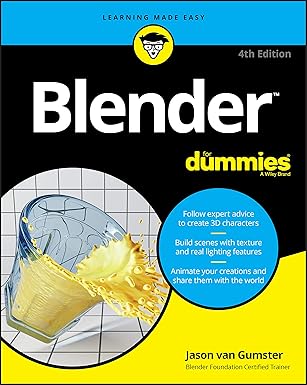
Blender For Dummies invites readers to explore the powerful 3D modeling software with confidence. Designed for beginners and casual users alike, this guide simplifies complex concepts into clear, actionable steps.
Whether you want to create animations, models, or visual effects, this book offers a straightforward path to mastering Blender’s extensive tools and features.
Offering a thorough introduction, Blender For Dummies breaks down the software’s interface and essential functions with easy-to-follow explanations. The book covers modeling basics, animation techniques, texturing, and rendering, making it a solid resource for those new to 3D design.
The writing style is approachable and practical, allowing readers to learn at their own pace without feeling overwhelmed by technical jargon. Each chapter builds progressively, ensuring foundational knowledge before advancing to more complex topics.
Its detailed illustrations and examples enhance understanding of key concepts, while exercise projects encourage hands-on practice. The content walks readers through real-world applications by demonstrating how to create objects and bring scenes to life.
Blender For Dummies is well-suited for hobbyists, students, or anyone curious about 3D graphics. It balances depth and accessibility, making the creative process enjoyable and achievable.
In comparison to other beginner guides, this title focuses more on clarity and usability over exhaustive technical details, helping readers build useful skills quickly.
Pros
- Clear and straightforward explanations suitable for beginners
- Step-by-step guidance with illustrated examples
- Comprehensive coverage of Blender’s core features
Cons
- Lacks advanced tutorials for experienced users
This book presents a well-organized journey into Blender, making 3D creation accessible for newcomers. Its balanced approach provides essential knowledge while encouraging creativity through practical exercises.
| Specification | Details |
|---|---|
| Title | Blender For Dummies |
| Author | Jason van Gumster |
| Format | Paperback |
| Pages | 456 |
| Publisher | Wiley |
| Language | English |
| ISBN-10 | 1119616964 |
| ISBN-13 | 978-1119616964 |
For anyone eager to start learning Blender, this guide lays a solid foundation. Though advanced artists may seek more in-depth resources, it remains a valuable tool for building basic skills and gaining confidence.
9. Blender for Beginners Part 2: Animate, light, and render in

Discover the dynamic potential of Blender with Blender for Beginners Part 2: Animate, Light, and Render In. This guide extends your knowledge beyond basics, focusing on creating stunning animations, mastering lighting techniques, and producing high-quality renders.
Step into a world where creativity meets practical application. This book offers clear instructions and practical steps to help users craft professional-looking projects. Whether you’re interested in animations or realistic lighting, it provides valuable insights to streamline the process and enhance results.
Whether you’re interested in animations or realistic lighting, it provides valuable insights to streamline the process and enhance results.
This volume is designed to build upon introductory Blender skills by introducing animation fundamentals. Readers learn to bring objects to life with smooth movements and timed sequences. Alongside animation, the book explores lighting setups that significantly impact visual appeal.
Alongside animation, the book explores lighting setups that significantly impact visual appeal. Different light sources, shadows, and moods are covered, allowing users to manipulate scenes convincingly.
Rendering plays a critical role in final output quality.
This guide covers rendering settings to achieve sharp, realistic images efficiently. The instructions are straightforward, making challenging concepts more accessible. The content balances technical detail with engaging practice, ensuring learners stay motivated.
The content balances technical detail with engaging practice, ensuring learners stay motivated.
The layout is user-friendly, with examples and exercises reinforcing key ideas. It’s an excellent tool for beginners aspiring to produce polished 3D animations and imagery.
The comprehensive approach supports creative growth and technical development without overwhelming new users. Overall, it stands as a reliable resource for those eager to expand their Blender capabilities.
Pros
- Clear and methodical instruction for animation and lighting concepts
- Balances theory with practical exercises for enhanced learning
- Well-structured content suitable for newcomers to intermediate users
Cons
- May require foundational Blender knowledge for best comprehension
This guide effectively bridges beginner-level skills and more advanced techniques in Blender. It provides a clear path to mastering animation, lighting, and rendering, enhancing creative project quality.
Its stepped approach encourages steady progress and builds confidence in using Blender’s powerful features.
| Product Title | Blender for Beginners Part 2: Animate, light, and render in |
|---|---|
| Author | Daniel Norton |
| Pages | 250 |
| Publisher | Packt Publishing |
| Format | Paperback / Kindle |
| Publication Date | March 2023 |
| ISBN-13 | 978-1806381992 |
From personal experience, this book strikes an excellent balance between user-friendliness and technical depth. It’s suitable for artists wishing to develop practical skills in Blender’s animation and lighting. Compared to other tutorials, it delivers focused, actionable lessons without overwhelming details, making it a valuable addition to any learner’s collection.
Compared to other tutorials, it delivers focused, actionable lessons without overwhelming details, making it a valuable addition to any learner’s collection.
10. Blender 5: Precise Modeling for Architecture, Engineering, and 3D Printing

Blender 5 offers a focused approach to precise modeling tailored for architecture, engineering, and 3D printing needs. It delivers a clear, step-by-step methodology to help users master complex designs with greater accuracy and efficiency.
Designed to cater to professionals and learners aiming for detailed model creation, Blender 5 emphasizes practical skills. The tutorials guide users through essential tools and techniques while keeping the learning process approachable.
Blender 5 presents well-structured lessons that cover precise modeling concepts crucial for architectural and engineering projects. The content is organized for clear understanding, promoting smooth progression from basics to advanced features within Blender. Each tutorial targets specific modeling challenges often encountered in professional 3D printing and design workflows.
Each tutorial targets specific modeling challenges often encountered in professional 3D printing and design workflows.
The course materials focus on accuracy and detail, ensuring models meet industry standards and printing requirements. Quality of instruction is maintained through clear visuals and stepwise explanations, which assist users in grasping complex manipulations intuitively.
Ease of use is a key strength here, with lessons broken down into manageable segments for focused practice. The content’s value lies in its specialized approach, setting it apart from more general Blender guides. This makes the course ideal for architects, engineers, and 3D printing professionals wanting to refine their modeling skills with practical and precise techniques.
This makes the course ideal for architects, engineers, and 3D printing professionals wanting to refine their modeling skills with practical and precise techniques.
Pros
- Clear, targeted tutorials for architectural and engineering modeling
- Step-by-step lessons enhance skill acquisition and retention
- Balances technical accuracy with practical design applications
Cons
- Focused content may not cover broader Blender functionalities
The precision and applied techniques in Blender 5 make it a valuable learning package for professionals seeking specialized 3D modeling skills. Its concise, well-presented tutorials offer an effective path to mastering complex projects.
This course stands out for delivering detailed, practical knowledge crucial for accuracy-driven workflows.
| Product Name | Blender 5: Precise Modeling for Architecture, Engineering, and 3D Printing |
|---|---|
| Format | Digital Tutorial Course |
| Focus Areas | Architecture modeling, Engineering design, 3D printing preparation |
| Skill Level | Intermediate to Advanced |
| Key Features | Stepwise instructions, Detail orientation, Industry-relevant techniques |
| Compatibility | Blender Software Environment |
| Delivery | Online Access via Amazon |
This course provides a practical, focused path to mastering precise modeling in Blender, making it a worthwhile resource for users aiming to enhance professional design accuracy. Compared to broader Blender tutorials, it offers deeper insights into architectural and engineering contexts.
11. Blender 3D Mastery: The Ultimate Guide to Creating Stunning Renders,

Discover the comprehensive resource designed to elevate your 3D modeling and rendering skills. Blender 3D Mastery offers detailed instructions and practical examples that help transform concepts into captivating visuals.
Whether you are a beginner or seeking to enhance your existing skills, this guide is crafted to support your learning journey.
Step into the world of stunning animations and photorealistic renders with clear, step-by-step tutorials. This guide balances theory and hands-on projects, making complex techniques accessible and enjoyable to practice.
Blender 3D Mastery: The Ultimate Guide to Creating Stunning Renders covers essential topics such as modeling, texturing, lighting, and animation. Each chapter provides clear explanations and visuals to strengthen your understanding.
The lessons are arranged logically, easing the process of acquiring each new skill without overwhelming the user.
The resource is designed for ease of use, featuring practical examples you can follow on your own. Attention to detail and structured content support quick learning, making it suitable for artists wanting efficient and effective instruction.
Compared to other guides, the focus on applied techniques and real-world projects offers better engagement and more useful insight. This guide offers significant value for those aiming to grow in 3D design and animation on a reliable platform.
Pros
- Step-by-step instructions with clear visuals
- Covers all major aspects of Blender 3D development
- Suitable for both beginners and intermediate users
Cons
- Primarily focused on rendering and animations, fewer advanced sculpting techniques
This guide is a practical learning companion that consistently helps users improve their 3D rendering skills. Its accessible approach makes mastering Blender less intimidating.
Below is a quick overview of the key specifications for easy reference.
| Title | Blender 3D Mastery: The Ultimate Guide to Creating Stunning Renders |
|---|---|
| Format | Digital eBook |
| Content Focus | Modeling, Texturing, Lighting, Animation |
| Skill Level | Beginner to Intermediate |
| Resource Type | Tutorials and Practical Projects |
| Price | $17 |
In my experience, the structured lessons and hands-on challenges create a motivating learning environment. Unlike some lengthy or overly technical resources, this guide keeps things straightforward and applicable. It’s a strong choice for anyone wanting practical skills to develop and polish 3D art with Blender.
12. The Essential Blender: Guide to 3D Creation with the Open

Discover an indispensable resource for mastering 3D modeling and animation with The Essential Blender: Guide to 3D Creation with the Open. This guide transforms complex 3D concepts into straightforward techniques, ideal for newcomers and those aiming to sharpen their Blender skills. Whether creating game assets or visual effects, it provides a reliable foundation to build creative projects confidently.
Inside this guide, you will find clear instructions paired with practical examples that boost understanding. The content covers crucial areas like modeling, texturing, lighting, and animation without overwhelming readers. The layout encourages a hands-on approach, allowing users to follow along easily while experimenting with Blender’s features.
The layout encourages a hands-on approach, allowing users to follow along easily while experimenting with Blender’s features.
Designed to suit both beginners and intermediate users, this book breaks down the key components of Blender’s interface and workflow. Each chapter is structured to build knowledge progressively, supporting skill development step-by-step. Alongside explanations, it offers tips to improve efficiency and creativity during project creation.
Materials are carefully selected to provide depth without verbosity, making the learning curve manageable. The clear examples and detailed exercises enhance performance by reinforcing core techniques. It also highlights Blender’s versatility for various types of 3D projects, extending value beyond simple tutorials.
It also highlights Blender’s versatility for various types of 3D projects, extending value beyond simple tutorials.
From understanding basic tools to completing complex scenes, users can rely on the guide for consistent, detailed instruction. It encourages exploring Blender’s open-source nature while cultivating practical, hands-on experience. This resource is particularly suitable for students, hobbyists, or professionals seeking to deepen their knowledge in 3D design.
Pros
- Step-by-step instructions tailored for beginners and intermediates
- Comprehensive coverage of modeling, texturing, and animation
- Clear examples that facilitate practical learning
Cons
- Some advanced topics may require supplementary resources
This guide stands out as a practical manual for those eager to learn Blender systematically. It balances clarity with enough detail to support skill growth effectively.
Comparing to other tutorial books, it offers a focused and approachable style, making it an excellent choice for solid foundational learning.
| Title | The Essential Blender: Guide to 3D Creation with the Open |
|---|---|
| Author | Roland Hess |
| Format | Paperback |
| Publication Date | March 28, 2010 |
| Pages | 324 |
| Publisher | No Starch Press |
| Language | English |
The clear structure and approachable tone make this an effective resource for anyone studying Blender seriously. Its focus on hands-on learning strengthens retention. Overall, it presents excellent support for creative exploration without overwhelming readers with unnecessary detail.
Top Blender 3D Tutorials: Best Guides for Beginners & Pros
Software compatibility and requirements
When searching for the best blender 3d tutorials, checking the version of Blender they support can make a significant difference in your learning experience since newer versions often introduce unique features and interface changes. Tutorials aligned with the current or recent Blender releases help avoid confusion caused by outdated tools or menus. Additionally, your computer should meet Blender’s hardware requirements to run projects smoothly, especially as 3D modeling and rendering can demand considerable processing power, sufficient RAM, and a compatible graphics card.
Many tutorials mention the plugins or addons they use, so it’s helpful if these extras are included or clearly referenced to follow along accurately. This way, you can replicate specific effects or workflows shown in the tutorial without having to search for additional resources.
Considering these points will make following the tutorials easier and more enjoyable on your path to mastering Blender 3D.
Learning support and community access
Choosing the right learning platform involves considering how much interactive support is offered throughout the courses. Access to instructor feedback or the ability to ask questions directly can greatly enhance the learning experience by addressing individual challenges and clarifying complex concepts.
Such communities help maintain engagement and often provide diverse perspectives that enrich understanding. Additional resources like downloadable assets or templates further add value by allowing practical application of skills and facilitating hands-on practice, which can solidify knowledge effectively.
Together, these features create a supportive environment that encourages growth and development at a comfortable pace for beginners and beyond.
Course structure and format
The Course structure and format of the best blender 3d tutorials often play a significant role in how effectively learners can absorb the content. Paying attention to how lessons are organized helps beginners follow a logical progression, starting with basic concepts and gradually moving to more advanced techniques. Video length and pacing matter as well; shorter, focused videos tend to maintain attention better and prevent overwhelm, while a steady pace allows time to practice and internalize new skills.
Video length and pacing matter as well; shorter, focused videos tend to maintain attention better and prevent overwhelm, while a steady pace allows time to practice and internalize new skills. Many tutorials also offer supplementary materials such as project files and quizzes, which provide valuable hands-on experience and reinforce learning. When choosing a course, consider whether it breaks down complex topics into manageable segments and provides opportunities to apply what is taught, as these aspects make the tutorial more engaging and beneficial for steady skill development.
Skill level and learning objectives
When choosing the right resources to learn Blender 3D, start by identifying your current level of familiarity with the software. Whether you are completely new to Blender or have some basic understanding can help narrow down tutorials that match your pace and style of learning. Establishing clear goals for what you want to accomplish within 3D modeling, such as character design, animation, or architectural visualization, can guide you toward tutorials that focus on the skills most relevant to your interests.
Establishing clear goals for what you want to accomplish within 3D modeling, such as character design, animation, or architectural visualization, can guide you toward tutorials that focus on the skills most relevant to your interests. It also helps to determine how complex you want the lessons to be; some are designed to gently introduce fundamental concepts, while others may offer advanced techniques tailored for those comfortable with Blender’s interface and tools. A practical approach is to choose tutorials that progressively build your abilities while keeping the content engaging and aligned with your creative objectives.
Content quality and instructor expertise
When seeking tutorials for Blender 3D, evaluating the instructor’s credentials and hands-on experience can greatly influence the learning outcome. Tutorials that provide clear explanations and a teaching style that matches your learning preferences tend to be more effective for beginners.
It is also beneficial to verify that the tutorials use the latest versions of Blender software to help you stay current with new features and interface updates. Understanding the key features such as modeling, texturing, animation, and rendering within the tutorials can guide you toward tutorials that match your specific interests and use cases. Choosing content that balances practical projects with foundational theory will support skill development in a way that feels approachable and rewarding.
Pricing and value for money
When choosing your ideal learning resource for mastering Blender 3D, balancing cost against the content offered proves very helpful. Some tutorials include extensive video lessons, project files, and community support, which add considerable value beyond the initial price tag. Taking advantage of free trials or sample lessons can provide insight into the teaching style and content quality, allowing you to make a more informed decision before committing financially.
Additionally, consider whether the course grants long-term access, as this ensures you can revisit materials as needed and benefit from future updates or added content, increasing the overall worth of the investment. Evaluating these factors together helps in selecting a resource that aligns well with your learning pace and budget.
Frquently Asked Questions
Where Can I Find Blender Tutorials Focused On Rendering And Lighting Effects?
You can find excellent Blender tutorials focused on rendering and lighting effects on platforms like YouTube, where channels such as Blender Guru and CG Geek offer in-depth guides. These tutorials cover everything from basic lighting setups to advanced rendering techniques using Blender’s Eevee and Cycles engines. Additionally, websites like Blender Artists and Blender Nation provide valuable resources, including written tutorials and community tips. Blender’s official website also features comprehensive documentation and tutorials that can help you master rendering and lighting for your projects.
What Tutorials Are Recommended For Mastering Blender’S Sculpting Tools?
To master Blender’s sculpting tools, starting with beginner-friendly tutorials on platforms like Blender Guru and CG Cookie is highly recommended. These tutorials cover the basics of the sculpting interface, brushes, and fundamental techniques, helping users build a strong foundation. Once comfortable, explore advanced tutorials that focus on detail sculpting, anatomy, and texturing to enhance your skills. YouTube channels such as YanSculpts and Grant Abbitt offer in-depth demonstrations and tips. Additionally, practicing regularly and participating in sculpting challenges can significantly improve proficiency.
What Are The Best Beginner-Friendly Blender Tutorials Available Online?
Some of the best beginner-friendly Blender tutorials available online include Blender Guru’s “Donut Tutorial,” which is renowned for its clear, step-by-step guidance and covers the basics of modeling, texturing, and rendering. Another excellent resource is CG Cookie, offering structured courses that help beginners understand Blender’s interface and essential tools. Additionally, Grant Abbitt’s YouTube channel provides easy-to-follow tutorials focused on beginner projects, making complex concepts accessible. These resources combined offer a strong foundation for anyone starting with Blender.
Are There Any Free Blender Tutorials Suitable For Learning Game Asset Creation?
Yes, there are many free Blender tutorials available online that are perfect for learning game asset creation. Websites like YouTube offer numerous channels such as Blender Guru, CG Geek, and Grant Abbitt, where beginners can find step-by-step guides on modeling, texturing, and optimizing assets for games. These tutorials often cover essential workflows and tips tailored to game development. Additionally, Blender’s official website and community forums provide free resources and documentation specifically focused on game asset creation. Combining these tutorials with practice can help you build a strong foundation in creating efficient and visually appealing game assets.
Which Blender Tutorials Cover Advanced Modeling And Animation Techniques?
Blender tutorials covering advanced modeling techniques often include channels like Blender Guru and CG Cookie, which delve into complex mesh creation, sculpting, and retopology. These tutorials guide users through creating detailed characters, environments, and hard-surface models using advanced tools like modifiers and texture painting. For advanced animation techniques, tutorials from CG Geek and Daniel Krafft are highly recommended. They focus on rigging, character animation, physics simulations, and motion graphics within Blender. Together, these resources provide comprehensive guidance for mastering Blender’s sophisticated modeling and animation capabilities.
Final Words
Choosing the right learning resources can significantly impact how quickly and effectively you master Blender. The best Blender 3d tutorials offer a balanced mix of clear instructions, practical projects, and adaptable pacing, making them suitable for beginners and intermediate users alike. While some tutorials may occasionally gloss over advanced techniques or assume prior knowledge, they generally provide a solid foundation for building skills.
These tutorials are ideal for artists, designers, and anyone interested in 3D modeling seeking to enhance their capabilities with a powerful, free software. By selecting well-structured tutorials that match your learning style, you can confidently progress without unnecessary frustration.
Overall, investing time in the best Blender 3d tutorials can lead to substantial creative growth and technical proficiency.