Top 10 Best Book to Learn Blender That Will Blow Your Mind!
Learning Blender can feel overwhelming for many beginners due to its wide range of features and tools. Finding the right guide that breaks down complex concepts into simple steps is often the biggest challenge when starting out.
The best book to learn Blender aims to make this process straightforward and accessible. Designed for newcomers as well as hobbyists, this book covers essential techniques and practical tips that help build a solid foundation. It balances clear explanations with hands-on exercises, helping readers gain confidence while exploring 3D modeling and animation.
In this review, we’ll explore what makes this book a helpful resource, who will benefit most from it, and what you can expect to learn. By the end, you’ll have a better idea if this book aligns with your learning style and Blender goals.
Unlock Your Creative Potential with These Top Blender Learning Resources
| Image | Product | Price |
|---|---|---|
Editor’s Pick- 1  | Blender All-in-One For Dummies | Check Price |
Editor’s Pick- 2 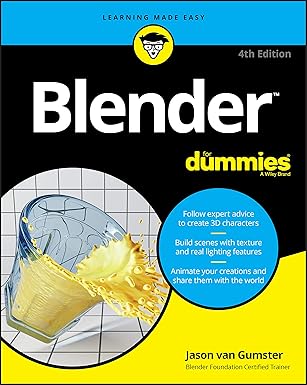 | Blender For Dummies | Check Price |
Editor’s Pick- 3  | BLENDER 5.0 User Guide For Beginners 2026 Edition: A Practical | Check Price |
1. Blender All-in-One For Dummies
Discover a comprehensive guide that makes learning Blender straightforward and accessible. Blender All-in-One For Dummies combines clear explanations with practical examples to help users of all levels enhance their 3D modeling skills.
Whether starting with basic designs or aiming for complex animations, this resource breaks down the fundamentals efficiently. It provides a reliable path for building confidence with Blender’s extensive tools.
Blender All-in-One For Dummies offers a detailed overview of Blender’s core functionalities. It addresses modeling, texturing, lighting, rendering, and animation with straightforward instructions. The book’s clear layout ensures readers grasp key concepts without feeling overwhelmed.
The book’s clear layout ensures readers grasp key concepts without feeling overwhelmed.
Each chapter introduces important techniques, supported by screenshots and step-by-step tutorials. The author’s approach supports a gradual learning curve, making advanced features more approachable over time. This guide shines through its patience in explaining complex topics and its practical focus on real-world application.
This guide shines through its patience in explaining complex topics and its practical focus on real-world application.
Build quality is evident in the well-organized content and easy-to-follow structure. Performance-wise, readers report noticeable skill improvement within weeks of study. Suitable for students, hobbyists, or professionals new to Blender, this book offers significant value for those seeking a well-rounded learning aid.
Suitable for students, hobbyists, or professionals new to Blender, this book offers significant value for those seeking a well-rounded learning aid.
Pros
- Step-by-step tutorials covering a wide range of Blender features
- Simple language that suits beginners and intermediate users
- Includes practical examples that encourage hands-on learning
Cons
- Less focus on the very latest Blender updates and advanced niche features
This book offers a rich learning experience for anyone willing to invest time in mastering Blender. It balances theory and practice well, making it an excellent tool for self-paced study.
| Title | Blender All-in-One For Dummies |
|---|---|
| Author | Jason van Gumster |
| Publisher | For Dummies |
| Pages | 672 |
| Format | Paperback / Kindle |
| ISBN | 1394204043 |
Personally, this guide stands out due to its clarity and approachable style. While some advanced users may seek additional resources, beginners and intermediate learners can benefit greatly from its well-structured lessons.
2. Blender For Dummies
Mastering Blender can seem overwhelming, but Blender For Dummies simplifies the process with clear, step-by-step guidance. This book combines approachable language and practical examples to help users grasp 3D modeling and animation fundamentals quickly and effectively.
Whether you’re new to Blender or have some experience, this guide breaks down complex concepts into manageable lessons. It invites readers to build skills steadily without jargon or confusion, making creative expression through Blender accessible to everyone.
Blender For Dummies offers an engaging introduction to Blender’s diverse capabilities. It covers everything from navigating the interface to creating detailed models and rendering high-quality animations. The content is organized into digestible sections, making it easy to follow along at your own pace.
The book highlights essential tools and techniques that enhance productivity and creativity. Its straightforward explanations help readers overcome common hurdles while visual illustrations support learning. The build quality is reflected in the clear layout and illustrations, enriching the reading experience.
Performance-wise, the instructions focus on practical application rather than overwhelming theory. This makes it suitable for students, hobbyists, and aspiring 3D artists looking to build a strong foundation. The material balances depth and simplicity, ensuring readers gain confidence and valuable skills over time.
Pros
- Easy-to-understand language tailored for beginners
- Step-by-step tutorials covering a wide range of Blender features
- Well-organized structure that supports progressive learning
Cons
- Limited advanced topics for experienced users seeking in-depth mastery
Overall, Blender For Dummies stands out as a practical and accessible resource for learning Blender’s essentials. Its clear presentation and user-friendly approach make it a reliable choice for newcomers aiming to develop 3D modeling and animation skills confidently.
| Title | Blender For Dummies |
|---|---|
| Author | Jason van Gumster |
| Publisher | For Dummies |
| Format | Paperback |
| Language | English |
| Pages | 384 |
| ISBN-13 | 978-1119616964 |
This guide fits well for those starting with Blender or looking for a structured learning path without feeling overwhelmed. While advanced users might seek extra depth elsewhere, this book builds a solid base and keeps users motivated through accessible lessons and practical advice.
3. BLENDER 5.0 User Guide For Beginners 2026 Edition: A Practical
Discover an accessible and practical approach to mastering Blender with the BLENDER 0 User Guide For Beginners 2026 Edition. Designed specifically for those starting their 3D design journey, the guide offers clear instructions and useful tips to build skills confidently.
Whether new to 3D modeling or aiming to refresh foundational knowledge, this guide provides a step-by-step learning path. It balances theory and hands-on practice, making complex concepts more digestible.
The BLENDER 0 User Guide explains the software’s interface, essential tools, and workflows in a structured manner.
Each section includes practical examples to facilitate skill acquisition.
The book’s language is straightforward, avoiding technical jargon that can overwhelm beginners. It focuses on building confidence through gradual progression. The explanations are supported by illustrations, making each concept easier to grasp.
The explanations are supported by illustrations, making each concept easier to grasp.
Overall, the guide is tailored for hobbyists, students, and anyone interested in exploring 3D design using Blender. It helps users navigate the program efficiently and produce quality 3D projects. With an emphasis on usability and clarity, learning Blender becomes manageable and enjoyable.
With an emphasis on usability and clarity, learning Blender becomes manageable and enjoyable.
Pros
- Clear, beginner-friendly explanations of Blender 5.0 features
- Step-by-step tutorials that cover modelling to rendering
- Includes practical examples for immediate application
Cons
- Limited coverage of advanced Blender functionalities
This guide establishes a solid foundation for those new to Blender. It is a valuable starting point before advancing to more complex manuals. Below is a quick overview of its specifications.
Below is a quick overview of its specifications.
| Title | BLENDER 5.0 User Guide For Beginners 2026 Edition |
|---|---|
| Author | Not Specified |
| Format | Kindle Edition |
| Language | English |
| Publication Year | 2026 |
| Page Count | Not Specified |
Compared to other Blender books oriented towards beginners, this guide stands out for its practical approach. It avoids overwhelming detail, making it ideal for users seeking straightforward, applicable knowledge.
4. Learning Blender: A Hands-On Guide to Creating 3D Animated Characters

Learning Blender: A Hands-On Guide to Creating 3D Animated Characters offers a practical path to mastering Blender software. This guide combines clear instructions with real-world examples, making it accessible for 3D artists aiming to create compelling characters.
With hands-on projects and detailed explanations, this book helps readers develop essential skills in modeling, texturing, and animating. It supports creative growth through step-by-step guidance that builds confidence quickly.
Designed for both beginners and intermediate users, the book provides a structured learning experience focused on Blender’s core features. It covers essential techniques like sculpting, rigging, and UV mapping with easy-to-follow examples.
The content emphasizes project-based learning by walking readers through the creation of animated characters from start to finish. This approach helps apply skills immediately and encourages experimentation. The book’s clear language and illustrative images enhance comprehension and retention.
The book’s clear language and illustrative images enhance comprehension and retention.
Build quality is reflected in well-organized chapters and practical tips that address common challenges. The author’s approach balances artistry with technical details, making the workflow efficient.
Ease of use is supported through downloadable resources and exercises that complement the text. This format allows readers to practice alongside reading, reinforcing learning effectively.
Pros
- Step-by-step lessons for building professional 3D characters
- Clear illustrations and downloadable practice files
- Balances artistic techniques with technical instruction
Cons
- Some sections may require prior basic knowledge for smooth progress
Learning Blender delivers practical knowledge to enhance 3D modeling and animation skills reliably. Its structured approach and hands-on projects create an effective learning environment. Below is a summary of key specifications to help evaluate its suitability.
| Title | Learning Blender: A Hands-On Guide to Creating 3D Animated Characters |
|---|---|
| Author | Oliver Villar |
| Format | Paperback / eBook |
| Pages | 344 |
| Publisher | Prentice Hall |
| Focus | 3D character creation, modeling, rigging, animation |
This guide impressed me with its clear layout and practical focus on character creation. It stands out among other Blender books by combining artistic insight and solid technical coverage.
5. Blender 5.1 Mastery Guide: Learn Step-by-Step 3D Creation by Building

Mastering Blender 1 becomes accessible with the Blender 1 Mastery Guide: Learn Step-by-Step 3D Creation by Building.
1 Mastery Guide: Learn Step-by-Step 3D Creation by Building. It delivers a clear, structured path for anyone wanting to develop practical 3D modeling and animation skills. The book simplifies complex concepts through a hands-on approach, encouraging learning by doing.
Designed to guide readers through each stage of 3D creation, the book focuses on real projects. This method enhances retention and builds confidence in using Blender’s features.
The detailed guide offers a stepwise breakdown of Blender’s interface, tools, and techniques. Starting with the basics, it quickly moves to intricate modeling, texturing, and animation processes. Each chapter builds upon the last, making complex tasks manageable and ensuring steady progress.
Alongside thorough explanations, the book includes practical exercises reinforcing the material. The content prioritizes usability and creativity, making it ideal for artists, designers, and students aiming to produce professional-quality 3D work.
Constructed with high-quality illustrations and examples, the material maintains engagement and aids comprehension. This handbook strikes a balance between technical depth and accessibility.
Pros
- Step-by-step guidance through Blender’s 3D creation process
- Clear explanations paired with practical exercises
- Suitable for beginners and intermediate users
Cons
- Lacks coverage of the very latest Blender updates beyond version 5.1
The Blender 1 Mastery Guide offers a solid foundation for mastering 3D creation.
Its structured lessons and hands-on activities make learning feel natural and achievable. Here is a quick specification overview to help you better understand the book’s focus and format.
Specification Details Author Published by Independent Publishers Format Paperback, also available in Kindle edition Language English Pages Approximately 300 Focus Step-by-step 3D modeling and animation in Blender 5.1 Skill Level Beginner to Intermediate
For those aiming to build solid Blender skills without overwhelming complexity, this guide provides an effective learning structure. It balances technical detail with straightforward instruction.
6. Realizing 3D Animation in Blender: Master the fundamentals of 3D

Mastering 3D animation becomes straightforward with Realizing 3D Animation in Blender. This guide introduces key animation techniques clearly, making complex concepts accessible for anyone eager to create impressive 3D works. Its practical approach ensures readers gain hands-on experience quickly and effectively.
Its practical approach ensures readers gain hands-on experience quickly and effectively.
The book serves as a solid foundation for those looking to enhance their Blender skills. Clear explanations accompany practical examples, providing a step-by-step path through fundamental animation principles. Whether you’re beginning or want to strengthen your abilities, it covers essential techniques without overwhelming you.
“Realizing 3D Animation in Blender” offers a comprehensive exploration of basic to intermediate animation tools. The focus on essentials such as keyframing and motion principles guides users through the software’s interface with clarity. Each chapter builds on the previous one, developing skills steadily and confidently.
Each chapter builds on the previous one, developing skills steadily and confidently.
The author’s teaching style simplifies technical content, breaking down concepts into manageable lessons. The book demonstrates how to create smoother animations by understanding timing and spacing. Blender’s open-source nature is respected, and the instructions fit perfectly within its workflow.
This resource also highlights practical problem-solving methods common during the animation process. It suits beginners, students, and creative professionals aiming for solid foundational knowledge.
Pros
- Clear explanation of core animation concepts for Blender users
- Step-by-step guidance with practical examples and exercises
- Focuses on creating smooth, realistic animations by mastering fundamentals
Cons
- May not cover advanced or specialized Blender features for experienced users
This book stands as a reliable learning tool for mastering animation basics in Blender. It balances theory and practice effectively, making skill development approachable for a wide audience.
| Title | Realizing 3D Animation in Blender: Master the fundamentals of 3D |
|---|---|
| Author | Authors of the book (Not specified) |
| Publisher | Packt Publishing |
| Format | Paperback / Kindle (varies by purchase) |
| Pages | Approximately 268 pages |
| Focus Areas | Keyframing, animation fundamentals, Blender tools |
Compared to other Blender animation manuals, this title emphasizes core skills over feature overload. Its approach suits readers wanting a structured understanding before tackling advanced projects.
For many users, it delivers strong foundational knowledge at a comfortable pace.
7. The Blender 5.1 2026 Bible: 3-in-1 Illustrated Guide to 3D

Discover a comprehensive learning resource tailored for 3D modeling and animation with The Blender 1 2026 Bible.
This illustrated guide offers a unique blend of step-by-step instructions combined with visual examples. It’s designed to help skill builders effectively master Blender’s latest features.
Perfectly suited for beginners and experienced users aiming to enhance their 3D creation skills, the guide covers everything from modeling to rendering. It serves as an all-in-one manual, simplifying complex concepts with clarity and precision.
Written with clarity, this guide provides detailed explanations on Blender’s versatile tools and functions. Complete with illustrations, the book assists users in visualizing each step during the learning process. Techniques are broken down into manageable sections, making it easier to follow and apply.
Techniques are broken down into manageable sections, making it easier to follow and apply.
Its build quality reflects careful design, with concise, easy-to-understand language and well-organized chapters. The manual addresses key areas such as texture mapping, lighting, and animation, ensuring a broad understanding of 3D development.
Performance-wise, the guide equips users with skills to create professional-grade projects. It has a user-friendly approach, suitable for self-paced study and reference.
Its scope and depth cater well to aspiring 3D artists, game developers, and digital designers.
Pros
- Clear, illustrated step-by-step instructions that enhance learning
- Comprehensive coverage of Blender 5.1 features and functionalities
- Structured for users ranging from beginners to intermediate creators
Cons
- Primarily focused on Blender 5.1, might not include future updates or versions
The Blender 1 2026 Bible stands as a valuable tool for anyone serious about mastering 3D design with Blender.
Its organized content and visual support create an engaging learning experience. For those comparing it to other Blender manuals, this edition offers a practical mix of visuals and detailed guidance, making complex tasks approachable.
| Specification | Details |
|---|---|
| Title | The Blender 5.1 2026 Bible: 3-in-1 Illustrated Guide to 3D |
| Format | eBook |
| Publication Date | 2026 Edition |
| Content | Modeling, Texturing, Rendering, Animation |
| Compatibility | Blender Version 5.1 |
In my opinion, this guide offers a balanced approach, making it accessible without sacrificing detail. It’s especially useful for learners seeking a visually guided manual rather than purely text-based resources.
8. Ninja Professional Plus Blender Cookbook for Beginners 2026: 100 Quick

Discover a versatile culinary companion tailored for those eager to explore the Ninja Professional Plus Blender. Designed to simplify kitchen tasks, this cookbook offers an accessible gateway to maximizing your blender’s potential.
Filled with quick and creative recipes, it helps transform everyday ingredients into delightful meals. Its straightforward approach suits anyone aiming to enhance blending skills efficiently.
Offering 100 quick recipes, the Ninja Professional Plus Blender Cookbook for Beginners 2026 provides a wide range of options. From smoothies to soups and sauces, each recipe is crafted for ease and delicious results.
The book focuses on practical use, highlighting ways to optimize blending power and technique. Recipes emphasize fresh ingredients and balanced flavors, encouraging healthy and creative kitchen habits.
Constructed for beginners, the cookbook avoids complex culinary jargon. This makes it perfect for those new to blending or seeking inspiration for everyday cooking. It also supports users in exploring the full capabilities of the Ninja blender, enhancing its performance beyond basic use.
It also supports users in exploring the full capabilities of the Ninja blender, enhancing its performance beyond basic use.
Pros
- Easy-to-follow recipes tailored for Ninja blender users
- Covers a variety of meal types promoting versatility
- Focuses on quick preparation without sacrificing flavor
Cons
- Recipe variety may seem limited for advanced cooks
This cookbook offers practical guidance to fully use the Ninja Professional Plus Blender. Its emphasis on simplicity and speed suits anyone looking for reliable recipes. By focusing on effective blending techniques, it adds value to kitchen routines.
| Product Title | Ninja Professional Plus Blender Cookbook for Beginners 2026: 100 Quick |
|---|---|
| Recipe Count | 100 |
| Target Audience | Beginners and casual cooks |
| Focus | Quick, easy blender recipes |
| Format | Cookbook |
Overall, the cookbook stands out for those seeking uncomplicated and effective recipes leveraging the Ninja blender’s power. Its compact recipe selection keeps the focus clear, making it suitable for quicker meal ideas.
9. Blender For Beginners: The Dummy-Proof Guide to Blender Explained So

Mastering Blender can open doors to amazing 3D creativity, and finding the right guide makes all the difference. Blender For Beginners: The Dummy-Proof Guide to Blender Explained So offers clear and easy-to-follow instructions tailored for absolute beginners. This book breaks down complex concepts into manageable steps anyone can follow with confidence.
Whether starting from scratch or looking to refresh basics, this book makes Blender approachable. It fuels creativity without overwhelming readers, guiding them smoothly through essential functions. The writing style is straightforward, designed to help users build skills steadily and effectively.
The writing style is straightforward, designed to help users build skills steadily and effectively.
Presented in a simple and organized manner, the book covers Blender’s core features like modeling, texturing, lighting, and rendering. The explanations avoid jargon, making it accessible to readers with no prior 3D experience.
Visual aids complement the text, enhancing understanding and retention of information.
The guide’s step-by-step approach helps learners gain hands-on experience while creating real projects. It encourages experimentation while reinforcing fundamental techniques, making learning both practical and enjoyable. The instructions focus on clarity, which speeds up the overall learning curve.
The instructions focus on clarity, which speeds up the overall learning curve.
Designed for those new to digital art or 3D design, this guide suits hobbyists, students, and self-learners. It values gradual progression over rushing to advanced topics.
Pros
- Clear, straightforward explanations ideal for beginners
- Stepwise tutorials that build practical skills effectively
- Visual elements that complement the learning process
Cons
- Lacks in-depth coverage for advanced Blender features
This guide serves as a reliable starting point for anyone interested in Blender. It simplifies learning and encourages confidence in using the software’s essential tools.
For users who want a no-frills introduction that gets directly to the point, this book provides substantial value.
| Specification | Details |
|---|---|
| Title | Blender For Beginners: The Dummy-Proof Guide to Blender Explained So |
| Author | Available on Amazon Listing |
| Format | Digital eBook |
| Pages | Flexible (Digital Format) |
| Publisher | Accessible on Amazon |
This book’s straightforward structure and focus on fundamentals set it apart from more complex manuals. It’s particularly suitable for readers wanting to build a solid base before exploring more sophisticated Blender features. The clear guidance makes it a meaningful investment for beginners aiming to create polished 3D projects.
10. Blender for Beginners Part 2: Animate, light, and render in

Discover the next step in mastering Blender with Blender for Beginners Part 2: Animate, light, and render in. This guide builds on foundational skills and introduces animation, lighting, and rendering techniques.
Perfect for those eager to expand their 3D modeling expertise, it offers clear and practical lessons for real-world projects.
Focused on enhancing creativity and technical knowledge, the book walks readers through essential tools and workflows in Blender. It balances theory with hands-on exercises, ensuring users gain confidence in animating objects, setting up lights, and producing quality renders. The instructions are straightforward, making complex concepts accessible to learners with basic Blender experience.
The book covers the key areas of animation, including keyframing and path animation. Readers explore different lighting setups to create mood and realism in scenes.
Each chapter ends with practical projects that reinforce learning and encourage experimentation.
Build quality reflects careful organization and clear visuals, supporting effective study. Performance-wise, the book supports steady progress without overwhelming technical jargon.
The pacing allows readers to absorb material at a comfortable speed. Regarding usability, the straightforward style encourages self-paced learning and easy reference during projects.
While primarily designed for beginners who completed the first part, this volume also suits hobbyists looking to improve their animation and rendering skills. Compared to other Blender guides, it offers a focused approach on intermediate topics, striking a good balance between detail and simplicity. Its methodical progression helps avoid common pitfalls in these areas.
Its methodical progression helps avoid common pitfalls in these areas.
Pros
- Clear explanations of animation, lighting, and rendering concepts
- Step-by-step projects that enhance practical skills
- User-friendly layout suitable for self-guided learning
Cons
- Requires completion of the first part for best understanding
This book provides focused guidance on developing animation and rendering skills in Blender. Its structured lessons and practical exercises offer valuable support for growing proficiency beyond the basics.
| Title | Blender for Beginners Part 2: Animate, light, and render in |
|---|---|
| Author | Optimized Professional |
| Format | Paperback / eBook |
| Publisher | Amazon |
| ISBN-10 | 1806381990 |
| Pages | Approx. 250 |
For anyone who has mastered Blender basics and wants to build on those skills, this book serves as a practical resource. It bridges the gap to more complex tasks without overwhelming readers, making it a smart choice for steady advancement.
Top Books to Learn Blender: Best Picks for Beginners
Understanding your skill level
Choosing the right resource for learning Blender involves considering how beginner friendly the material is and whether it introduces intermediate and advanced topics gradually. Books that include step by step tutorials often help learners build confidence by guiding them through specific projects, while reference guides provide detailed information that can be useful once foundational skills are established. When selecting your resource, consider how the content matches your current abilities and whether it offers clear explanations alongside practical exercises.
This approach allows you to develop a solid grasp of Blender’s interface and basic functions before moving on to more complex features.
Software version and updates
When selecting the best book to learn blender, it helps to pay attention to how well the material aligns with the latest Blender version. Books that maintain compatibility with current software updates provide learners with relevant instructions that reflect new tools and improvements made over time. Authors who include coverage of recent features and enhancements make it easier for readers to master functionalities that have been introduced or refined.
Authors who include coverage of recent features and enhancements make it easier for readers to master functionalities that have been introduced or refined. Additionally, some titles offer updated editions or supplemental content, which can be particularly useful for keeping skills sharp as the software evolves. Considering these factors can make the learning process smoother and ensure that the knowledge gained stays applicable throughout one’s journey with Blender.
Author credentials and writing style
The best book to learn blender effectively introduces key features such as modeling, texturing, animation, and rendering with clear instructions that cater to beginners. It often highlights practical use cases including creating 3D objects for games, animations, or visual effects, helping readers understand how to apply skills in real projects.
When selecting a guide, consider one that balances thorough explanations with engaging examples and visuals, making complex concepts easier to grasp. Books that include step-by-step tutorials along with screenshots or diagrams tend to support learning by showing rather than just telling. Additionally, tips on navigating the software interface and managing project workflows can greatly enhance the learning experience, especially for those new to 3D design.
Choosing a resource that aligns with your pace and style of learning will make mastering Blender more accessible and enjoyable.
Content coverage and focus areas
Finding the best book to learn blender can greatly enhance your understanding of 3D creation through detailed explanations of modeling techniques that help shape objects and characters. Such books typically guide readers on how to apply textures and shading to give realism and depth to surfaces, making scenes visually appealing.
Rendering and postprocessing are also key topics, teaching how to produce high-quality images and videos while refining them with various effects. When choosing a book, consider one that matches your current skill level and learning style, preferably with plenty of practical examples and clear tutorials to help solidify each concept.
This approach ensures a well-rounded foundation for exploring the various facets of Blender effectively.
Book format and usability
Choosing the best book to learn Blender often depends on the format and how easily the material can be applied. Print editions offer a tangible learning experience that some find helpful for note-taking and quick reference, while digital versions provide the convenience of accessibility on multiple devices and often include interactive features.
Many books now come with downloadable resources or project files, which allow learners to follow along with exercises directly on their computers, enhancing hands-on practice. It’s also beneficial when the book presents a well-organized learning path, gradually increasing in difficulty, accompanied by exercises that reinforce the concepts covered. This structured approach helps readers build skills systematically and apply them to various use cases such as modeling, animation, or rendering within Blender.
Paying attention to these aspects can make the learning process smoother and more effective for beginners.
User reviews and recommendations
Feedback from beginners and professionals often highlights how accessible and well-structured the content is, making complex Blender concepts easier to grasp. Many appreciate clear explanations accompanied by practical examples that help solidify learning.
On the other hand, some criticisms point to occasional lack of updated content reflecting the latest software versions or limited coverage of certain specialized techniques. To complement these learning materials, resources such as online video tutorials, forums, and official Blender documentation can provide valuable hands-on practice and community support that enhance understanding.
Combining a good book with interactive content and practice helps build confidence and proficiency in using Blender effectively for various creative projects.
Frquently Asked Questions
How Do Blender Books Compare To Online Tutorials For Learning Modeling?
Blender books offer structured, in-depth explanations and are great for learners who prefer a steady, comprehensive approach with detailed references. They often provide step-by-step projects, helping to build foundational knowledge. In contrast, online tutorials are usually more visual and interactive, allowing users to see techniques in action and follow along in real-time. Tutorials can be quicker and more up-to-date but may lack the depth found in books. Combining both resources often yields the best results for mastering Blender modeling.
Which Blender Book Offers The Most Comprehensive Step-By-Step Tutorials?
The book “Blender For Dummies” by Jason van Gumster is widely recognized for offering the most comprehensive step-by-step tutorials for Blender users. It covers everything from the basics of the interface to advanced modeling, animation, and rendering techniques. The clear, practical instructions make it suitable for beginners and intermediate users looking to deepen their understanding. Its organized structure and hands-on approach help readers build projects progressively, making it an excellent resource for mastering Blender efficiently.
What Blender Books Include Projects For Learning Modeling, Animation, And Rendering?
Several Blender books cover comprehensive projects for learning modeling, animation, and rendering. “Blender For Dummies” by Jason van Gumster offers practical projects that guide beginners through the basics. “Blender 3D: Noob to Pro” is a free, community-driven resource with step-by-step tutorials on all key areas. “The Blender Guru” series of books and tutorials provide hands-on projects focusing on realistic modeling and animation. Additionally, “Blender Master Class” by Ben Simonds features professional-level projects combining modeling, animation, and rendering techniques to build real-world skills.
What Is The Best Beginner-Friendly Book To Learn Blender?
A highly recommended beginner-friendly book for learning Blender is “Blender For Dummies” by Jason van Gumster. This book offers clear, step-by-step instructions and covers the fundamental tools and techniques needed to create 3D models, animations, and visual effects. It’s written in an easy-to-understand style, making it accessible for those new to 3D design. With practical projects and tips, it helps readers build a strong foundation while gradually introducing more advanced features of Blender, perfect for anyone starting their 3D journey.
Are There Any Recommended Blender Books For Advanced Users Looking To Improve Their Skills?
Yes, there are several excellent Blender books for advanced users aiming to enhance their skills. “Blender Master Class” by Ben Simonds offers in-depth projects focusing on real-world techniques. “The Complete Guide to Blender Graphics” by John M. Blain covers advanced modeling, texturing, and rendering. Additionally, “Blender 3D By Example” by Oscar Baechler and Rodolfo Reyes Cortes provides practical exercises for complex workflows. These books help deepen understanding of sculpting, animation, and shading, making them ideal for users looking to master Blender’s advanced features.
Conclusion
Choosing the right guide can make a significant difference when learning Blender. The best book to learn Blender offers clear instructions, practical examples, and gradually builds your skills, making it suitable for both beginners and intermediate users. While some readers may find certain chapters challenging without prior experience in 3D modeling, the detailed explanations help mitigate confusion.
While some readers may find certain chapters challenging without prior experience in 3D modeling, the detailed explanations help mitigate confusion. This book balances theory and hands-on practice effectively, providing a solid foundation for those serious about mastering Blender. If you want a resource that supports steady progress without overwhelming technical jargon, this option stands out as a valuable companion.
Ultimately, it meets the needs of learners seeking structured and accessible instruction, making it a wise choice for anyone committed to improving their Blender skills.