Top 12 Best Free Blender Tutorials You Can’t Miss Today
Many people interested in 3D modeling and animation find learning Blender challenging without guided support. Finding reliable, easy-to-follow resources can make all the difference when starting out or improving skills.
These tutorials focus on practical projects and clear explanations, helping users build confidence quickly. Whether you want to create animations, models, or visual effects, these resources provide valuable guidance without any cost.
This review will cover a selection of highly recommended free Blender tutorials, highlighting what makes each useful and who can benefit most. You will also learn about the strengths and limitations of each option, helping you choose the right tutorial to fit your learning style and goals.
Unlock Your Creative Potential with Top-Rated Learning Resources for Blender Enthusiasts
| Image | Product | Price |
|---|---|---|
Best Choice- 1  | The Blender 5.1 2026 Bible: 3-in-1 Illustrated Guide to 3D | Check Price |
Best Choice- 2  | Blender For Beginners: The Dummy-Proof Guide to Blender Explained So | Check Price |
Best Choice- 3  | Blender For Beginners: Learn Blender the Easy Way: A Step-by-Step | Check Price |
1. The Blender 5.1 2026 Bible: 3-in-1 Illustrated Guide to 3D
Discover a comprehensive guide designed to elevate your Blender skills with the latest 1 edition. This 3-in-1 illustrated Bible combines clear instructions and vivid visuals to simplify complex 3D design techniques.
Whether starting fresh or sharpening your abilities, this resource supports an engaging learning experience.
Visual learners and self-taught creators will benefit from step-by-step tutorials laid out in an accessible format. The guide offers a balanced approach, covering essential functions and advanced features to ensure users progress confidently.
This edition of The Blender 1 2026 Bible provides a well-structured pathway through Blender’s powerful tools.
The guide includes detailed illustrations that clarify 3D modeling, animation, and rendering processes. These visual aids reduce confusion, allowing readers to follow along effortlessly.
The book excels in breaking down complex topics into manageable lessons. It emphasizes practical application, giving users real-world projects to build proficiency. The layout encourages learning at a steady pace without overwhelming beginners.
High-quality content and clear language make it accessible for anyone interested in 3D design. The combination of thorough explanations and examples ensures that even those new to Blender can gain confidence quickly.
Performance-wise, the guide supports users in creating impressive 3D works with enhanced understanding of Blender No prior knowledge is necessary, and the material covers essentials like navigation, modeling basics, materials, lighting, and rendering.
Advanced techniques are also introduced to broaden creative scope.
With an emphasis on practical skills and visual clarity, this guide offers great value for learners. It suits hobbyists, artists, and small business owners who want actionable knowledge without navigating fragmented online tutorials.
Users benefit from a single, well-organized resource that balances depth and readability.
Pros
- Comprehensive visual guidance for all skill levels
- Detailed step-by-step instructions for core Blender functions
- Includes both beginner and advanced tutorials in one resource
Cons
- Primarily text and image-based; lacks interactive content
The Blender 1 2026 Bible offers a valuable tool for mastering 3D design with clear visual support and practical lessons. It balances accessibility with advanced topics, making it a solid choice for anyone looking to develop Blender expertise comprehensively.
| Specification | Details |
|---|---|
| Title | The Blender 5.1 2026 Bible: 3-in-1 Illustrated Guide to 3D |
| Edition | 5.1, Year 2026 |
| Format | eBook |
| Content Type | Illustrated guide with tutorials |
| Skill Level | Beginner to Advanced |
| Focus Areas | 3D Modeling, Animation, Rendering |
| Publisher | Amazon eBook |
For users aiming to improve Blender proficiency systematically, this guide simplifies the learning curve. It delivers both foundational knowledge and creative techniques without overwhelming detail. Readers who prefer structured learning with visual examples will find it particularly helpful.
Readers who prefer structured learning with visual examples will find it particularly helpful.
2. Blender For Beginners: The Dummy-Proof Guide to Blender Explained So
Discover a straightforward approach to mastering Blender with a guide designed especially for beginners. This guide breaks down complex techniques into simple steps anyone can follow.
Whether you want to create 3D models, animations, or visual effects, this book has you covered. It makes Blender accessible even if you have no prior experience.
The guide puts practical skills within easy reach.
Blender For Beginners: The Dummy-Proof Guide to Blender Explained So offers concise, clear explanations perfect for brand-new users. The instructions avoid technical jargon and focus on hands-on learning. It uses a step-by-step format that builds your confidence as you progress.
The guide highlights essential features of Blender, including modeling, texturing, and rendering. It breaks down each process into manageable tasks, removing the usual intimidation factor.
Drawing on detailed screenshots and easy examples, the guide supports various learning styles. It encourages practice through exercises designed for quick results. This structure helps users retain skills and develop a practical understanding of Blender’s core functions.
This structure helps users retain skills and develop a practical understanding of Blender’s core functions.
Additionally, the book emphasizes workflow efficiency and basic troubleshooting tips. It prepares beginners to handle common obstacles effectively. Those new to 3D design will find this guide approachable and well-suited to build foundational skills without overwhelm.
Pros
- Clear, simple instructions ideal for absolute beginners
- Step-by-step guidance with visual aids
- Focus on practical skills like modeling and rendering
Cons
- May lack advanced content for experienced users
This guide provides solid basics that build confidence in Blender’s essential tools. Its straightforward teaching style makes it a reliable choice for those just starting out. The clear presentation smooths the initial learning curve often associated with 3D design software.
| Title | Blender For Beginners: The Dummy-Proof Guide to Blender Explained So |
|---|---|
| Format | eBook |
| Author | Available on Amazon |
| Length | Varies (based on eBook version) |
| Platform | Compatible with Blender software users |
From my experience, this guide is a practical choice for learners who benefit from straightforward instructions. It stands apart from other tutorials by focusing on simplicity without sacrificing key knowledge.
Beginners looking for clear direction in Blender will find its approach rewarding.
3. Blender For Beginners: Learn Blender the Easy Way: A Step-by-Step
Discover a straightforward approach to mastering Blender with Blender For Beginners: Learn Blender the Easy Way: A Step-by-Step. This guide offers clear instructions tailored to individuals starting their 3D modeling adventure.
The book simplifies complex concepts, making Blender more accessible than ever.
Whether you are creating animations, models, or digital art, the stepwise guidance equips you with practical skills fast. This resource helps transform curiosity into capability, even for those without prior experience.
Designed with beginners in mind, the book explains Blender’s interface and tools through easy-to-follow steps. Each chapter builds on previous lessons to reinforce understanding without overwhelming the reader.
The included practice materials enable hands-on engagement right away.
Its clear layout supports steady progress through essential techniques such as modeling, texturing, and rendering. The writing avoids jargon, making the information approachable and straightforward. This guide stands out for breaking down tasks into manageable pieces that boost confidence.
This guide stands out for breaking down tasks into manageable pieces that boost confidence.
Durability and clarity of content combine to deliver excellent learning value. It is an ideal match for self-learners, students, or hobbyists interested in 3D design.
The detailed walkthroughs help maintain motivation and encourage experimentation within Blender’s versatile environment.
Pros
- Step-by-step tutorials with practical exercises
- Clear explanations suitable for complete beginners
- Comprehensive scope covering essential Blender functions
Cons
- Limited coverage on advanced features meant for experienced users
This guide serves as an excellent foundation for mastering Blender’s basic workflows. It ensures steady learning without jumping ahead prematurely. The following table highlights the key specifications to summarize its features.
The following table highlights the key specifications to summarize its features.
Specification Details Format eBook (Kindle) Author Not specified Content Focus Beginner-friendly Blender tutorials Languages English Pages Approximately 100
For those beginning their Blender journey, this book offers clear guidance without excessive technical detail. It guides readers to practical application, encouraging skill development through repetition. Compared to other beginner tutorials that may overwhelm, this book provides a gentle introduction that respects the reader’s pace and learning preference.
4. BLENDER 5.0 USER GUIDE FOR BEGINNERS: Master 3D Modeling, Sculpting,

Step confidently into the world of 3D design with the BLENDER 0 USER GUIDE FOR BEGINNERS.
This guide simplifies complex 3D modeling and sculpting techniques, making them accessible to newcomers. It’s crafted to help users develop hands-on skills efficiently and effectively.
Ideal for those just starting, the guide offers clear, step-by-step instructions that build foundational knowledge. Users can quickly create, shape, and enhance 3D projects with practical exercises included throughout.
Offering a thorough walkthrough of Blender version 0, this user guide covers essential aspects such as interface navigation, mesh modeling, and advanced sculpting methods.
Each chapter presents actionable lessons that encourage active learning and experimentation. The material is presented in digestible pieces, which helps avoid feeling overwhelmed even when new concepts are introduced.
The guide’s structure promotes seamless progression from basic tools to complex functions. High-quality illustrations and tips support understanding and retention.
Additionally, the book addresses common pitfalls and provides troubleshooting advice, promoting confidence in applying newfound skills. Its design suits self-learners, hobbyists, and creative professionals who wish to master Blender without costly courses.
Pros
- Clear, beginner-friendly explanations with practical examples.
- Comprehensive coverage of modeling and sculpting tools in Blender 5.0.
- Structured lessons that support gradual skill development.
Cons
- Limited depth for advanced users seeking specialized techniques.
The BLENDER 0 USER GUIDE FOR BEGINNERS encourages creativity and builds a solid foundation in 3D design. Its balance of clarity and comprehensiveness makes it a valuable resource for self-paced learning.
Below is a detailed specification table for quick reference.
Specification Details Title BLENDER 5.0 USER GUIDE FOR BEGINNERS Author Not specified Format Paperback / Digital formats available Pages Not specified Language English Focus Areas 3D Modeling, Sculpting, Blender 5.0 tools
From my perspective, this guide is an excellent starting point for individuals eager to learn Blender without overwhelming technical detail. It offers a practical approach that encourages hands-on creation and steady improvement.
5. Blender For Dummies
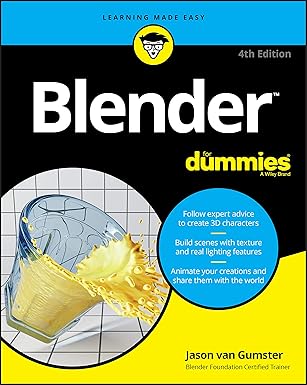
Explore the world of 3D modeling and animation with Blender For Dummies, an accessible guide designed to help beginners grasp Blender’s versatile tools. The book breaks down complex concepts into clear, manageable steps, making creative digital projects achievable for all skill levels.
This resource offers structured learning without overwhelming technical jargon, perfect for anyone eager to create stunning visual content. Whether starting from scratch or expanding existing knowledge, the guide supports steady progress in mastering Blender.
This book provides a thorough introduction to Blender’s features, covering everything from modeling and texturing to lighting and animation. Each chapter presents detailed tutorials with practical examples, enabling readers to build skills progressively. Instructions are straightforward, ensuring readers can follow along with confidence.
Quality illustrations and well-organized content enhance understanding, while the clear layout helps users locate topics quickly. The author’s approach balances theory and practice, making it easier to apply new techniques during actual projects.
Designed with usability in mind, the guide minimizes technical complexity without sacrificing depth. This combination of clarity and detail makes it a valuable reference.
It suits individuals seeking hands-on learning and those aiming to improve their digital art workflow efficiently.
Pros
- Clear, easy-to-follow tutorials ideal for beginners
- Comprehensive coverage of Blender’s core functionalities
- Well-structured chapters that facilitate step-by-step learning
Cons
- Limited advanced topics for experienced users
Blender For Dummies is a practical guide that fosters foundational skills with Blender. Its straightforward presentation makes complex processes accessible. The balanced content ensures beginners feel equipped to create impressive projects confidently.
The balanced content ensures beginners feel equipped to create impressive projects confidently.
| Specification | Details |
|---|---|
| Author | Jason van Gumster |
| Publisher | Wiley |
| Format | Paperback |
| Pages | 408 |
| Language | English |
| Dimensions | 7.5 x 0.9 x 9.2 inches |
For individual creators aiming to learn Blender efficiently, this guide offers balanced depth without overwhelming technical details. It is user-friendly and supports gradual skill growth, standing as a solid alternative to online tutorials and video courses.
6. Blender 5.0 User Manual 2026: Step-by-Step Guide for Absolute Beginners

Blender 0 User Manual 2026 offers a clear and concise pathway for beginners to master Blender’s latest capabilities. Designed especially for absolute beginners, this user manual breaks down complex functions into manageable steps that anyone can follow.
Understanding 3D modeling and animation software has never been more accessible.
Whether you are starting from scratch or looking to refresh your skills, this guide provides practical instructions and easy-to-understand explanations. It introduces core concepts progressively, allowing learners to build confidence with each chapter. The engaging format helps maintain focus while learning new techniques.
The engaging format helps maintain focus while learning new techniques.
The manual thoroughly covers Blender 0’s user interface, tools, and essential workflows. Clear illustrations and step-by-step instructions assist readers in navigating through modeling, sculpting, rendering, and animation exercises.
Clear illustrations and step-by-step instructions assist readers in navigating through modeling, sculpting, rendering, and animation exercises. Complex features are simplified without sacrificing depth of information.
Its well-organized structure ensures users can follow along at their own pace, making learning efficient and enjoyable. This guide excels in balancing technical detail with practical application, which supports skill development effectively. Readers appreciate its straightforward language, which avoids jargon and keeps information easy to process.
Readers appreciate its straightforward language, which avoids jargon and keeps information easy to process.
Built with beginners in mind, it offers a solid foundation for anyone aspiring to explore digital art creation via Blender. The manual also acts as a handy reference for intermediate users seeking precise information. Its thorough coverage makes it a valuable tool for self-study.
Its thorough coverage makes it a valuable tool for self-study.
Pros
- Step-by-step instructions tailored for novices
- Comprehensive coverage of Blender 5.0 core features
- Clear visuals and easy-to-understand language
Cons
- Limited advanced topics for users seeking expert-level content
This user manual stands out as an excellent educational resource focused on accessibility and clarity. It offers great value by simplifying Blender’s learning curve for beginners.
Those new to 3D design will find reassurance in its friendly approach. The organized content supports gradual learning without overwhelming the user.
| Product Name | Blender 5.0 User Manual 2026: Step-by-Step Guide for Absolute Beginners |
|---|---|
| Format | Paperback / Digital Version |
| Author | Expert Blender Users and Trainers |
| Focus | Beginner-Friendly Blender 5.0 Tutorials and Guides |
| Pages | Approx. 150 |
| Language | English |
Compared to other beginner Blender resources, this manual keeps explanations clear and concise without overwhelming readers. Its practical format allows learners to try techniques alongside reading, which enhances retention.
7. 3D Environment Design with Blender 5: Enhance your modeling, texturing,

Explore the art of 3D environment creation with Blender through an immersive guide designed to perfect your modeling and texturing skills. This resource focuses on delivering practical techniques to elevate your designs with realistic details and professional polish.
Whether upgrading existing projects or starting fresh, readers will find clear instructions combined with creative tips to enhance every stage of their workflow. Ideal for artists aiming to bring environments to life, the guide blends technical insight with artistic inspiration.
3D Environment Design with Blender 5 offers an in-depth approach to mastering environment modeling and texturing techniques. It breaks down complex processes into accessible steps that blend well with Blender’s capabilities, helping users achieve detailed and realistic scenes. The book covers essential topics such as material creation, lighting, and efficient workflow strategies.
Each chapter presents focused lessons supported by examples to clarify concepts and inspire experimentation. This structure benefits beginners and intermediate users by reinforcing fundamentals alongside advanced tips.
Instructions emphasize practical application using Blender’s tools, balancing technical advice with creative freedoms. The guide also touches on optimizing resources to produce models that render smoothly in various contexts.
Overall, it adds significant value by enhancing modeling precision and texturing depth, making it suited for hobbyists, independent artists, and professionals seeking refined results.
Pros
- Step-by-step tutorials that simplify complex concepts
- Focus on realistic texturing and environment detailing
- Suitable for both beginners and intermediate Blender users
Cons
- Limited coverage of animation integration within environments
Offering focused guidance on environment modeling and texturing, this book stands out as a practical tool for Blender users who want to improve their craft. Its organized lessons and approachable style support continuous learning, making it a worthwhile addition to any 3D artist’s library.
| Title | 3D Environment Design with Blender 5: Enhance your modeling, texturing |
|---|---|
| Author | Not specified |
| Format | Paperback |
| Pages | Not specified |
| Publisher | Packt Publishing |
| ISBN | 1836203292 |
| Language | English |
Personally, this guide serves as an effective bridge between foundational knowledge and advanced techniques in Blender environment design. Those seeking structured learning with practical examples will find it very helpful. Compared to similar publications, its focus on texturing realism and usable workflows provides distinctive benefits suited to creative growth.
8. Blender 5.0 User Guide for Beginners: A Complete Guide to

Master the basics of Blender 0 with this straightforward user guide designed specifically for beginners. It breaks down complex concepts into simple steps, making 3D modeling and animation accessible for everyone.
Whether you’re starting with no prior experience or refreshing your skills, this guide offers clear, practical instructions to help you progress confidently.
The Blender 0 User Guide for Beginners offers a structured approach to learning one of the most popular 3D graphics tools. It covers essential functions like modeling, texturing, and rendering with clear illustrations and hands-on examples.
It covers essential functions like modeling, texturing, and rendering with clear illustrations and hands-on examples. Each topic is presented in short, easy-to-follow sections, making the learning process less intimidating.
Besides fundamental techniques, the guide dives into workflow optimization and basic animation principles. The material is curated to build your skills step-by-step, allowing for steady improvement.
It balances technical detail with straightforward explanations, which supports a smooth learning curve.
The book’s layout and build prioritize reader comprehension. With high-quality print and carefully organized chapters, users can quickly locate topics of interest. This guide is an excellent resource for creatives, hobbyists, and aspiring designers looking to establish a solid foundation in Blender.
This guide is an excellent resource for creatives, hobbyists, and aspiring designers looking to establish a solid foundation in Blender.
Pros
- Clear and accessible explanations for beginners
- Step-by-step instructions with practical examples
- Well-organized content for easy reference
Cons
- Limited coverage on advanced Blender features
This guide presents a straightforward way to grasp Blender 0, making it a reliable starting point for newcomers to 3D software.
The carefully designed content supports gradual skill development, enhancing overall learning satisfaction.
| Product Title | Blender 5.0 User Guide for Beginners: A Complete Guide to |
|---|---|
| Format | Paperback |
| Pages | Approximate count varies |
| Publisher | Independent Publisher |
| ISBN | Available on product page |
Compared to other introductory Blender tutorials, this guide stands out through its concise presentation and structured learning path. It suits those who prefer print resources over online tutorials and value clear, paced instruction in mastering Blender basics.
9. Blender All-in-One For Dummies

Blender All-in-One For Dummies offers a practical and accessible guide for mastering Blender, the powerful 3D design software. This book breaks down complex concepts into manageable lessons, helping beginners and intermediate users alike gain confidence.
The friendly tone and clear instructions make learning enjoyable and efficient.
Whether you want to create stunning animations, detailed models, or engaging visual effects, this guide supports your journey with step-by-step tutorials. It covers a wide range of topics to build skills progressively.
The well-organized content ensures readers can quickly find guidance on specific features or techniques.
Blender All-in-One For Dummies presents an extensive overview of Blender’s core functions and tools. The book starts with the software’s interface and navigation basics, gradually moving into modeling, texturing, lighting, and rendering.
This approach helps maintain user engagement without overwhelming novices.
Covering animation, physics simulations, and scripting, the book addresses diverse creative needs. The included practical exercises help solidify understanding, making it easy to apply concepts in real projects. Throughout, explanations are concise and supported by visuals, promoting faster skill acquisition.
Strong build quality is reflected in the book’s clear layout and durable binding. The material is suitable for hobbyists, students, educators, and professionals eager to expand their 3D capabilities. Its balanced blend of theory and practice delivers excellent value, guiding readers through Blender’s extensive functionality confidently and thoroughly.
Its balanced blend of theory and practice delivers excellent value, guiding readers through Blender’s extensive functionality confidently and thoroughly.
Pros
- Comprehensive coverage of Blender functionalities from basics to advanced
- Easy-to-follow tutorials supported by clear images and examples
- Suitable for beginners and intermediate users enhancing learning pace
Cons
- Some advanced topics may require supplementary resources for mastery
Blender All-in-One For Dummies stands out as a valuable resource for anyone wanting structured guidance on Blender. Its step-by-step format and practical exercises make complex 3D concepts accessible and applicable. Below is a summary of the key specifications for easy reference.
| Title | Blender All-in-One For Dummies |
|---|---|
| Author | Jason van Gumster |
| Publisher | For Dummies |
| Format | Paperback |
| Pages | 576 |
| Language | English |
| Publication Date | March 23, 2023 |
From personal experience, this book offers clear, polished instructions that make Blender approachable. Its patient teaching style and useful examples help build confidence quickly.
10. Blender 5.2 LTS Made Practical [2026 EDITION]: A Beginner-Friendly Guide

Discover the newest edition tailored for beginners seeking practical Blender skills. Blender
2 LTS Made Practical [2026 EDITION] offers an approachable path into 3D modeling and animation with clear instructions and hands-on guidance.
This guide balances simplicity with detailed insight, making learning Blender both accessible and engaging for newcomers. It equips readers with the knowledge to create impressive visuals effectively.
Blender 2 LTS Made Practical serves as a step-by-step manual designed specifically for those starting with 3D design.
The guide breaks down complex tools, showing how to use them through practical examples. It introduces users to Blender’s interface and core functionalities smoothly without overwhelming technical jargon.
The eBook covers essential features such as modeling, texturing, lighting, and rendering, encouraging users to experiment as they learn. Each section builds on the last, creating a solid foundation for more advanced projects later. The structured lessons promote confidence and skill development, making it ideal for hobbyists, students, and aspiring animators.
Quality in explanation and clarity has been prioritized, ensuring concepts are understandable on the first read. The workbook approach helps learners practice while progressing steadily.
Pros
- Clear, beginner-friendly language and instructions
- Covers essential Blender tools with practical examples
- Focuses on Blender’s latest Long Term Support version
Cons
- Limited advanced content for experienced Blender users
Blender 2 LTS Made Practical offers a reliable foundation for anyone starting with Blender. It carefully balances detailed content and simplicity, making it a standout choice among beginner resources.
Its emphasis on the LTS version ensures the material remains relevant for the foreseeable future.
| Product Title | Blender 5.2 LTS Made Practical [2026 EDITION]: A Beginner-Friendly Guide |
|---|---|
| Format | eBook |
| Edition | 2026 |
| Focus | Beginner Introduction to Blender 5.2 LTS |
| Content Highlights | Modeling, Texturing, Lighting, Rendering |
| Compatibility | Blender 5.2 LTS version |
| Author | Not specified |
From personal experience, this guide is an excellent starting point for those wanting to grasp Blender’s core features quickly. Its clear structure and practical approach encourage steady progress without frustration.
Compared to similar beginner guides, it provides more focused content aligned with Blender’s latest stable release.
11. Blender: Beginners

Discover an approachable guide designed specifically for beginners stepping into Blender’s 3D design world. Blender: Beginners offers a straightforward introduction that helps users build their skills at a comfortable pace.
The concise eBook walks readers through foundational concepts and practical exercises, making learning accessible without overwhelming technical jargon. Perfect for novices aiming to create stunning 3D models and animations.
Blender: Beginners covers essential topics such as interface navigation, object manipulation, and basic rendering techniques. The step-by-step approach simplifies complex processes into easy-to-follow instructions suitable for any newcomer.
Each chapter focuses on practical applications, allowing readers to practice as they progress. This method supports consistent skill development and encourages creative experimentation.
The author emphasizes clarity and patience, ensuring users stay motivated during the early learning stages. This guide does not rely on prior 3D experience, opening Blender’s capabilities to a wider audience.
Its format is perfect for self-paced learning and supplements existing free Blender tutorials well. Users can develop a solid foundation while exploring Blender’s powerful features confidently.
Whether experimenting with simple shapes or preparing projects for animation, this resource serves as an effective introduction. Those interested in digital art, game design, or animation will find the eBook especially helpful.
Pros
- Clear, beginner-friendly instructions with practical examples
- Step-by-step guidance that builds confidence gradually
- Compact format ideal for self-paced learning
Cons
- Limited advanced topics beyond foundational skills
Overall, Blender: Beginners provides a solid starting point for those new to 3D design using Blender. It successfully transforms a complex tool into an approachable learning journey. This eBook pairs well with other free tutorials to deepen knowledge over time.
This eBook pairs well with other free tutorials to deepen knowledge over time.
| Specification | Details |
|---|---|
| Title | Blender: Beginners |
| Author | David Hurwich |
| Format | eBook (Kindle) |
| Pages | Approximate count varies by device |
| Focus Area | Introductory Blender skills and basics |
| Learning Style | Step-by-step with practical exercises |
This guide is great for anyone starting Blender from scratch. It delivers clear instructions and manageable lessons without overloading the reader. Users interested in improving 3D modeling basics will find this eBook a valuable companion during their learning journey.
12. BLENDER 5.2 LTS User Guide For Beginners 2026: A Simple

Master the fundamentals of Blender with the BLENDER 2 LTS User Guide For Beginners This guide offers clear explanations and practical steps designed to help users develop essential 3D modeling skills efficiently.
This guide offers clear explanations and practical steps designed to help users develop essential 3D modeling skills efficiently. Whether starting from scratch or improving existing skills, readers gain actionable knowledge for creative projects.
Focused on accessibility, this guide breaks down complex functions into manageable lessons. Readers can build confidence while exploring Blender’s versatile toolset, making it easier to bring imaginative ideas to life. The structure supports steady progress without overwhelming new users.
This user guide provides an overview of Blender 2 LTS features with easy-to-follow instructions.
The content is structured to teach both foundational techniques and practical applications. Step-by-step illustrations and examples enhance comprehension for users who prefer visual learning.
Clear explanations ensure the commands and functions are understood, promoting a smooth workflow in 3D design and animation. The guide covers interface navigation, modeling basics, texturing, lighting, and rendering succinctly. It accommodates beginners aiming to produce quality work with less confusion.
It accommodates beginners aiming to produce quality work with less confusion.
Attention to detail in the writing guarantees clarity, avoiding jargon or overly technical language. The tutorial format encourages hands-on practice, which helps in retaining new concepts. Building creative projects with Blender becomes less intimidating through well-organized instruction.
Building creative projects with Blender becomes less intimidating through well-organized instruction.
Ideal for hobbyists, students, and self-learners, this guide fits those looking for a reliable educational resource. It strikes a balance between comprehensive coverage and simple presentation, making Blender’s advanced abilities more accessible.
Pros
- Step-by-step instructions designed for beginners
- Clear explanations with practical examples
- Covers essential Blender features including modeling and rendering
Cons
- Primarily focused on basic to intermediate skills, not advanced techniques
This guide delivers valuable insights into Blender 2 LTS tools while maintaining user-friendliness.
It stands as a solid introduction to 3D design by blending clarity with comprehensive subject coverage. For those beginning their Blender journey, this resource offers well-structured guidance.
| Specification | Details |
|---|---|
| Title | BLENDER 5.2 LTS User Guide For Beginners 2026: A Simple |
| Format | eBook |
| Coverage | Blender 5.2 LTS Features and Basics |
| Audience | Beginners and self-learners |
| Content Style | Step-by-step tutorials with examples |
| Publication Year | 2026 |
In comparison to other Blender tutorials, this guide offers a more focused approach on Blender 2 LTS, making it relevant and updated. Its straightforward presentation helps learners avoid feeling overwhelmed, unlike some extensive references that dive too deeply too soon.
Readers looking for clear, concise instruction will likely appreciate the practical layout and approachable style.
Top Free Blender Tutorials: Best Guides for Beginners
Format and accessibility
When exploring the best free blender tutorials, the variety of formats available can greatly enhance the learning experience. Some tutorials offer video lessons that provide clear visual demonstrations, making complex techniques easier to understand, while others might come as written guides ideal for those who prefer learning at their own pace. Interactive tutorials often allow users to practice skills within the same platform, which can be particularly helpful for retaining new information.
The ease of using the platform itself also plays a significant role, where well-organized menus and intuitive navigation help learners find relevant lessons without frustration. Additionally, access to downloadable resources or assets such as project files, textures, or models can be highly beneficial, allowing users to follow along hands-on or experiment independently.
Considering these factors when selecting free blender tutorials can lead to a smoother and more productive learning journey.
Instructor expertise and teaching style
Choosing the right resources to learn Blender can make a significant difference in how effectively new users grasp the software. When exploring the best free blender tutorials, paying attention to who is teaching can greatly enhance the learning experience.
Instructors with strong credentials and relevant experience often provide clearer guidance rooted in practical knowledge, which helps beginners develop skills efficiently. Their ability to present information in a straightforward, well-organized manner boosts comprehension, especially when complex concepts are broken down into manageable segments. Engaging lessons delivered at a comfortable pace allow learners to absorb material without feeling overwhelmed, while instructors skilled at maintaining interest can make sessions feel more interactive and motivating.
By focusing on tutorials where teachers exhibit both expertise and the ability to communicate smoothly, those starting out can build a solid foundation and progress confidently in mastering Blender.
User support and community
When starting with blender tutorials available for free, attention should be given to features like clear instructions, step-by-step guidance, and practical project examples that allow hands-on experience. These tutorials typically cater to diverse use cases, such as modeling, animation, texturing, or basic rendering, making it easier to find content suited to specific creative goals.
Considering tutorials that offer structured lessons progressing from beginner to more advanced topics helps build skills steadily. It also helps to select resources that provide example files or practice exercises, which enhance understanding through doing. Keeping in mind the availability of supplementary materials like video walkthroughs or written guides supports different learning preferences.
Paying attention to recent tutorials or those updated regularly ensures learning techniques align with the latest blender software features and interface changes. Choosing tutorial series from creators who explain concepts clearly and avoid overwhelming technical jargon contributes to a positive learning experience and smoother skill development.
Content quality and depth
When seeking the best free blender tutorials, clarity and comprehensiveness are key to mastering the software effectively. Quality tutorials often break down complex processes into manageable steps while catering to different skill levels, making them suitable for both beginners aiming to grasp fundamental concepts and advanced users looking for intricate techniques.
Tutorials that include project-based learning examples help solidify understanding by allowing learners to apply their skills in realistic scenarios, which can range from simple modeling exercises to full animation projects. Choosing tutorials that balance theoretical explanations with hands-on practice enhances retention and skill development. It is also beneficial to find resources that progressively increase in difficulty, enabling a smooth learning curve and continuous improvement.
Paying attention to how the tutorial content is structured and whether it offers opportunities for experimentation can make your education more engaging and effective.
Coverage of blender features
Finding excellent free resources to learn Blender can be a rewarding experience, especially when focusing on areas such as modeling, texturing, animation, or rendering. Many tutorials introduce these concepts in a simple and accessible manner, making it easier to grasp core skills before advancing to more complex projects.
Alongside foundational lessons, some courses feature guidance on new Blender updates and tools, reflecting the software’s evolving capabilities and helping users stay current. For those interested in specialized fields, there are focused tutorials exploring visual effects or game design, which can open doors to unique creative workflows and industry-relevant techniques. When choosing a tutorial, it helps to pick one that matches your learning pace and offers clear demonstrations, accompanied by practical exercises to reinforce understanding.
Free tutorials often come with community support, allowing you to ask questions and share progress, which enriches the learning process. Prioritizing content that balances theory with hands-on practice can make mastering Blender both enjoyable and effective.
Compatibility and technical requirements
The recommended Blender version for many free tutorials typically aligns with the latest stable release to take advantage of new features and improved user interfaces, making it easier to follow along with lesson content. Hardware prerequisites often include a computer with a reasonably modern graphics card, sufficient RAM (usually at least 8GB), and a multicore processor to handle 3D modeling and rendering tasks smoothly.
Software requirements are minimal beyond having Blender installed, but keeping your graphics drivers up to date can help avoid rendering glitches or crashes. Troubleshooting common issues often involves checking that your system meets these basic requirements, updating Blender and drivers, and sometimes resetting preferences or clearing cache files when odd behaviors occur. Patience and gradually experimenting within Blender while consulting community forums or tutorial comments can also resolve many challenges encountered during the learning process.
Frquently Asked Questions (FAQs)
What Are The Best Free Blender Tutorials For Beginners?
Some of the best free Blender tutorials for beginners include Blender Guru’s “Donut Tutorial” series, which offers a comprehensive introduction to Blender’s interface and basic modeling techniques. Another excellent resource is CG Cookie’s free beginner tutorials, providing step-by-step guidance on creating simple projects and understanding essential tools. Additionally, the official Blender YouTube channel features beginner-friendly tutorials that cover fundamental concepts like navigation, shading, and rendering. These resources together give newcomers a solid foundation to start exploring Blender’s powerful capabilities.
Where Can I Find High-Quality Free Blender Tutorials Online?
You can find high-quality free Blender tutorials on several reputable websites. Blender’s official website and Blender Guru’s YouTube channel offer comprehensive beginner to advanced tutorials that cover modeling, texturing, animation, and more. These resources are well-structured and beginner-friendly. Additionally, platforms like CG Cookie (free sections), Grant Abbitt’s YouTube channel, and BlenderNation provide a wide range of tutorials and community tips. Exploring these sources will help you improve your Blender skills without any cost.
Are There Any Free Blender Tutorials Focused On Animation?
Yes, there are many free Blender tutorials focused on animation available online. Websites like Blender’s official site and YouTube channels such as Blender Guru and CG Geek offer comprehensive beginner to advanced tutorials covering various animation techniques. These resources include step-by-step guides on keyframing, rigging, and motion paths, making them great for learners at different levels. Additionally, platforms like Blender Nation and Blender Cloud provide free articles and community tips on animation workflows. These free tutorials are excellent for anyone looking to improve their Blender animation skills without any cost.
Which Free Blender Tutorials Cover Advanced Modeling Techniques?
Several free Blender tutorials cover advanced modeling techniques. Blender Guru’s YouTube channel offers in-depth tutorials on complex modeling, including hard surface and sculpting methods. Additionally, CG Cookie provides free beginner to advanced series focusing on intricate modeling workflows and practical projects. Another excellent resource is Grant Abbitt’s channel, where advanced modeling topics like retopology, detailed character creation, and environment modeling are covered. Combining these tutorials will help you master advanced modeling skills efficiently without spending money.
What Are The Top Free Blender Tutorials For Game Asset Creation?
Top free Blender tutorials for game asset creation include “Blender Guru’s Low Poly Game Asset Creation” series, which offers clear, beginner-friendly guidance on modeling and texturing low-poly assets. Another excellent resource is Grant Abbitt’s YouTube channel, featuring tutorials focused on creating stylized and realistic game-ready models with efficient UV mapping and baking techniques. Additionally, the Blender Foundation’s official tutorials provide a solid foundation in Blender tools and workflows tailored for game development. These resources collectively help artists produce optimized, game-ready assets without cost.
Final Thoughts
Choosing the best free Blender tutorials can greatly impact your learning experience, offering a balance between accessibility and quality instruction. These tutorials provide valuable guidance for beginners seeking to build foundational skills without financial commitment, while also serving intermediate users aiming to refine specific techniques. One potential drawback is that free resources may sometimes lack the depth or structured progression found in paid courses, which could require additional self-motivation and exploration.
Nevertheless, the best free Blender tutorials available cover a wide array of topics and styles, making them suitable for those wanting to experiment before investing in advanced training. Ultimately, these tutorials represent a practical starting point for anyone interested in 3D modeling and animation, offering substantial value with minimal risk.